
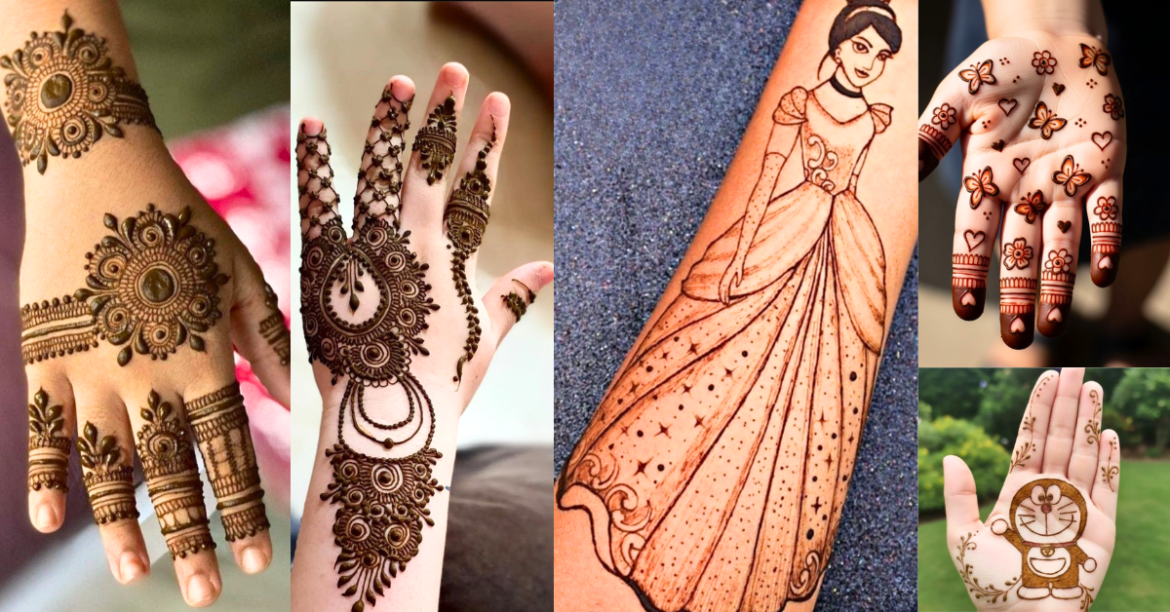
Introduction
Mehndi, or henna, is one of the oldest and most beloved forms of body art, celebrated across South Asia, the Middle East, and North Africa for thousands of years. For children, it transforms every festival and celebration into something truly magical. Kids’ mehndi designs are playful, age-appropriate, and quick to apply. Think cheerful flowers, cute animals, cartoon motifs, and simple geometric patterns rather than the dense, intricate artwork of adult mehndi. This guide covers everything parents and artists need to know to make every kid’s mehndi experience beautiful, safe, and memorable.
Why Kids Love Mehndi
There is something genuinely enchanting about watching a delicate design appear on your hand from a small cone. Children love the process just as much as the result. The temporary nature adds to the excitement, designs fade, and new ones can be chosen next time. More meaningfully, mehndi connects children to family traditions. Little ones who sit alongside mothers, aunts, and grandmothers during Eid or wedding mehndi sessions absorb not just the art but the warmth and stories that surround it, memories that stay with them for life.
Popular Kids Mehndi Design
Floral and Nature-Inspired Designs
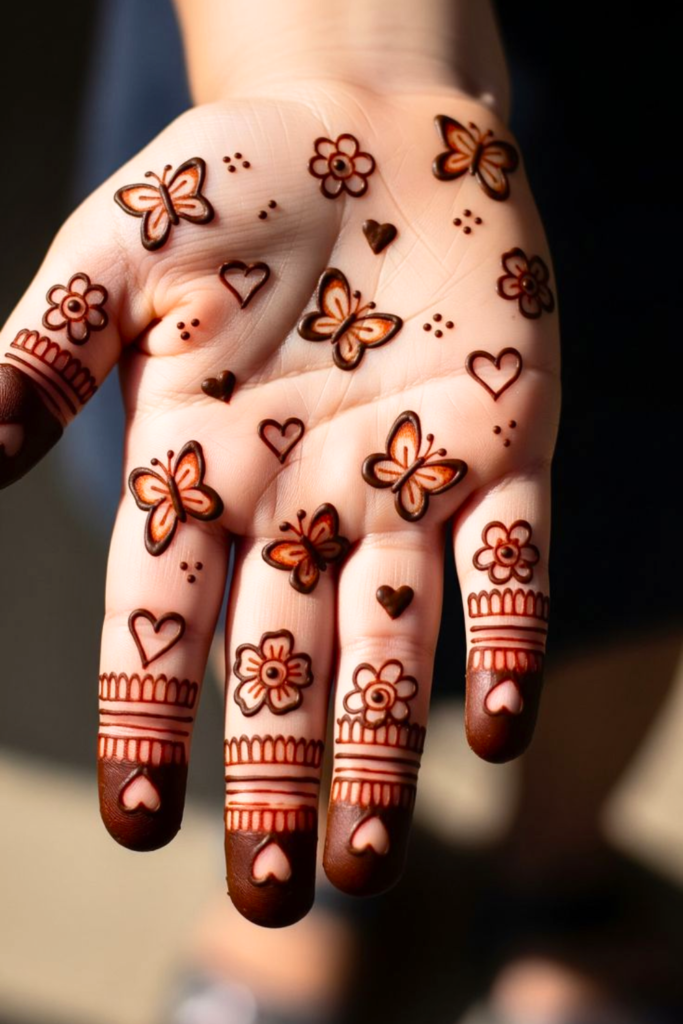
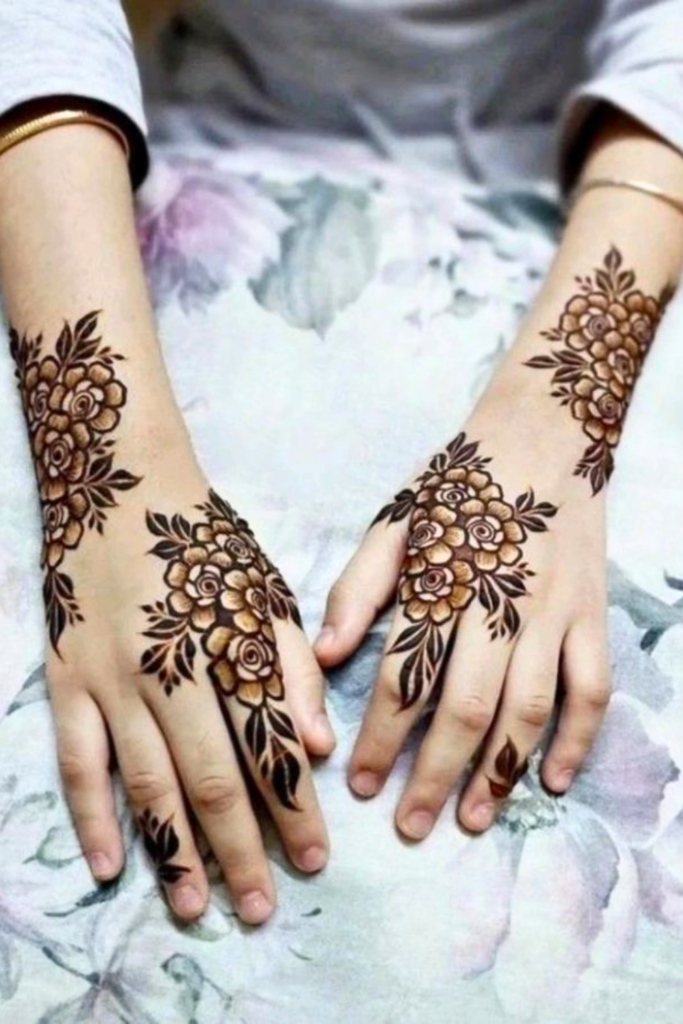
Flowers are among the most universally loved motifs in kids’ mehndi and for good reason. Simple roses, sunflowers, daisies, and lotus patterns are visually beautiful and easy to apply. Complement them with soft leaves, curling vines, and paisley shapes, and you have elegant yet uncomplicated compositions that suit children perfectly. Floral designs can be scaled to fit small hands comfortably and completed in a short time, making them ideal for busy celebrations.
Cartoon and Character-Inspired Designs
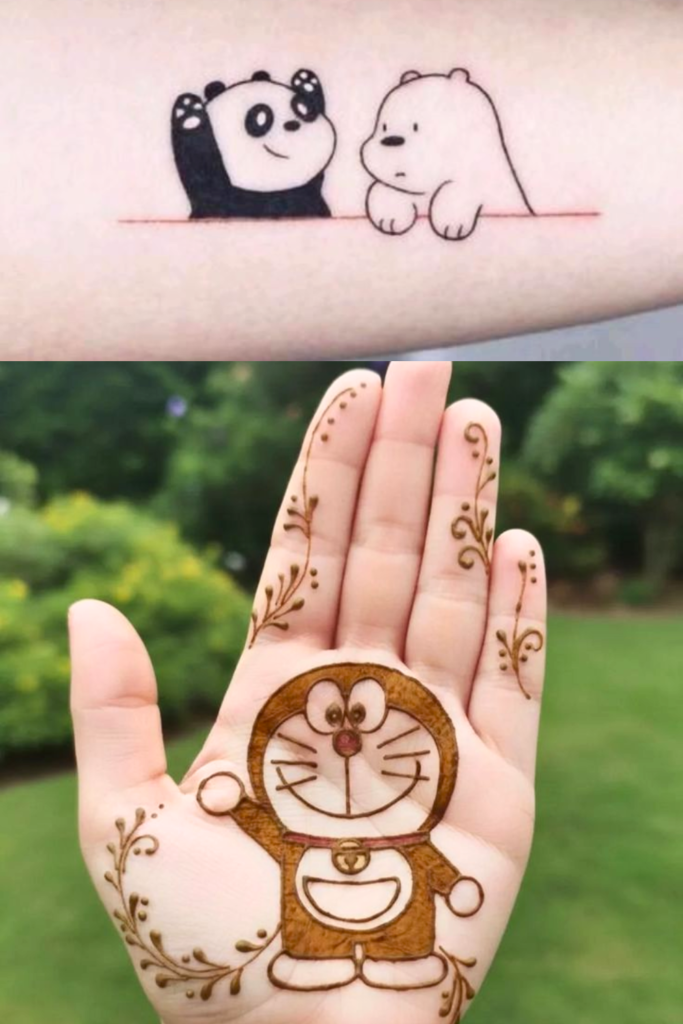
Modern kids’ mehndi has embraced popular culture enthusiastically. Unicorns, fairies, stars, hearts, crowns, and simple depictions of beloved characters are among the most requested motifs today. A talented mehndi artist can transform a child’s favorite theme into a hand-drawn masterpiece in henna. These designs make the experience feel personal and special. The child sees something that belongs entirely to them, drawn just for them, on their own hand.
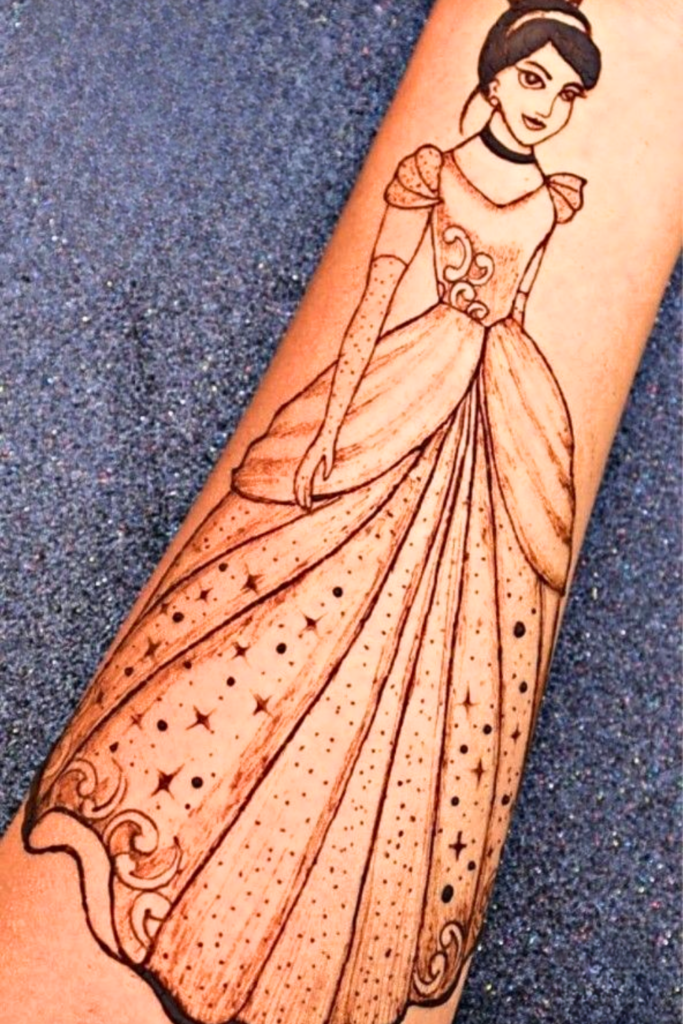
Source: Pinterest
Animal Designs
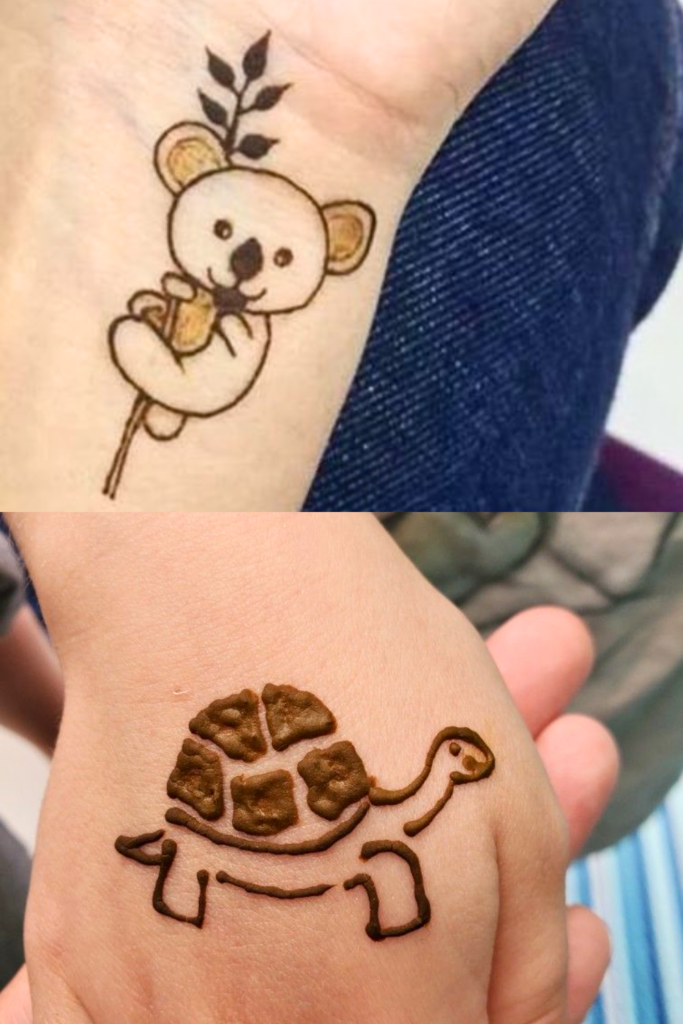
Cute animal motifs have always been a firm favorite in children’s mehndi. Butterflies, peacocks, elephants, cats, birds, and fish bring a sense of life and movement to the design. The peacock, in particular, holds deep cultural significance in South Asian art and appears in mehndi traditions across generations. Stylized animal silhouettes look beautiful on the back of the hand, along the wrist, or even on the feet.
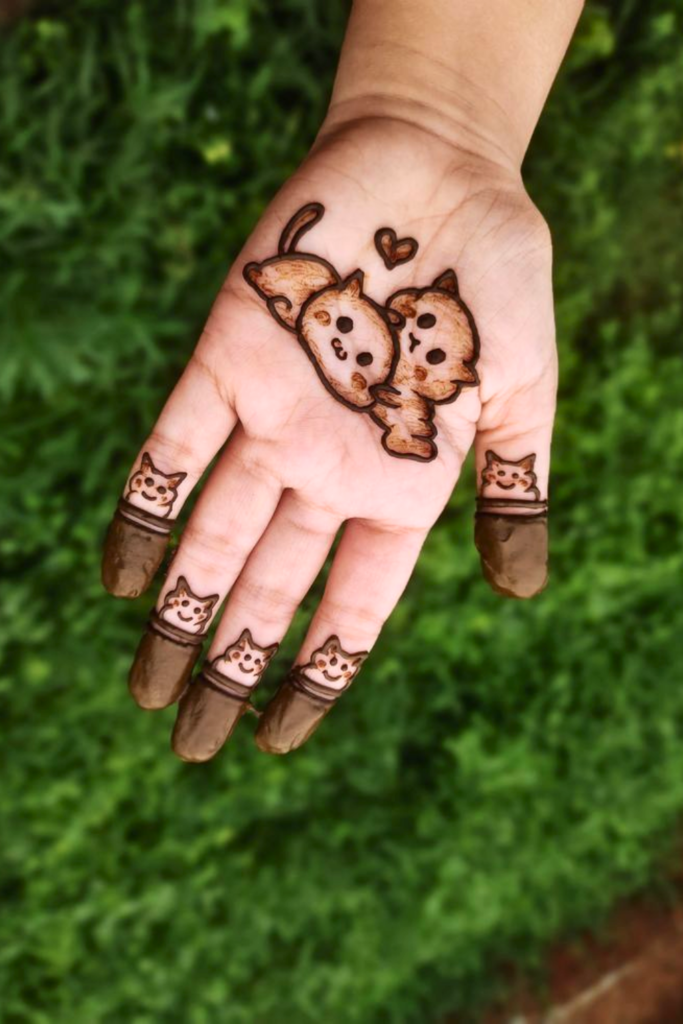
Source: Pinterest
Geometric and Simple Line Designs
For younger children or those who prefer a cleaner, more modern look, geometric designs are an excellent choice. Stars, triangles, circles, dots, and simple repeating line patterns create striking mehndi without overwhelming complexity. These designs are faster to apply, which is a practical advantage when working with impatient young ones, and they carry a contemporary, minimalist charm that appeals to both children and parents.
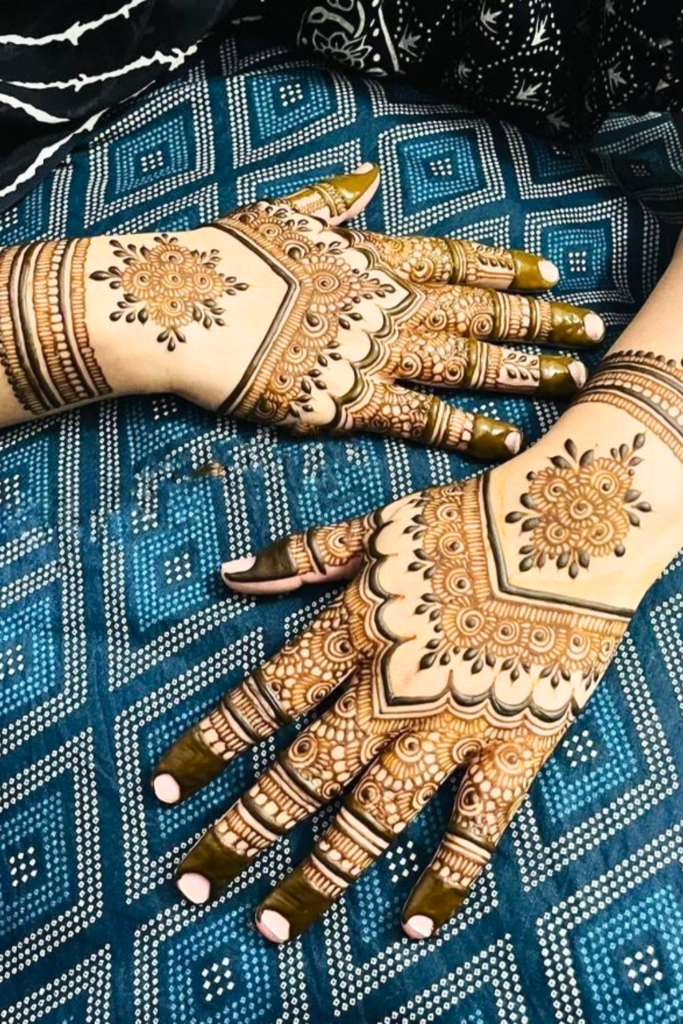
Arabic Style Kids Mehndi
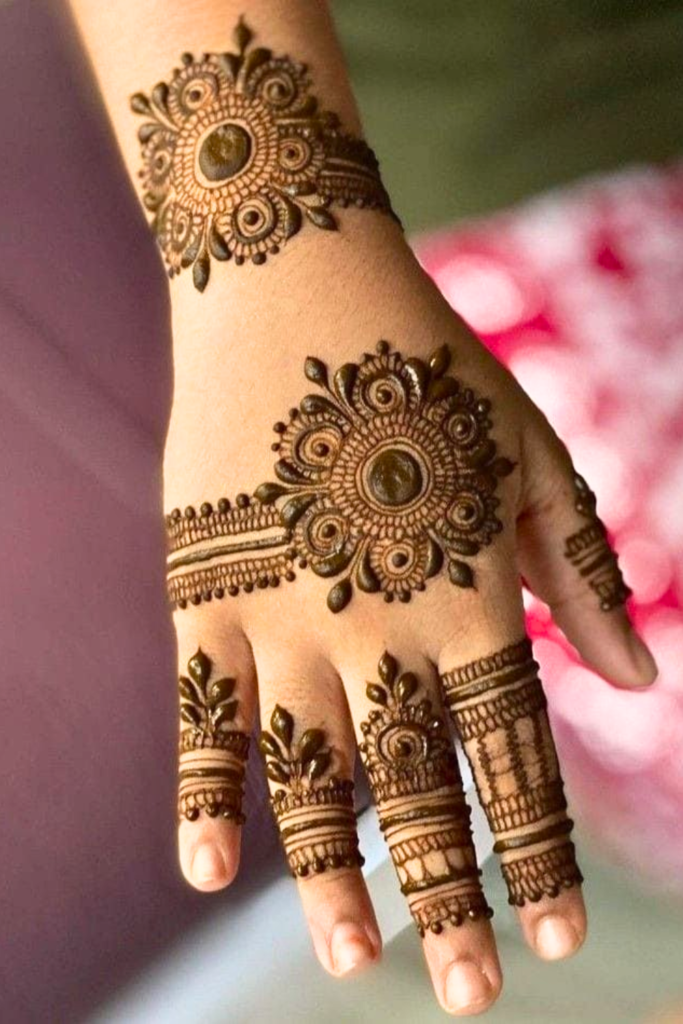
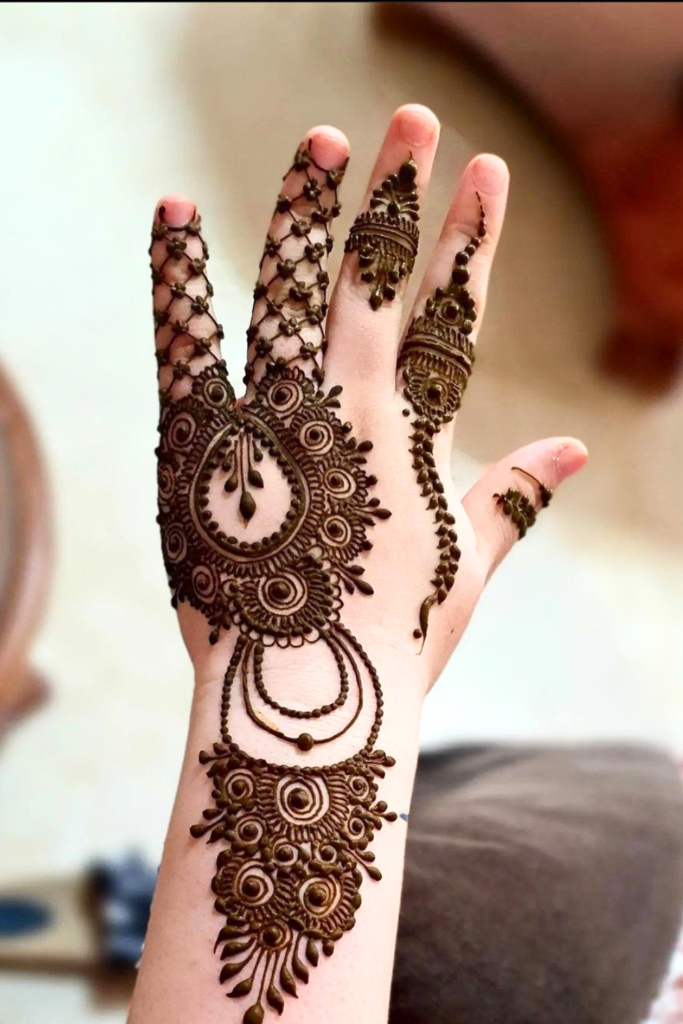
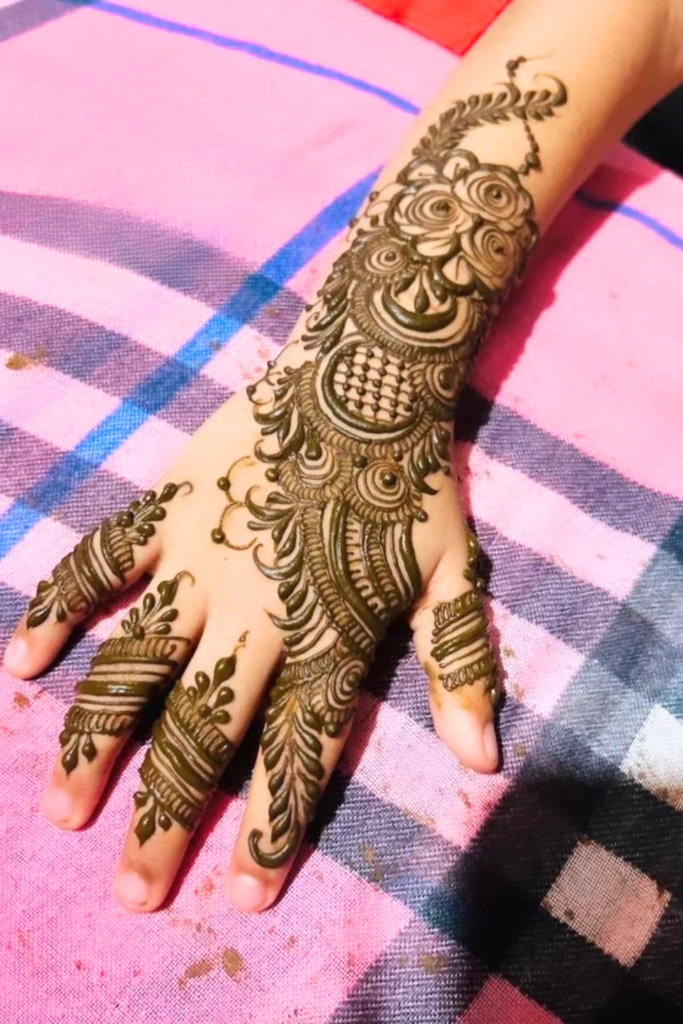
Arabic mehndi is characterized by bold floral motifs, flowing vines, and generous negative space between the design elements. This open, airy quality makes Arabic-style mehndi less dense than traditional Indian patterns, and it adapts beautifully for children. A single large statement flower on the back of the hand, or a trailing vine along the wrist, captures the elegance of Arabic mehndi while remaining perfectly manageable for young ones.
Placement Tips
The back of the hand is the most traditional choice and photographs beautifully. The wrist works wonderfully for bracelet-style bands or a child’s name in stylized lettering. Finger designs add a delicate finishing touch for older children. For special occasions like weddings or Eid, simple ankle and foot designs add a lovely traditional element.
Safety: What Every Parent Must Know
Avoid black henna entirely. It is not real henna; it commonly contains a chemical called PPD that can cause severe burns, allergic reactions, and permanent scarring, especially on sensitive children’s skin. Always use certified natural, organic henna only.
Do a patch test first. Apply a small amount on the inner wrist and wait 24 hours before proceeding. If any redness, itching, or swelling appears, stop immediately.
Never apply mehndi near the eyes, mouth, or on broken skin. If the child has known skin sensitivities or conditions like eczema, consult a dermatologist first.
Application Tips
Apply mehndi when the child is well-rested and in a good mood. Have a favorite cartoon or movie ready to keep them still and entertained during application. Keep designs simple enough to complete within 15 to 20 minutes. Once dry, seal the design with a sugar and lemon juice mixture to deepen the color. When removing, scrape the dried henna off gently rather than washing it, then apply coconut oil before the first water contact for a richer, longer-lasting stain.
Occasions and Trends
Mehndi belongs at every celebration, Eid, Diwali, weddings, birthdays, and school cultural events. Modern trends have expanded the art beautifully: glitter mehndi with cosmetic sparkle is a birthday party favorite, minimalist single-line designs appeal to older children, and personalized name mehndi, where the child’s name is worked into the design, is consistently one of the most requested styles today.
Conclusion
Kids’ mehndi is a beautiful intersection of art, culture, and celebration. Done safely with natural henna and age-appropriate designs, it gives children more than a lovely pattern on their hands; it gives them a meaningful connection to tradition and a joyful memory that lasts long after the stain fades. Choose wisely, apply with care, and let the art speak for itself.