
Introduction
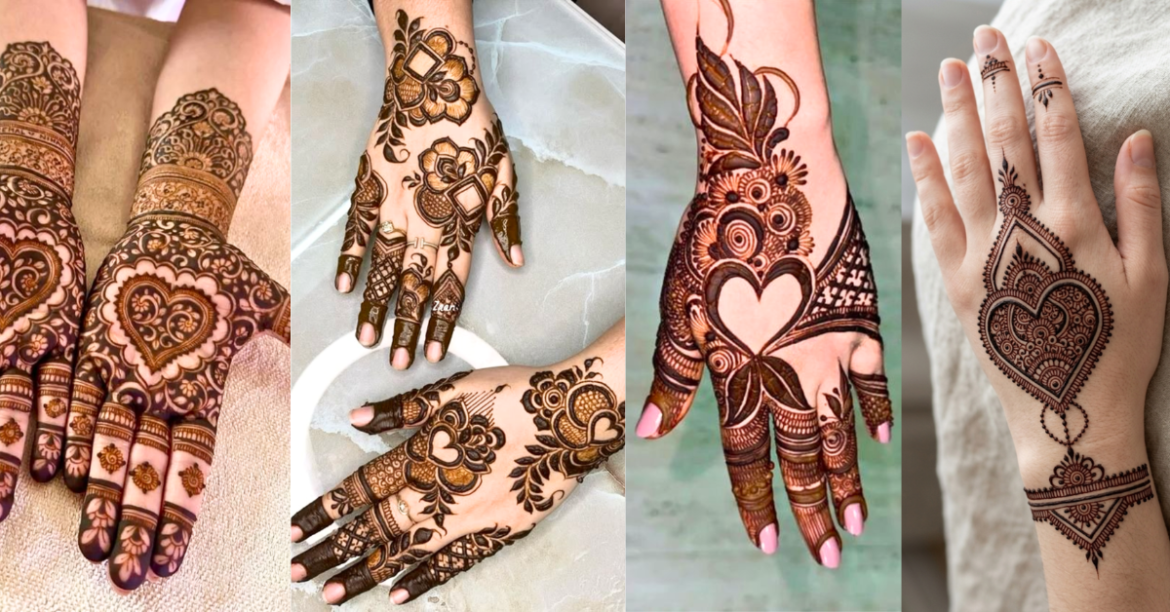
Mehndi, also known as henna, is one of the oldest and most cherished forms of body art practised across South Asia, the Middle East, and North Africa. Among its many motifs, the heart holds a special and enduring place. Heart mehndi design symbolise love, romance, and the deep bonds between people, making them a natural choice for weddings, festivals, and personal expression alike.
Cultural Significance
In South Asian traditions, mehndi is central to wedding celebrations. Brides especially love heart motifs, and one charming custom involves hiding the groom’s initials within the heart designs for him to discover on the wedding night. Beyond bridal occasions, heart mehndi is worn during festivals such as Eid and Diwali, on Valentine’s Day, and as a simple everyday adornment, always carrying a message of warmth and affection.
Popular Types of Heart Mehndi Designs
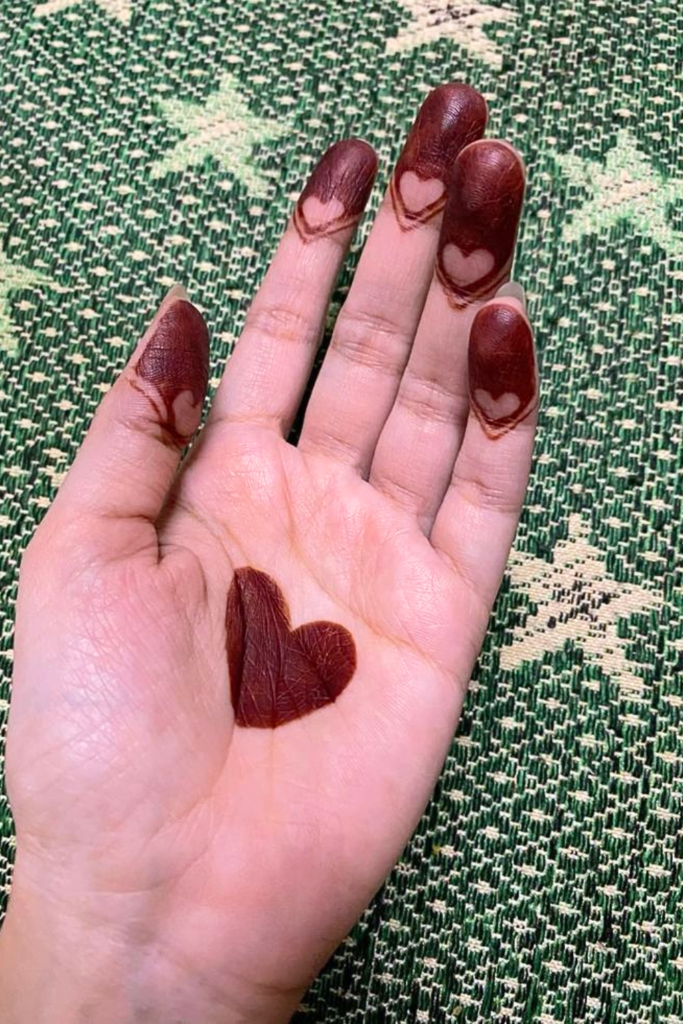
Simple Heart Design: Clean, minimal outlines on the palm or wrist. Elegant in its simplicity and perfect for beginners or casual wear.
Source: Pinterest
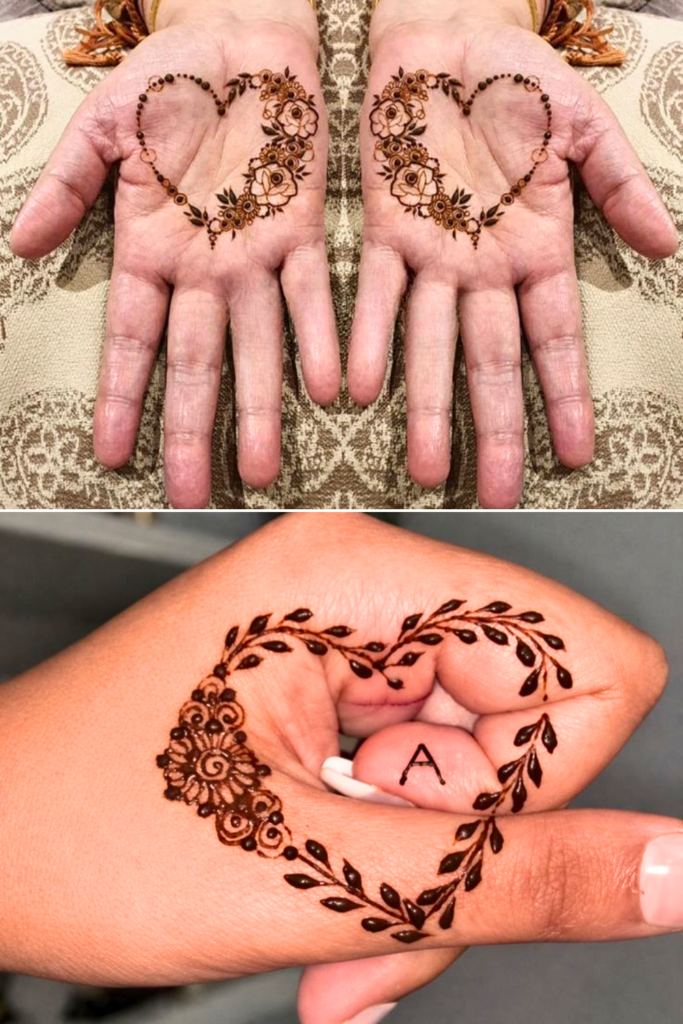
Floral Heart Design: Hearts filled or surrounded by roses, lotuses, and jasmine motifs. Lush and romantic, this is a perennial favourite for brides and festivals.
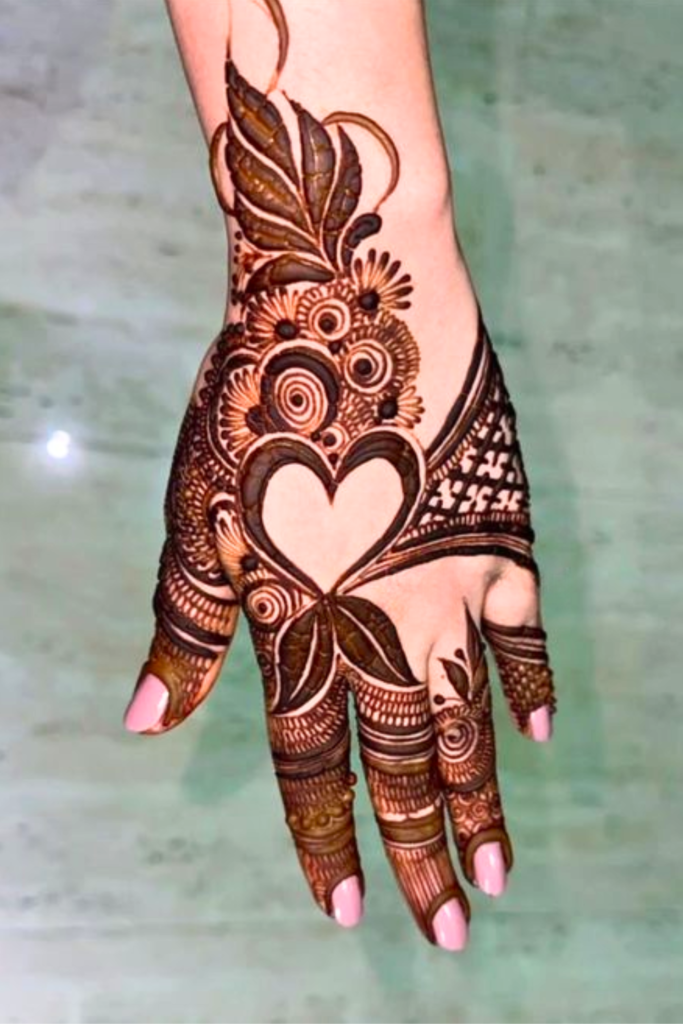
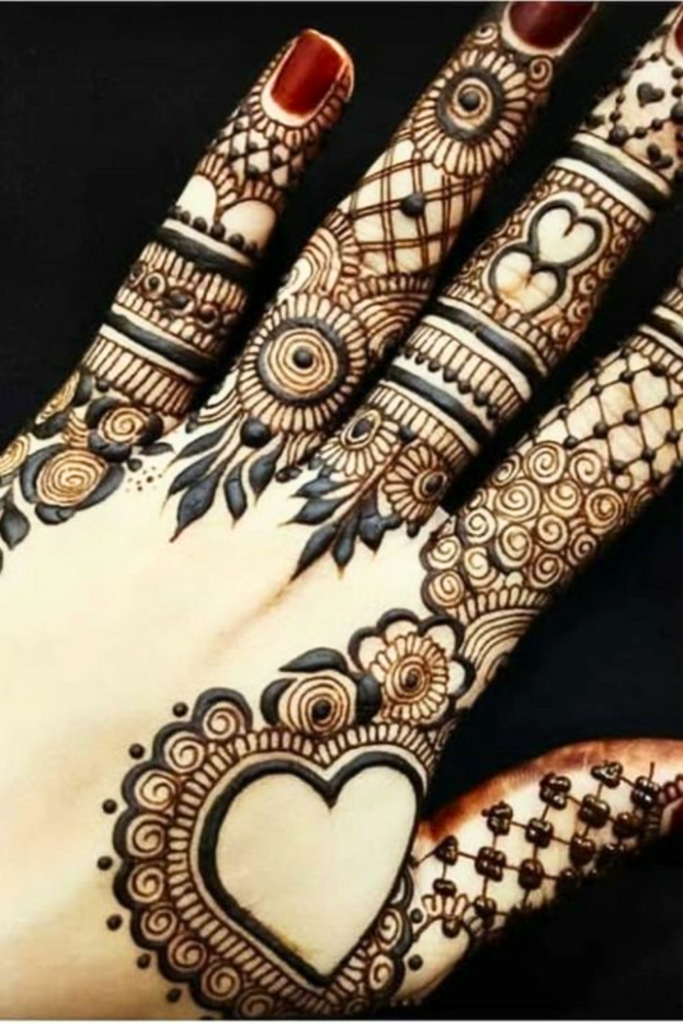
Geometric Heart Design: Triangles, diamonds, and lattice patterns within the heart create a modern, structured aesthetic that blends tradition with contemporary style.
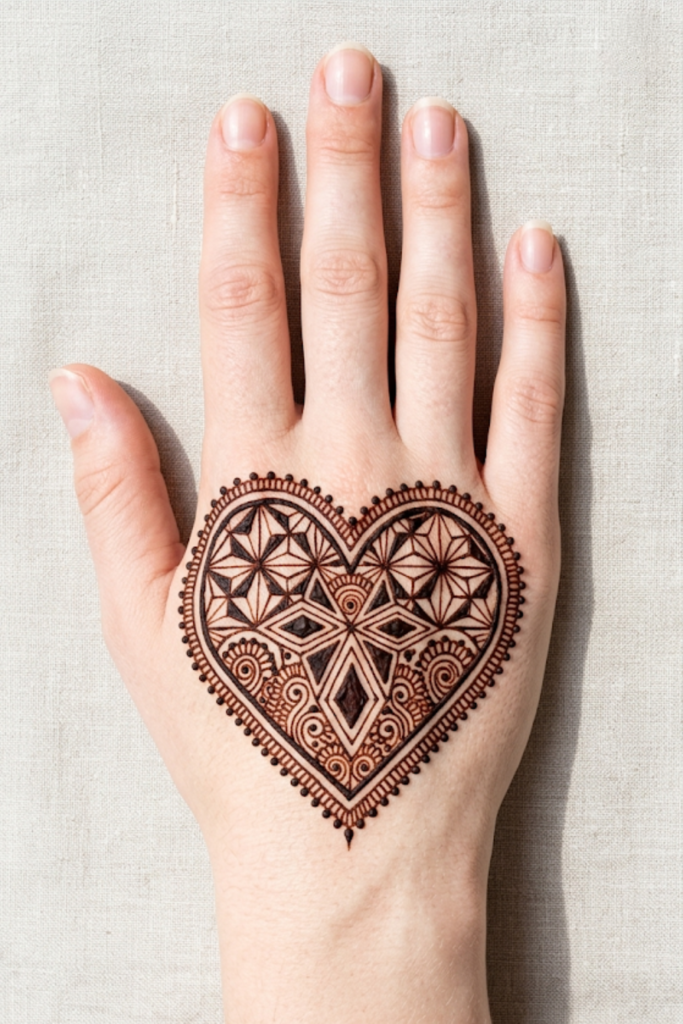
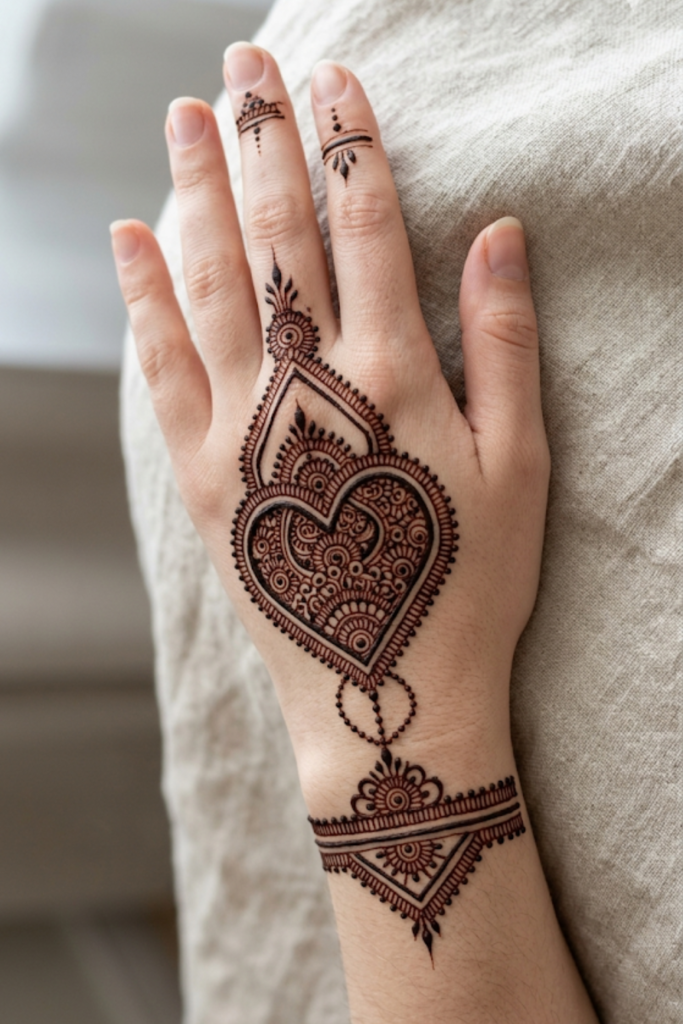
Mandala Heart Design: The interior of the heart is filled with concentric circles, petals, and radiating lines inspired by the mandala. Spiritually meaningful and visually striking.
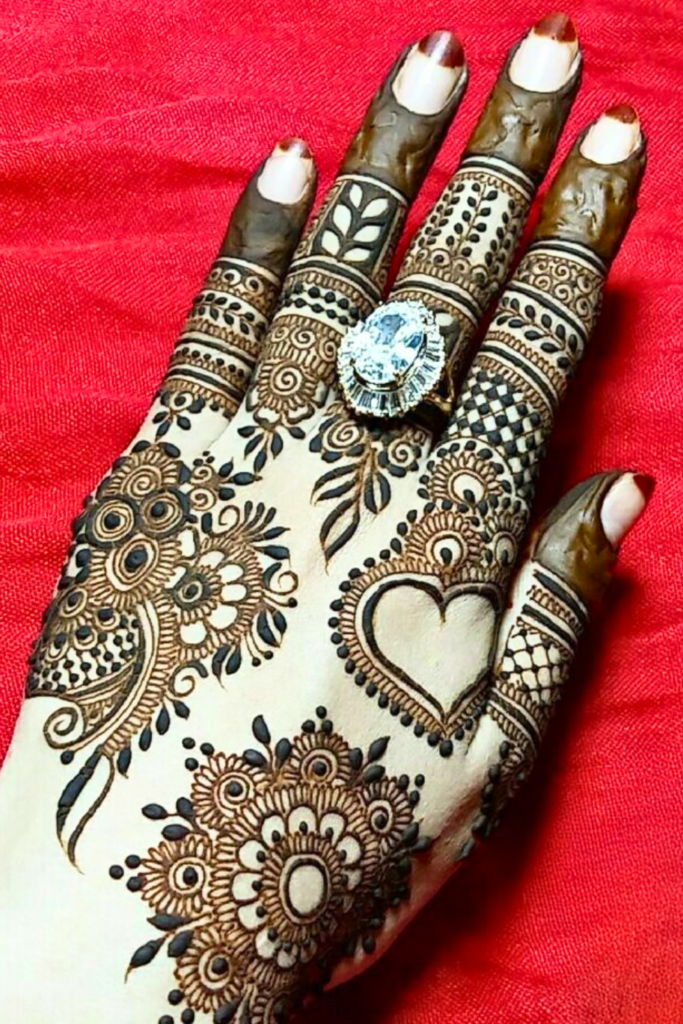
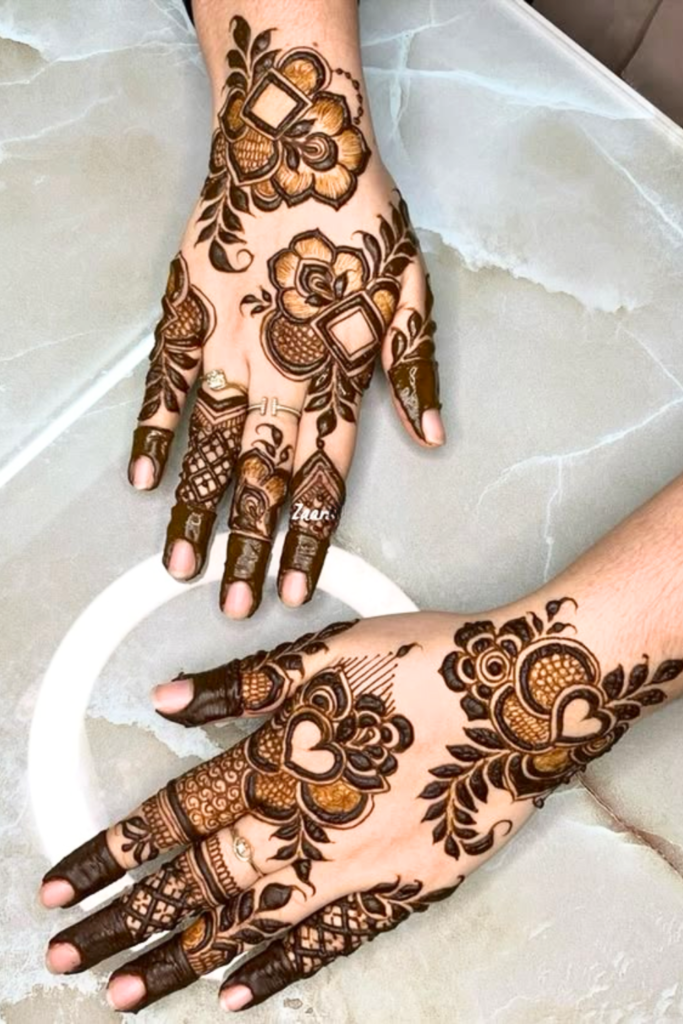
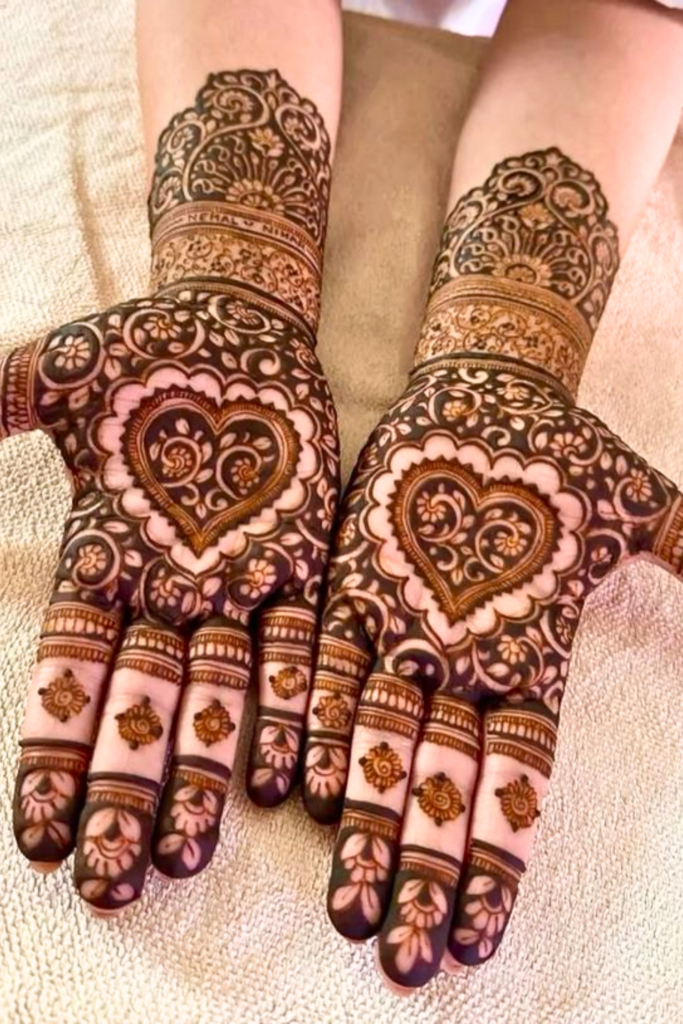
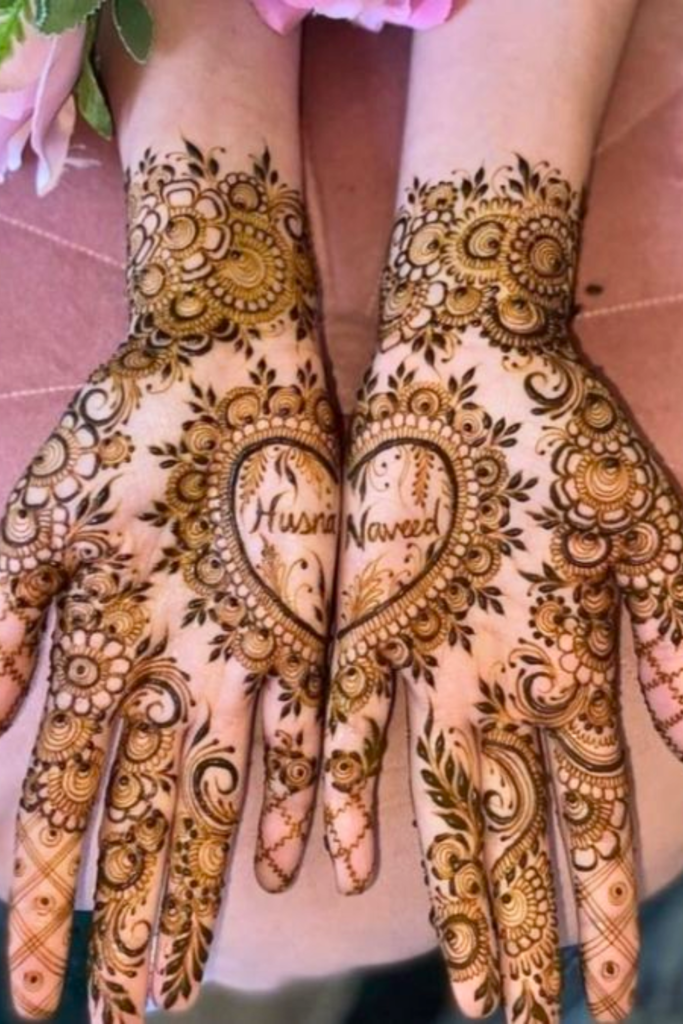
Bridal Heart Design: The most elaborate form, combining multiple hearts with peacocks, paisleys, and flowers across the hands and forearms. Often personalised with the couple’s names or initials hidden within the design.
Occasion-Specific Ideas
Weddings
- Features large heart motifs combined with peacocks, paisleys, and lotus blossoms for a full bridal composition.
- Hide the groom’s initials or name inside one of the hearts for a romantic, personalised touch.
- Extend the design from the fingertips up to the forearm for a grand, traditional bridal look.
- Use fine detailing and layered patterns within the hearts to reflect the significance of the occasion.
Festivals (Eid, Diwali, Teej)
- Choose a single large floral heart on the back of the hand as the centrepiece.
- Add delicate vines, leaves, and small accent motifs on the fingers to complement the main design.
- Keep the overall design celebratory yet refined, festive without being overly elaborate.
- Opt for bold, dark henna for maximum colour payoff during celebrations.
Valentine’s Day
- Apply paired hearts on both hands as a symbol of mutual love.
- Try a heart pierced by an arrow on the inner wrist for a classic romantic look.
- Create interlocked hearts to represent two people joined together.
- Add your partner’s initials within a heart for a meaningful, personal touch.
- A trail of small hearts along the fingers is playful, sweet, and quick to apply.
Casual Everyday Wear
- A single small heart on the ring finger is subtle, stylish, and always appropriate.
- A minimalist heart outline on the inner wrist works like a delicate piece of jewellery.
- A tiny heart at the base of the thumb is understated yet charming.
- Keep lines clean and spacing open for a modern, effortless everyday look.
Placement Guide
The palm is the most traditional surface for heart mehndi, while the back of the hand is ideal for larger, more decorative compositions. The inner wrist suits smaller, intimate designs, and tiny hearts along the fingers offer a modern, minimalist look. For bridal mehndi, the feet and ankles are equally important canvases.
Application Tips
Begin with high-quality natural henna paste and ensure the skin is clean and dry before application. Practise the design on paper first to build confidence, and use a fine-tipped cone for precise lines. Once applied, allow the mehndi to dry fully, then seal it with a lemon and sugar mixture to deepen the colour. Leaving it on for at least four to six hours overnight is best. Scrape the dried henna away rather than washing it off, and avoid soap and water for twelve hours to allow the stain to fully develop.
Modern Trends
Minimalist heart mehndi, defined by clean lines and deliberate simplicity, is particularly popular among younger generations. Personalised designs featuring names, initials, or meaningful dates within the heart have become a wedding staple. Glitter and gold leaf accents add contemporary glamour, while Indo-Arabic fusion designs blend bold floral patterns with fine Indian detailing to stunning effect.
Conclusion
Heart mehndi is more than decoration; it is a language of love expressed through art. Whether you are a bride preparing for her wedding day, celebrating a cherished festival, or simply adorning your hands for the joy of it, heart mehndi offers beauty that is both timeless and deeply personal.
May your mehndi always be dark, your designs always be beautiful, and your heart always be full of love.