
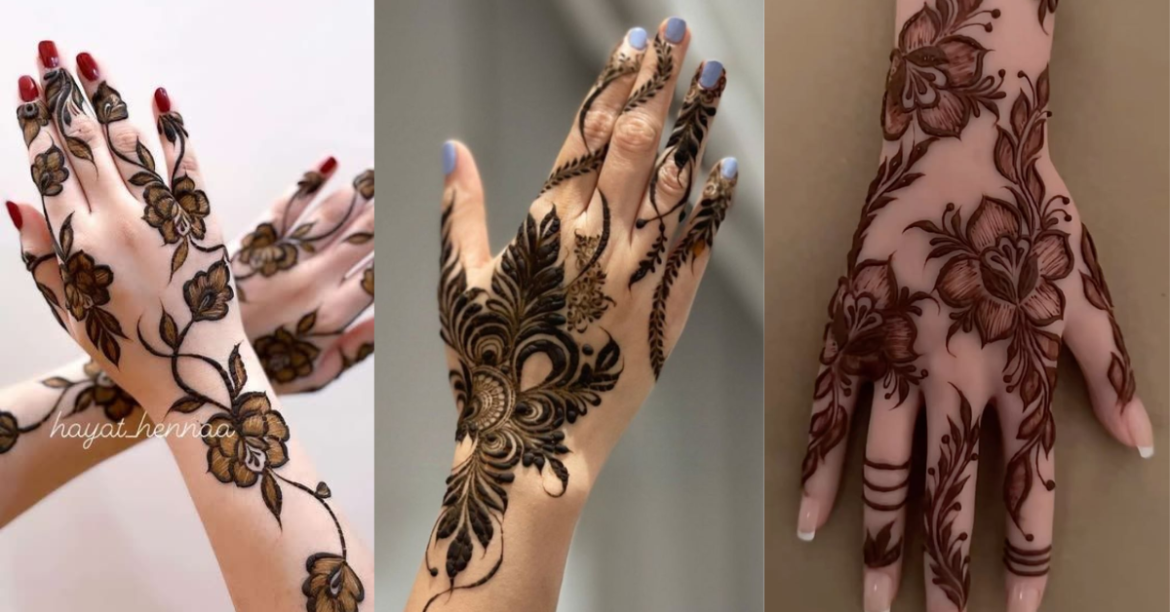
Mehndi has been an inseparable part of South Asian and Middle Eastern culture for centuries, adorning the hands and feet of women during weddings, festivals, and joyful celebrations. Among the many styles that have flourished through generations, the Dubai rose mehndi design stands out as one of the most graceful and sought-after patterns in contemporary bridal and festive art. Rooted deeply in tradition yet continuously evolving, this style captures the imagination of brides, artists, and henna enthusiasts across Pakistan, India, and beyond.
What Is Dubai Rose Mehndi Design?
The term “Dubai rose” refers to a mehndi application style that emphasizes deep, full coverage paired with detailed floral and leafy motifs, particularly rose-inspired patterns that bloom across the palm and the back of the hand. The word “rose” itself evokes the essence of roses, soft, layered, and richly detailed, which defines the entire character of this design. Unlike minimalist or Arabic-style mehndi, Dubai rose mehndi is bold in its ambition, covering broad areas of skin with precision-crafted elements that together form a breathtaking whole.
The Signature Layering Technique
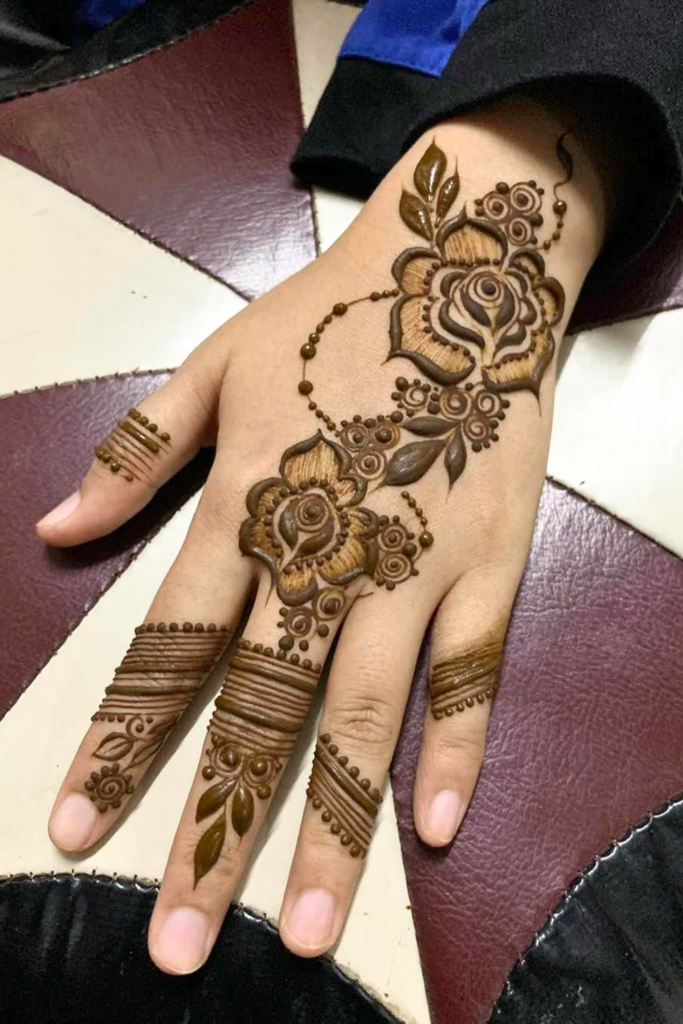
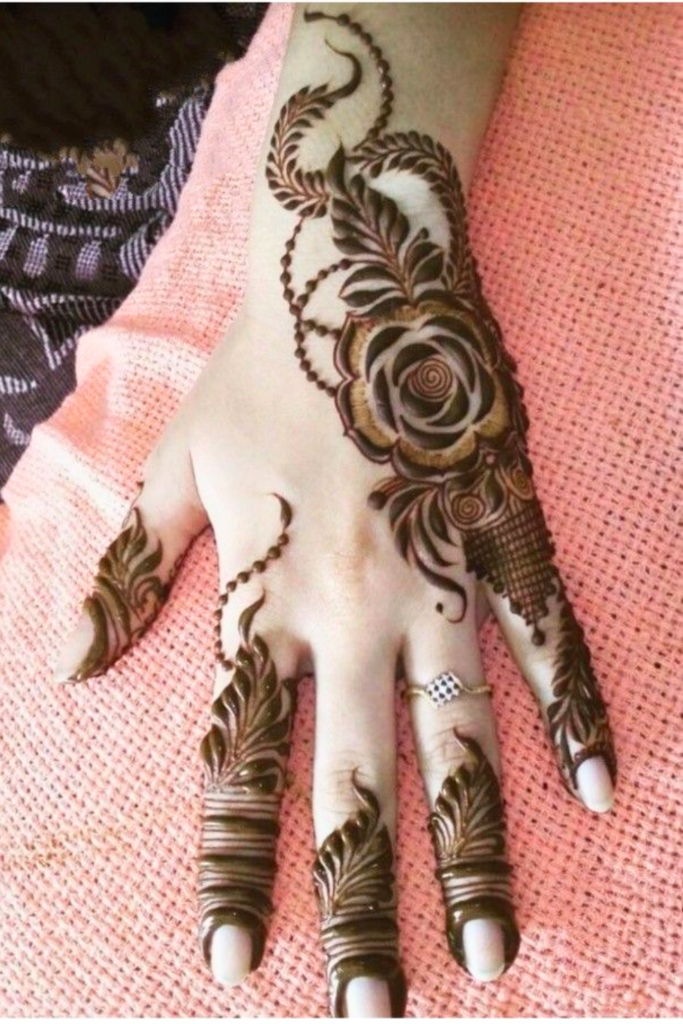
One of the most distinctive features of the Dubai rose mehndi is its layering technique. Artists begin by outlining large floral clusters, usually centered on the palm or the back of the hand, and then work outward with trailing vines, geometric borders, and intricate filling work that leaves virtually no blank space. This dense, immersive quality is what gives the Dubai rose style its signature appearance, a look that is simultaneously structured and organic, traditional yet modern. The skill required to maintain balance within such a detailed pattern is what separates a truly gifted mehndi artist from an ordinary one.
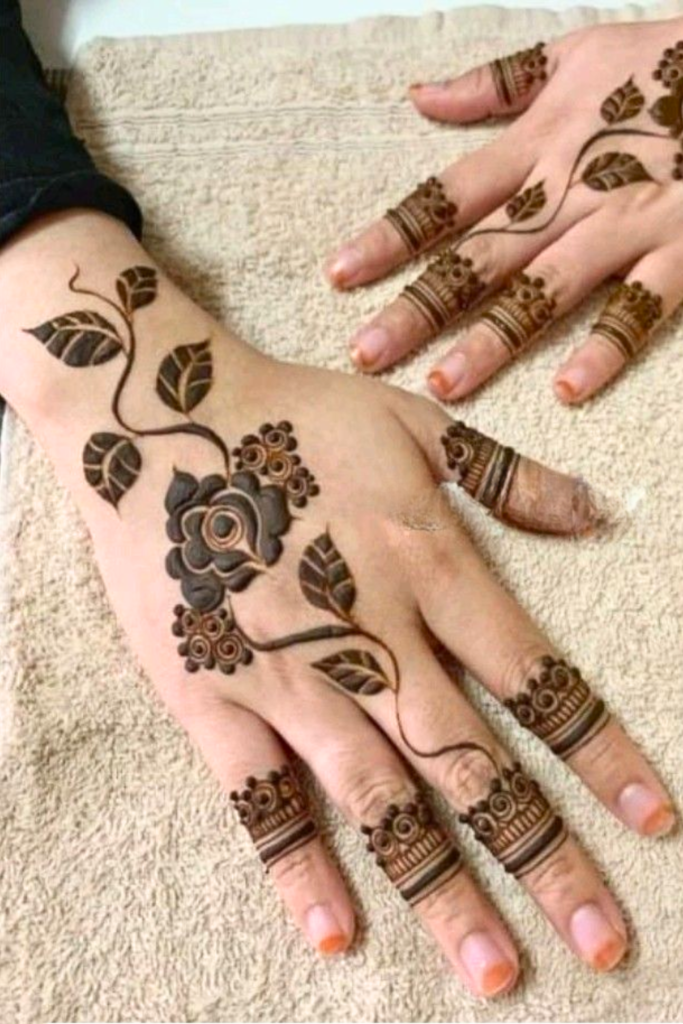
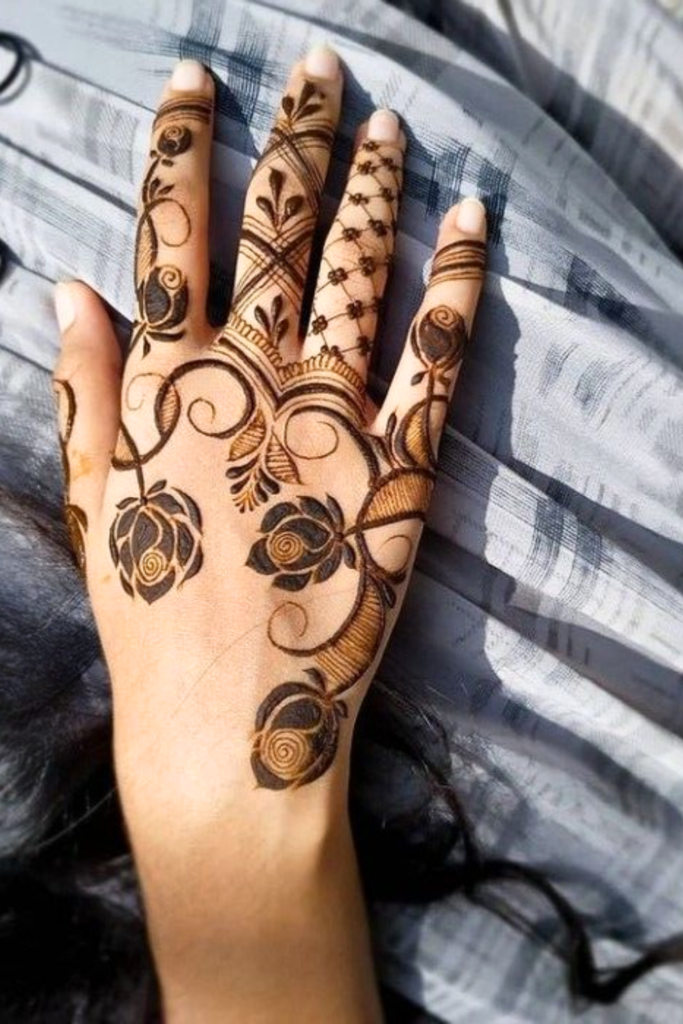
The core pattern identity of Dubai rose mehndi design is built around the following foundational points:
Central Rose Bloom: Every Dubai rose composition begins with a large, fully opened rose at the center of the palm or the back of the hand. The petals are drawn in concentric layers, each slightly overlapping the next, creating a three-dimensional illusion of depth and softness that is the hallmark of this style.
Dense Fill Work: Unlike open or lace-style mehndi, duba rosei demands that every gap between motifs be filled with fine dots, crosshatching, seed patterns, or micro-leaf clusters. This dense, wall-to-wall coverage is what gives the design its distinctive “dubai” (deep/submerged) quality.
Trailing Vine Network: Slender, curving vines extend outward from the central rose, branching naturally across the fingers, wrist, and forearm. These vines serve as the structural skeleton of the design, connecting each motif into a single cohesive composition.
Leaf and Petal Borders: Along the outer edges of the design, rows of pointed leaves and half-open petals form a natural border that frames the entire pattern without rigid geometric lines, keeping the overall look organic and flowing.
Fingertip Detailing: Each fingertip is treated as its own small canvas, typically featuring a miniature rose bud, a teardrop paisley, or a spiral motif capped with fine linework that draws the eye all the way to the end of the hand.
Key Pattern Elements Used in Dubai Rose Mehndi
Every accomplished mehndi artist working in the Dubai rose style draws upon a specific vocabulary of pattern elements. These recurring components give the design its recognisable identity while allowing room for individual artistic expression:
Dubai Rose Mehndi in Bridal Celebrations
Bridal mehndi ceremonies, known as mehndi raat or mehndi night, are the most common occasions where the Dubai rose mehndi design is applied with great passion and cultural pride. Brides prefer this style because it photographs beautifully and holds color exceptionally well when a quality henna paste is used.
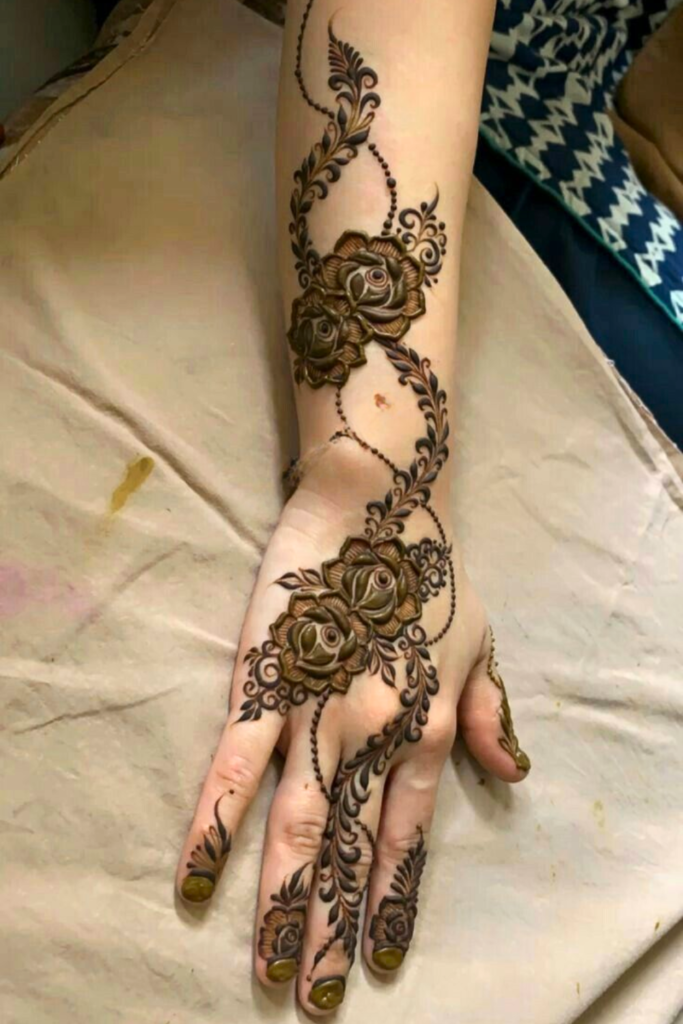
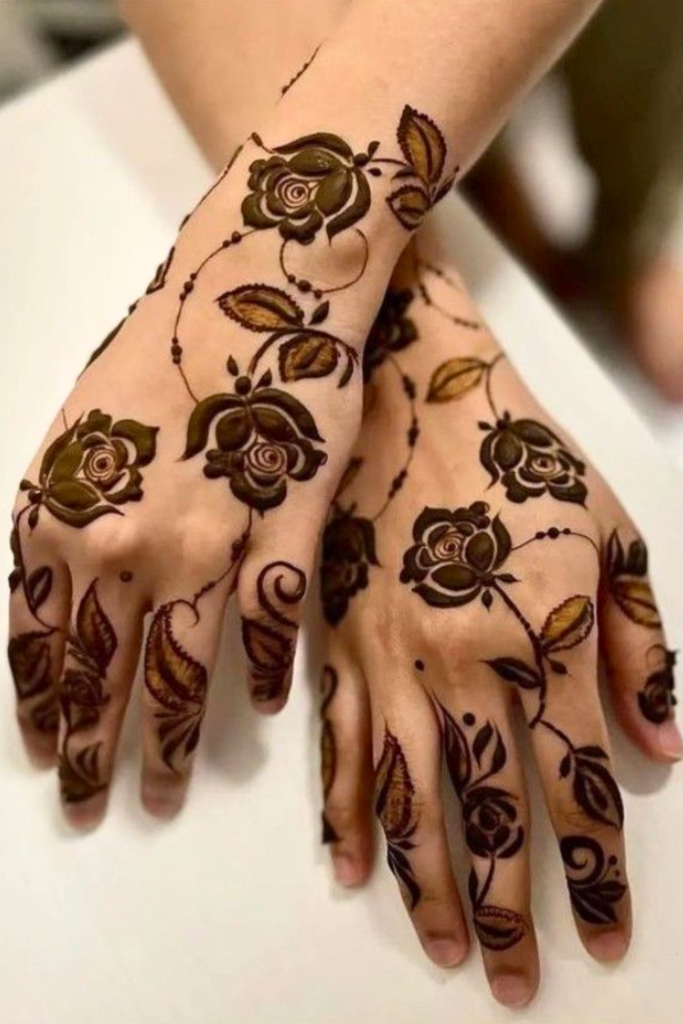
The deep stain left behind by natural henna complements the intricate detailing of the Dubai rose pattern, making every curve and petal visible against the skin for days after the celebration. It is not uncommon for a bride’s mehndi session to last three to four hours, as both hands, wrists, and forearms are covered with elaborate rose-centered compositions.
The Symbolism of the Rose Motif
The rose motif within the Dubai rose mehndi carries rich symbolic meaning. Roses in mehndi art traditionally represent love, beauty, and new beginnings, themes that resonate profoundly at weddings and engagements. Artists often personalize the design by incorporating the initials of the bride and groom within the florals, adding a sentimental layer to an already meaningful tradition. Hidden names, hearts, and miniature portraits are common surprises embedded within the dense patterning of a dubai rose composition, making every design a unique and personal piece of wearable art.
Global Popularity and Modern Influence
In recent years, the popularity of Dubai mehndi design has expanded well beyond the subcontinent. Pakistani and Indian diaspora communities around the world celebrate their cultural roots through mehndi, and social media platforms have given this art form a truly global audience. Mehndi artists now showcase their Dubai rose work to millions of followers, inspiring women internationally to embrace this style for engagements, Eid celebrations, and even non-traditional events such as baby showers and milestone birthdays.
Application Process and Aftercare Tips
The application process for Dubai rose mehndi requires both skill and patience. Once applied, the paste must be left on the skin for at least four to six hours, and many brides choose to sleep with the dried paste still in place to allow the stain to develop fully. Applying a mixture of lemon juice and sugar over the dried paste before removal is a well-known technique among experienced artists, as it encourages a deeper and more vibrant result. After removal, avoiding water and direct heat for several hours helps the stain oxidize gradually and reach its richest, darkest hue.
Conclusion
Whether applied on a bride’s hands the night before her wedding or chosen by a young woman celebrating Eid with her family, the Dubai rose mehndi remains a living testament to the enduring beauty of henna artistry. It bridges the gap between ancestral craft and modern aesthetic, honoring the past while continuing to inspire generations of artists and admirers who see in every rose petal a story worth telling.