
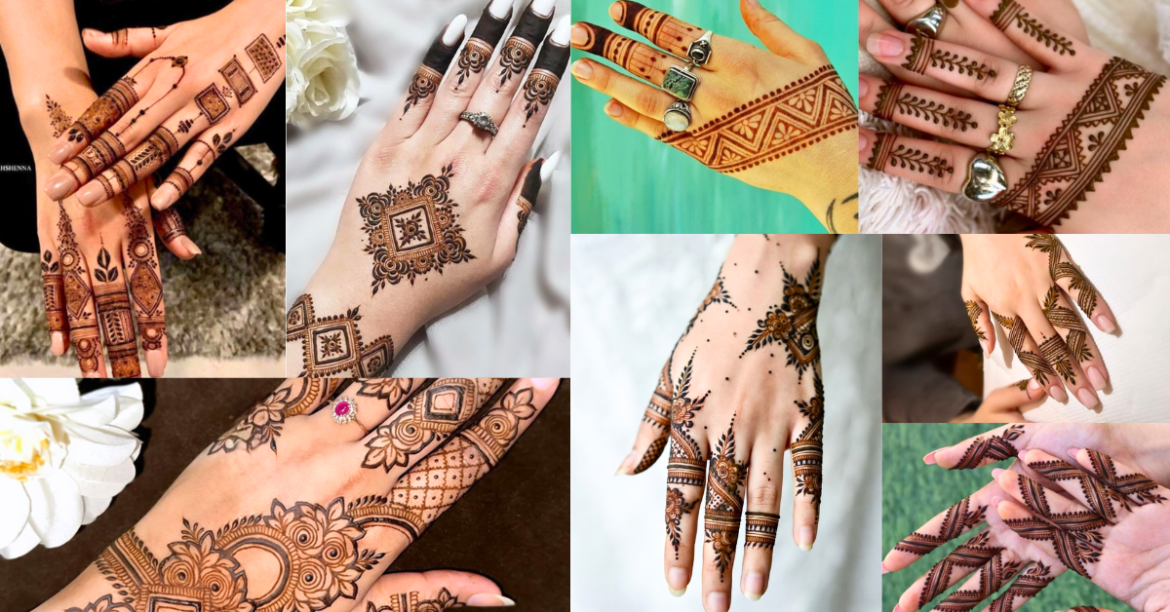
Mehndi has been an inseparable part of South Asian, Middle Eastern, and North African cultures for centuries. Among its many styles and patterns, the zigzag mehndi design holds a special place for its bold geometry, clean structure, and striking visual appeal. Whether applied for bridal occasions, festivals, or casual adornment, this pattern continues to captivate artists and enthusiasts alike with its refined and expressive character.
What Is a Zigzag Mehndi Design?
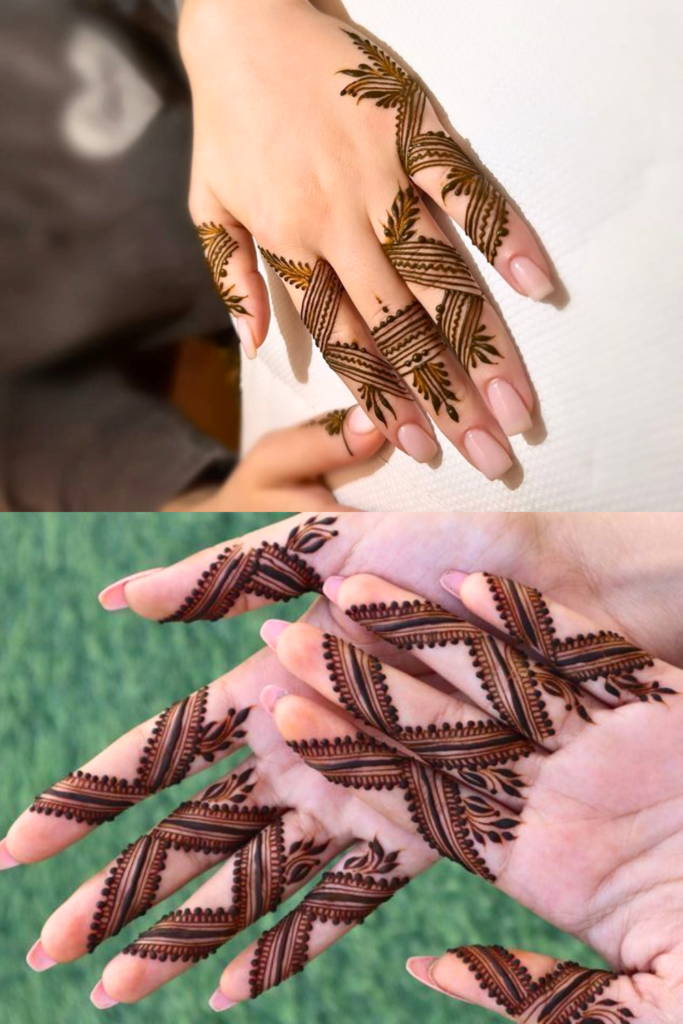
A zigzag mehndi design is a structured henna pattern that combines sharp, angular zigzag lines with enclosed box-shaped compartments. These two elements work together to create a rhythmic, interlocking layout that fills the hand, wrist, or foot with a sense of order and movement. The zigzag lines serve as borders or dividers, while the box shapes house intricate inner fillings. The result is a design that feels both geometric and ornamental at the same time.
Main Patterns of Zigzag Mehndi Design
Understanding the core elements of this style is essential for both artists and admirers. Each pattern point contributes a distinct layer to the overall composition, and together they form the visual language that defines a well-executed zigzag mehndi design.
- The Zigzag Baseline
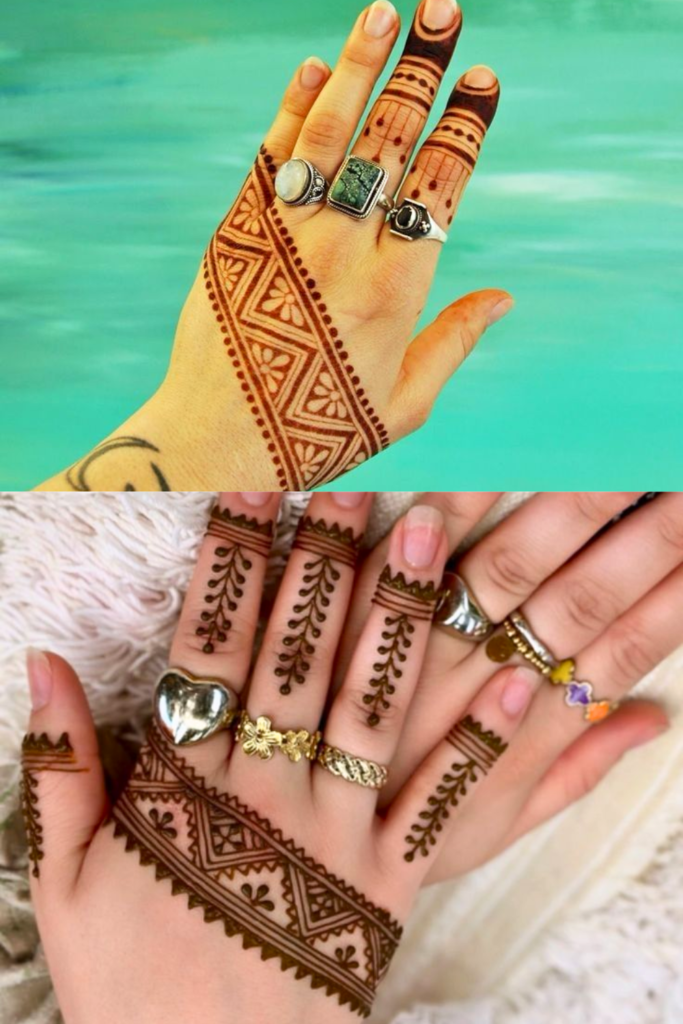
The zigzag baseline is the foundational line from which the entire design is built. This sharp, angular line travels across the hand, wrist, or foot and establishes the structural rhythm of the pattern. The degree of its angle and the spacing between its peaks and valleys determine whether the final composition reads as bold and dramatic or light and airy. Without a confident and well-proportioned baseline, the rest of the design loses its direction and coherence.
- The Box Compartment Structure
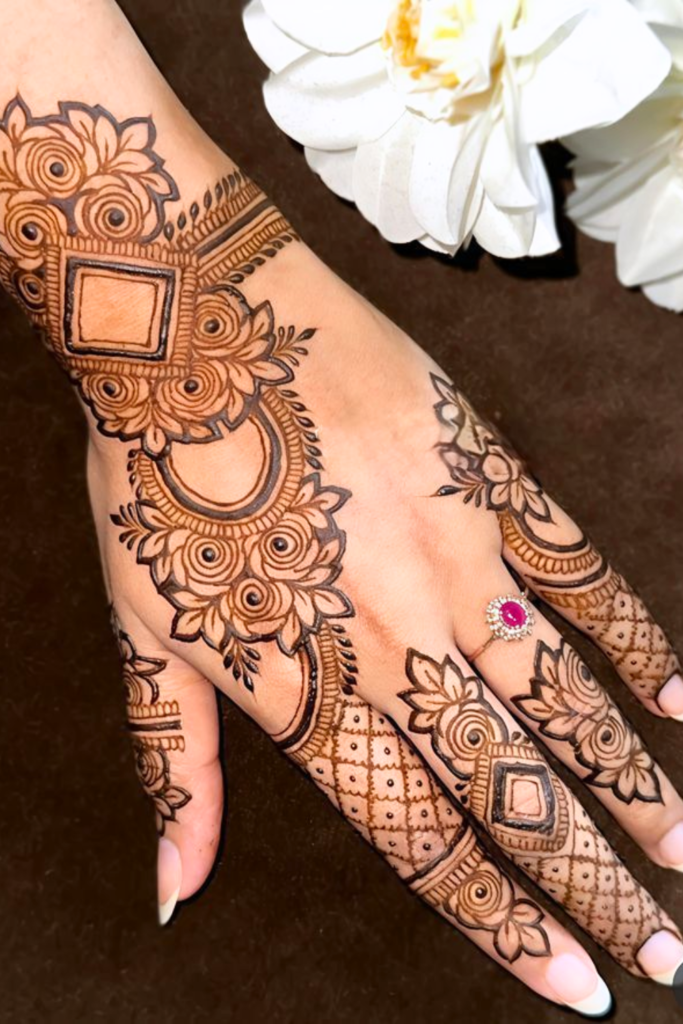
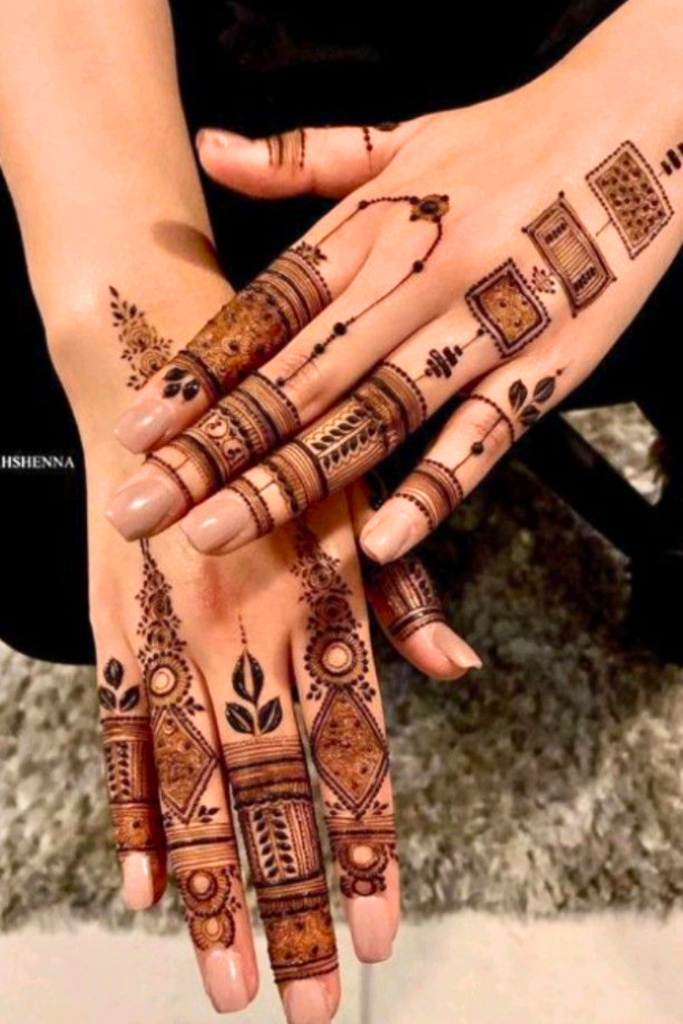
Boxes are formed by enclosing sections between the zigzag lines, creating a series of individual panels that serve as decorative frames. The size and proportion of these compartments directly influence how intricate or minimal the overall pattern appears. Smaller, tighter boxes allow for dense geometric detail, while larger compartments provide space for more elaborate inner motifs. This structural element is what distinguishes the zigzag box mehndi design from other angular henna styles.
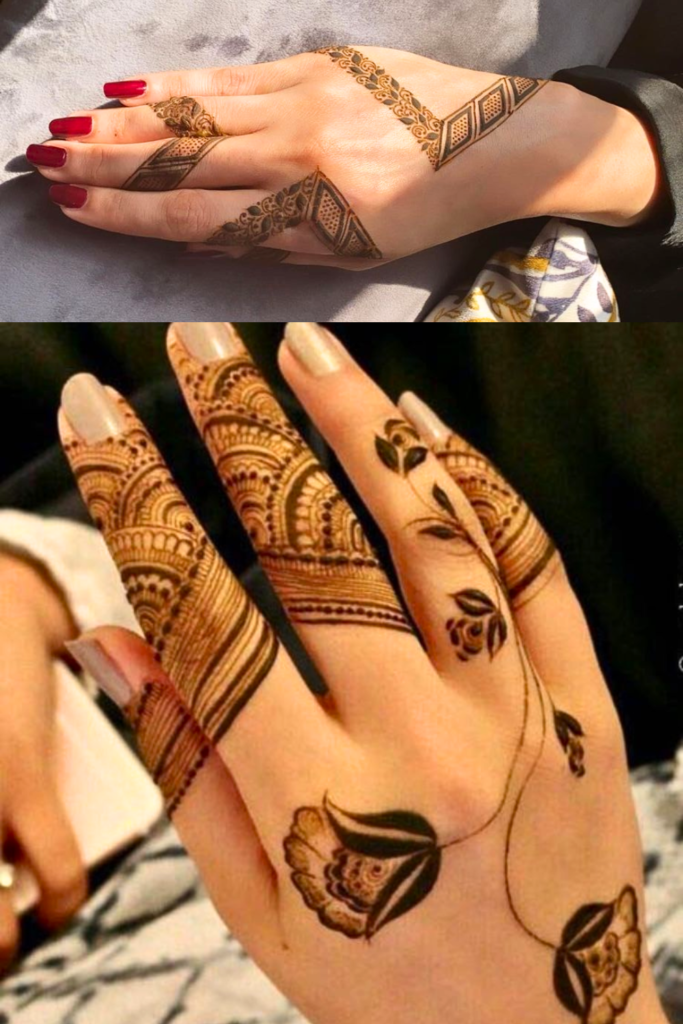
Source: Pinterest
- Inner Fill Motifs
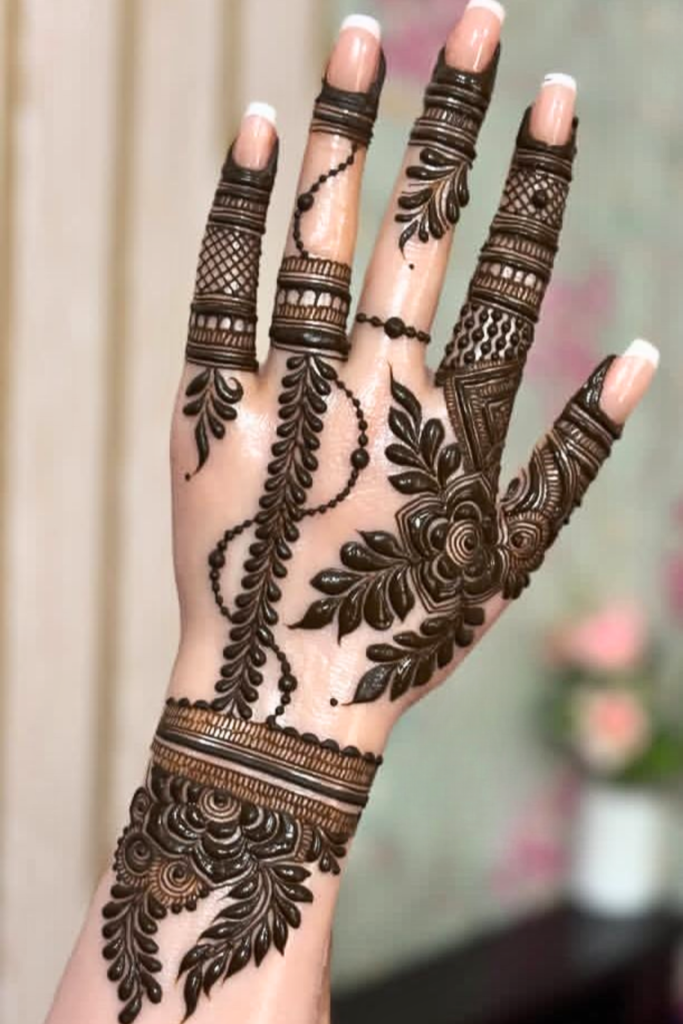
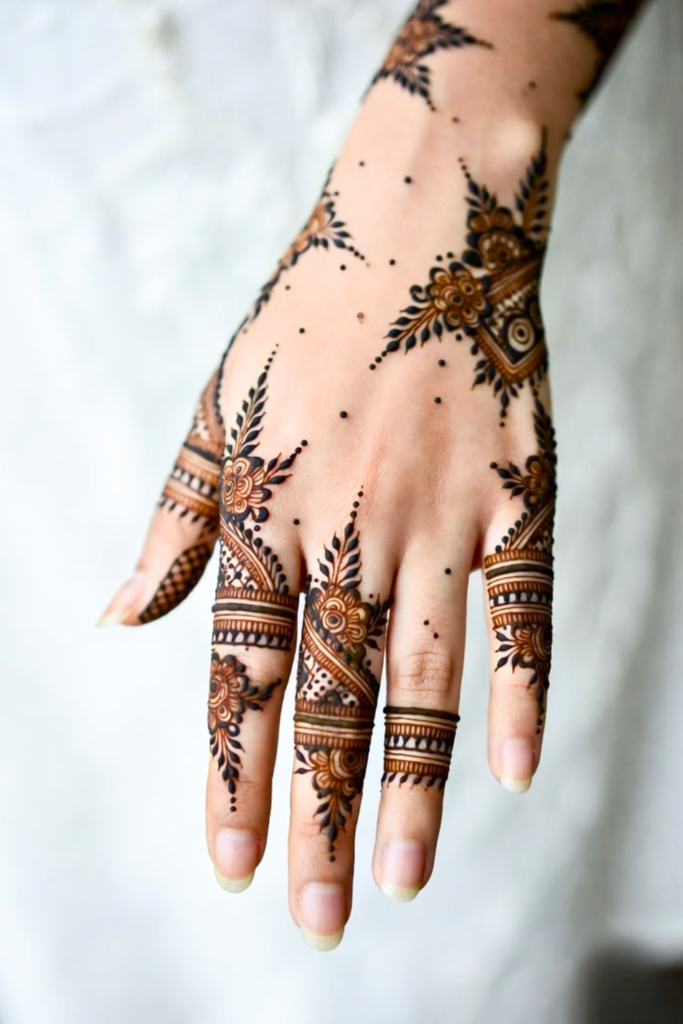
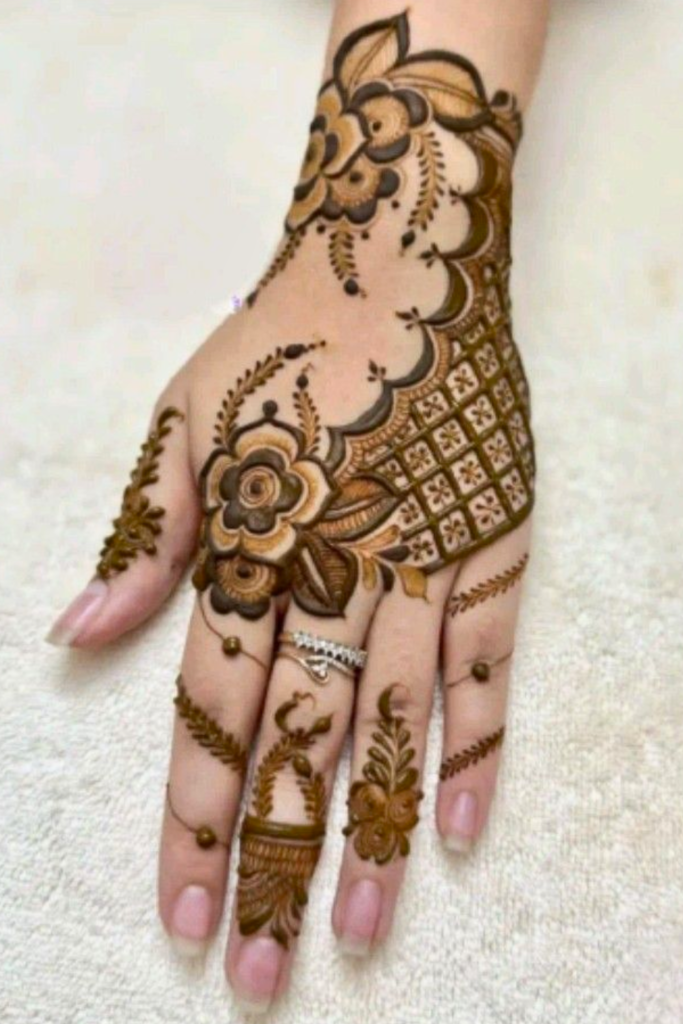
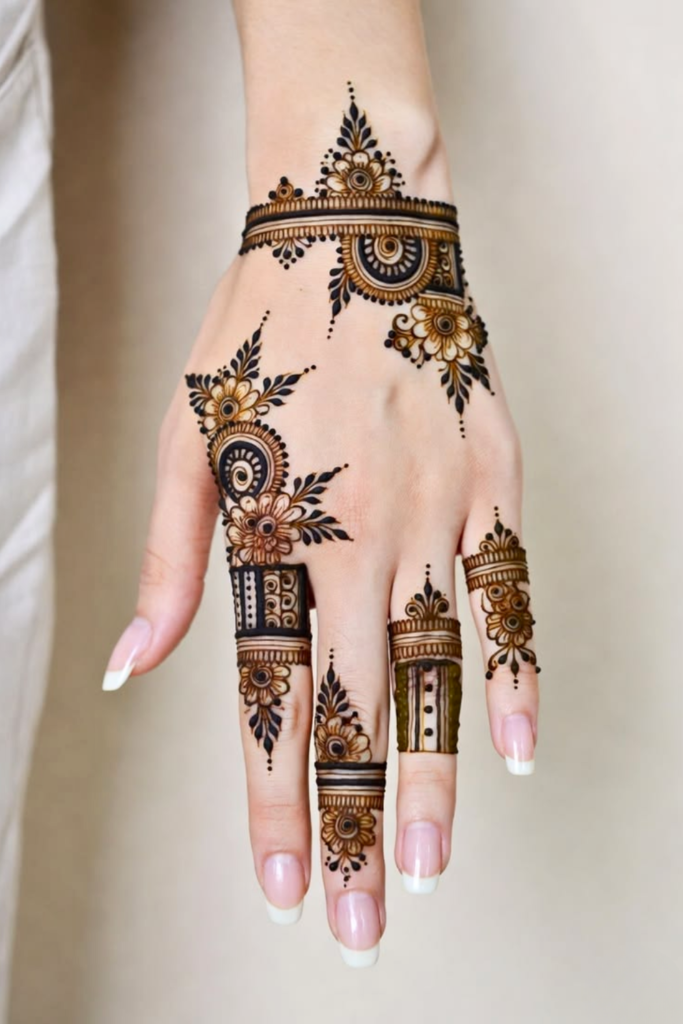
The inner fill motif is arguably the most expressive element within the pattern. Each compartment is filled with a chosen motif that adds texture, depth, and personality to the design. Common fill choices include fine diagonal hatching, miniature floral clusters, repeating dot formations, tiny paisleys, and chevron sub-lines. The selection of fill gives each box a unique character while maintaining visual harmony across the full composition.
- Precision Bordering Lines
Bold bordering lines outline the edges of each compartment with deliberate precision. These borders serve to separate individual boxes cleanly, enhance the geometric structure of the design, and create a sense of depth that draws the eye inward. The thickness and consistency of these outlines are defining factors in the overall quality of the design. Uniform bordering is what gives zigzag box mehndi its signature, refined and structured finish.
Source: Pinterest
- Finger Extension Patterns
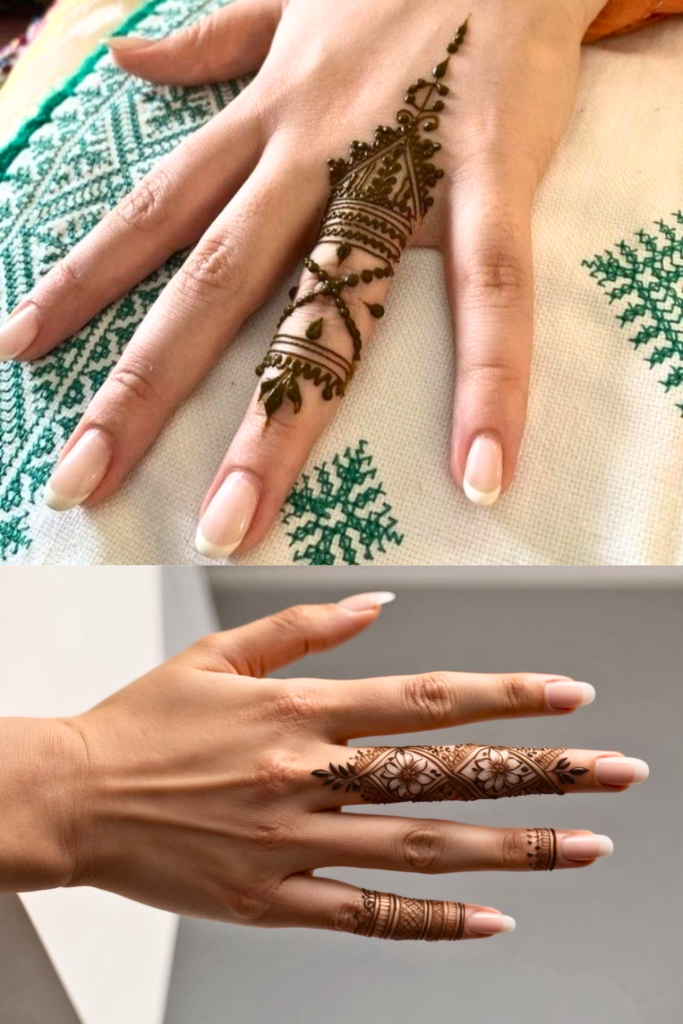
Finger extensions carry the design beyond the palm and into the fingers, creating a unified and complete appearance across the entire hand. These extensions appear as full geometric bands wrapping each finger, or as tapered half-box shapes that frame the finger sides without overwhelming the knuckles. Incorporating finger patterns into a zigzag box mehndi design is what transforms a partial decoration into a fully finished hand art composition.
- The Geometric Wrist Band
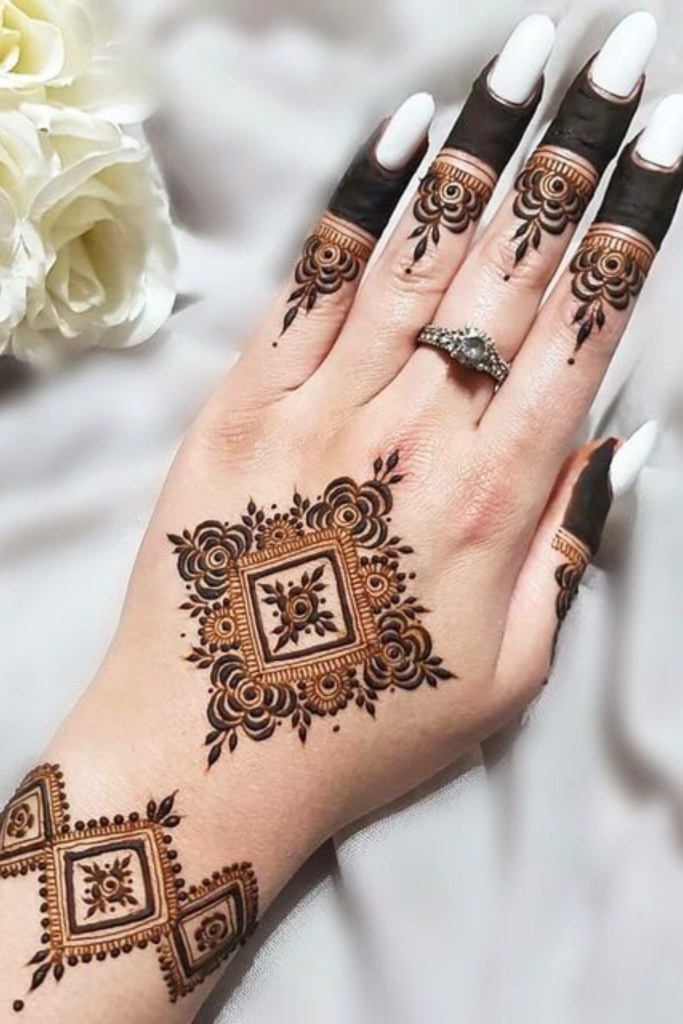
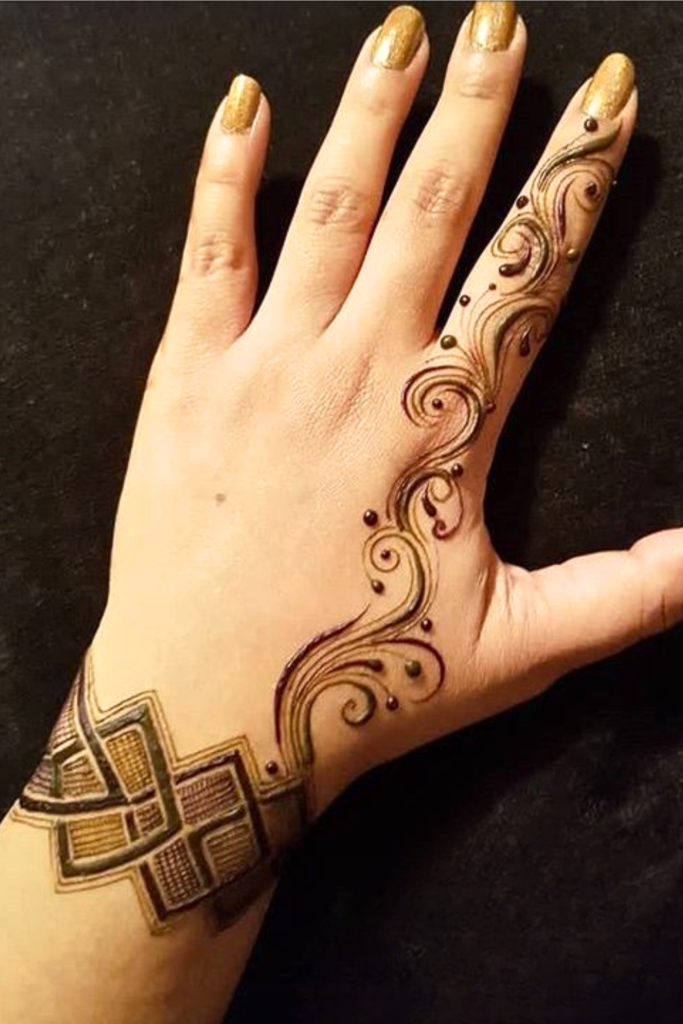
The wristband acts as the anchoring foundation of the entire design. Constructed from zigzag lines and enclosed box forms, it marks the lower boundary of the pattern and provides visual balance to the upper hand composition. A well-designed wrist band not only completes the look but also serves as a natural starting point for forearm extensions in bridal or elaborate festival applications.
Placement and Occasion
Zigzag box mehndi designs are versatile enough to be worn across a variety of occasions. For bridal mehndi, the pattern is often extended from the fingertips all the way to the elbow, combined with floral and vine motifs to soften the geometric framework. For festivals such as Eid, Diwali, or Teej, a compact version applied to the palm or back of the hand is equally impactful. The design also works beautifully as a standalone wrist band for those seeking a minimal yet refined look.
Tips for a Flawless Application
Achieving a clean zigzag box mehndi design requires steady hands, a quality henna cone, and a clear plan before application begins. Lightly sketching the outline with an eyeliner pencil before tracing with henna ensures accuracy in geometric layouts. Consistent cone pressure guarantees uniform line thickness throughout. After application, sealing the dried paste with a sugar-lemon mixture deepens the stain significantly.
Conclusion
The zigzag box mehndi design is more than a decorative pattern. It is an expression of mathematical beauty rendered in wearable art. Its balance of structure and detail, geometry and grace, makes it one of the most enduring and admired styles in contemporary and traditional mehndi artistry alike.