
A timeless tradition woven into the fabric of celebration
In the grand tapestry of Pakistani wedding culture, few traditions carry the weight of meaning and beauty that Pakistani bridal mehndi does. Applied to the hands and feet of a bride in the days leading up to her wedding, mehndi, commonly known in the West as henna, is far more than decorative art. It is a ritual, a blessing, and a rite of passage that connects generations of women across centuries of South Asian heritage.
A Celebration Before the Celebration
The mehndi ceremony is an event of tremendous joy. Typically held one to two nights before the wedding, it draws together the bride’s closest family and friends in an evening filled with music, dancing, and laughter. The application of mehndi marks the official beginning of wedding festivities, and the atmosphere is deliberately intimate and festive. Women gather around the bride, traditional songs are sung, and the artist begins the careful, hours-long process of transforming bare skin into an intricate masterpiece.
The Anatomy of a Pakistani Mehndi Design
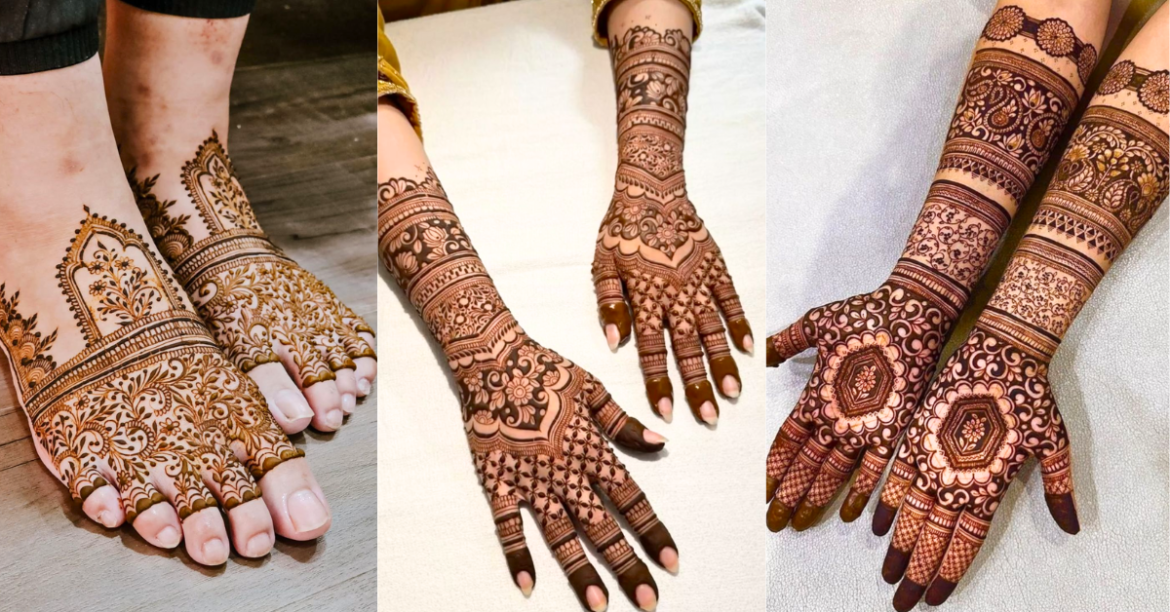
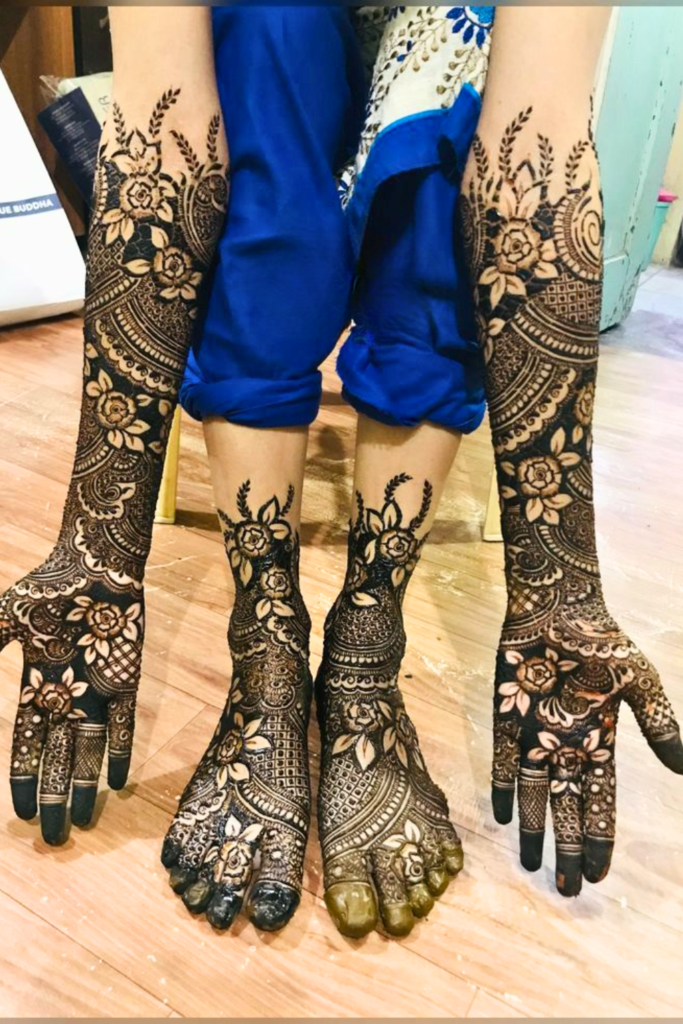
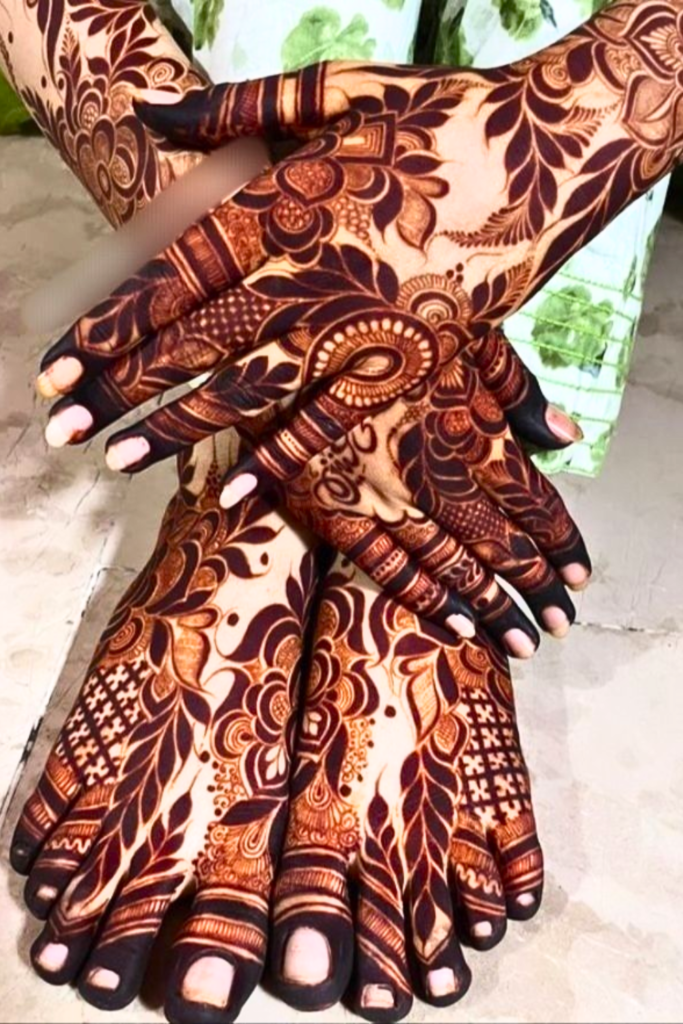
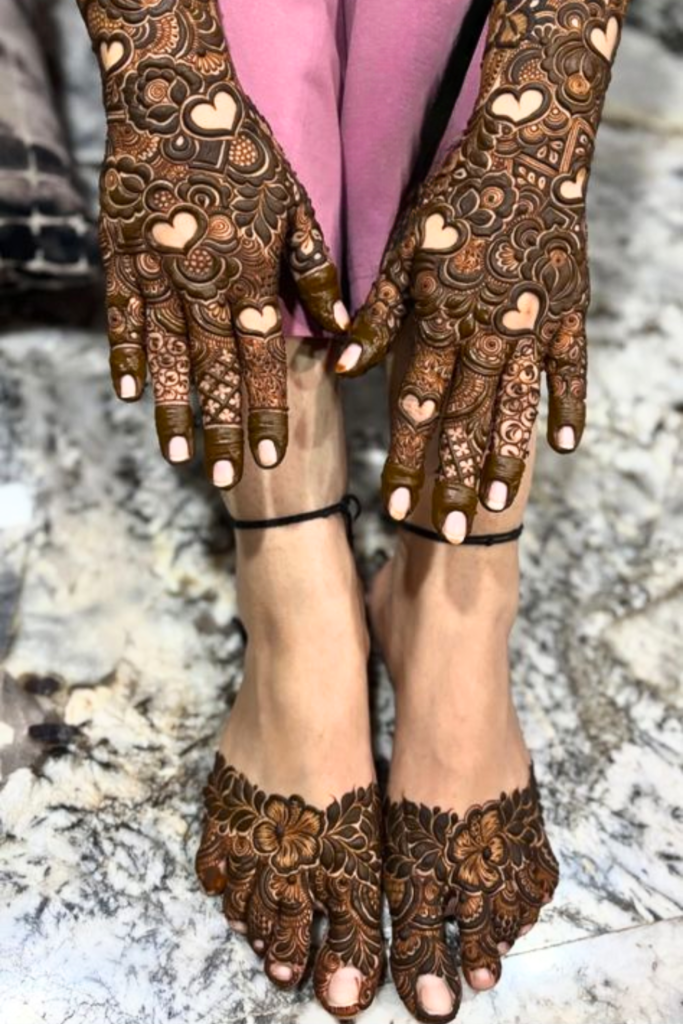
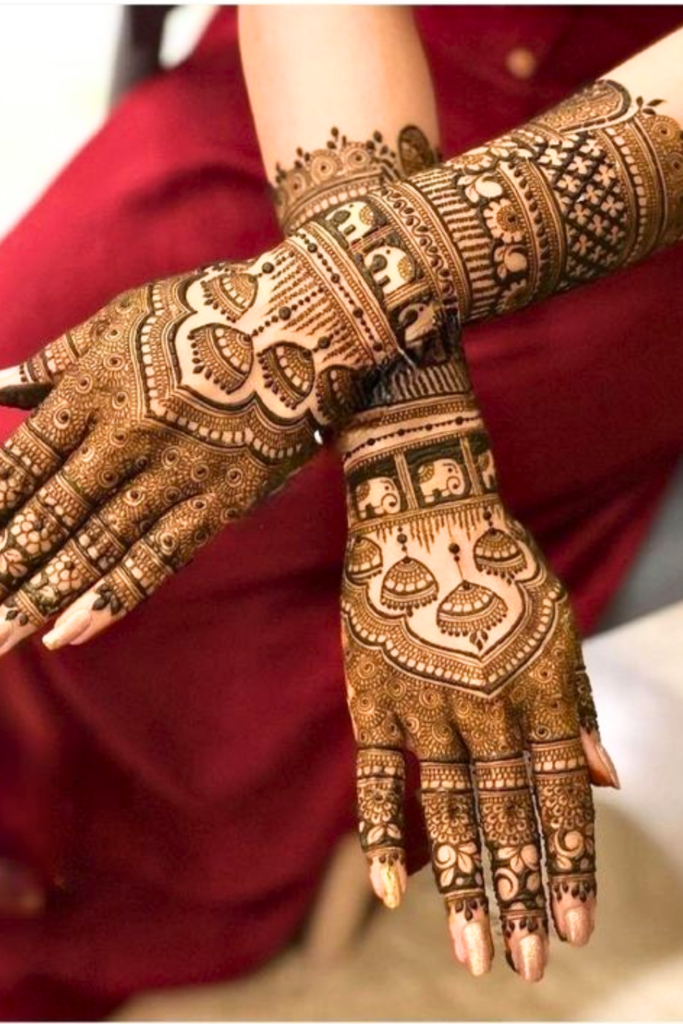
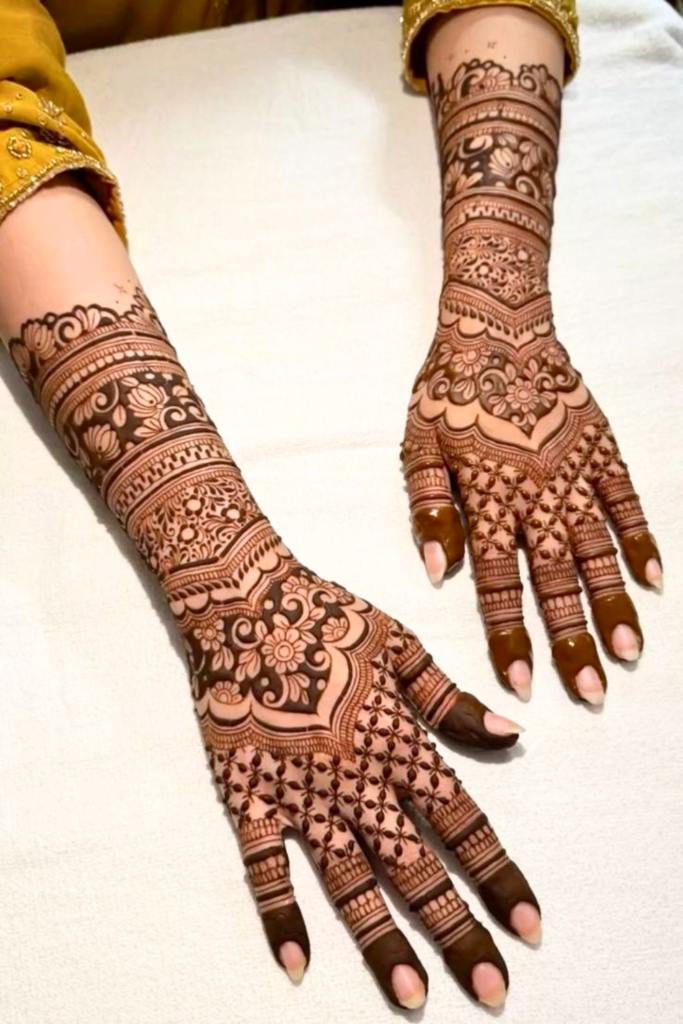
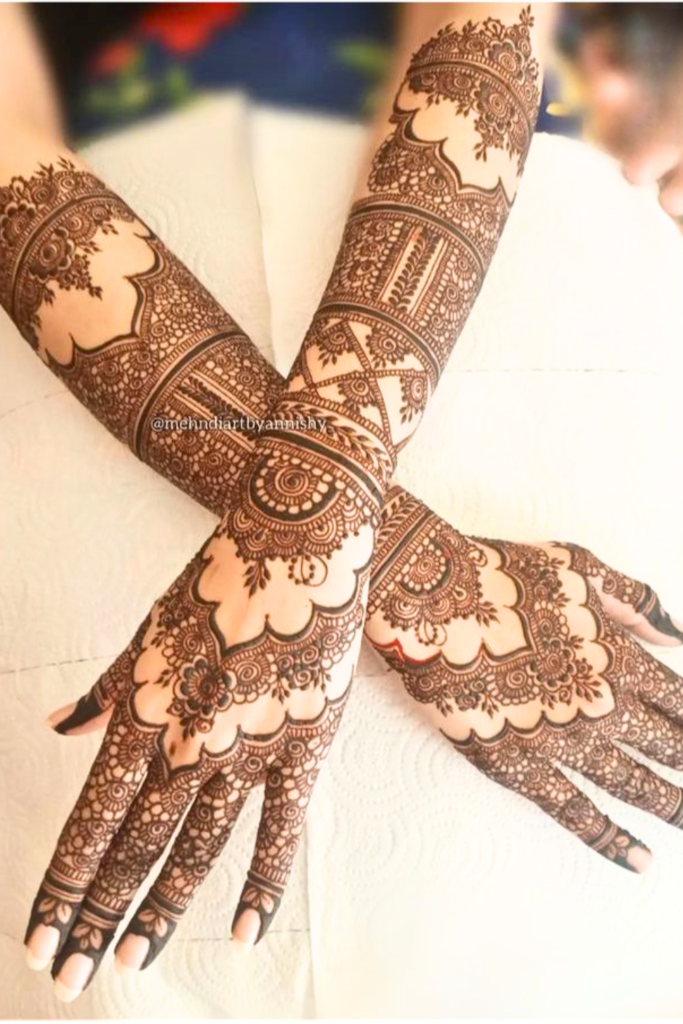
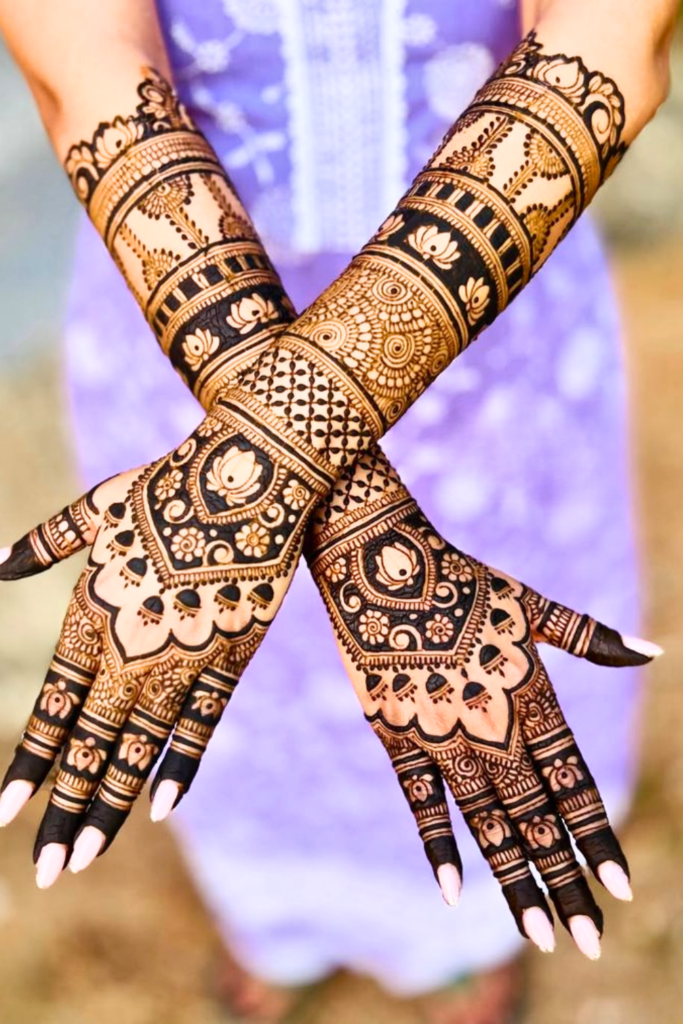
Pakistani bridal mehndi is known for its geometric precision, density, and fine detail. The full arm is covered from fingertip to elbow, while the feet are adorned up to the ankle. Motifs include paisley forms, blooming roses, trailing vines, and stylized peacocks, all centered around a signature palm medallion from which patterns radiate outward.
Front Hand Mehndi Design
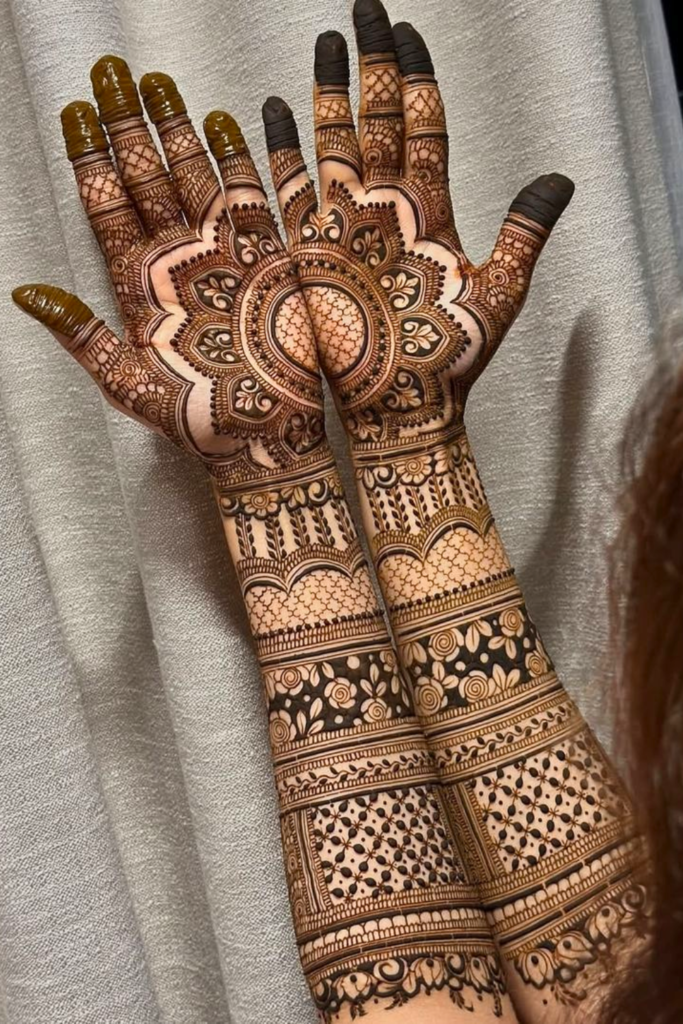
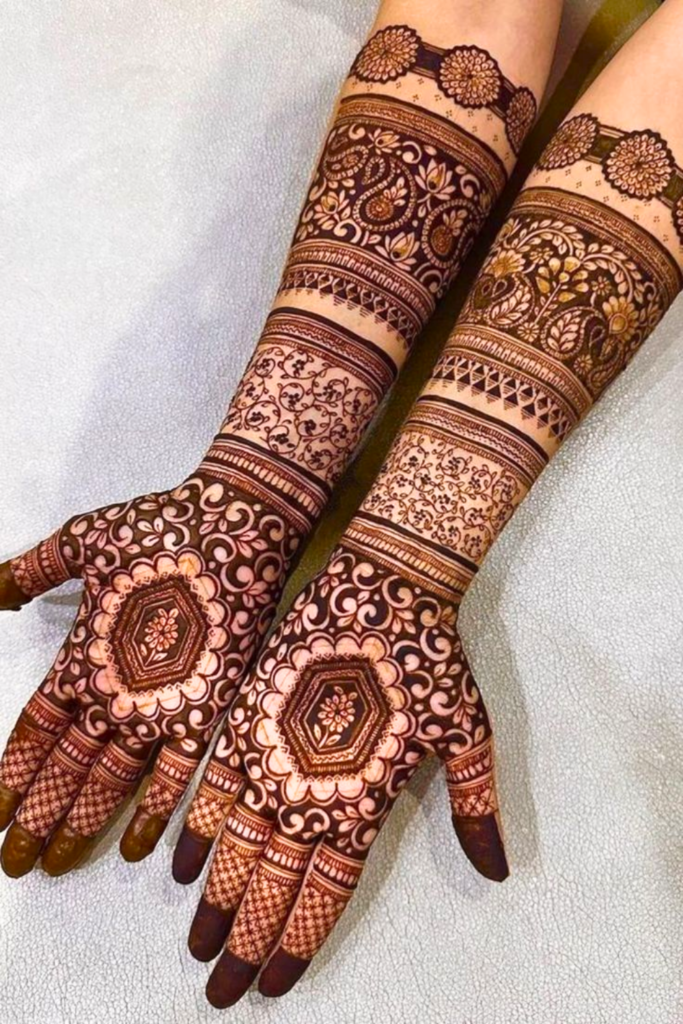
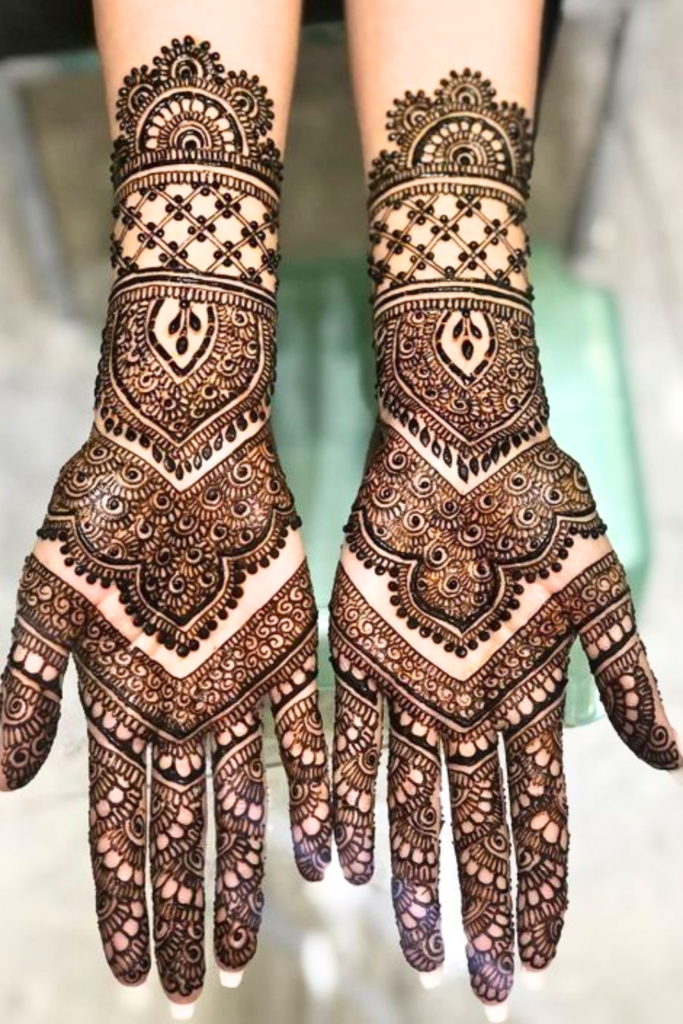
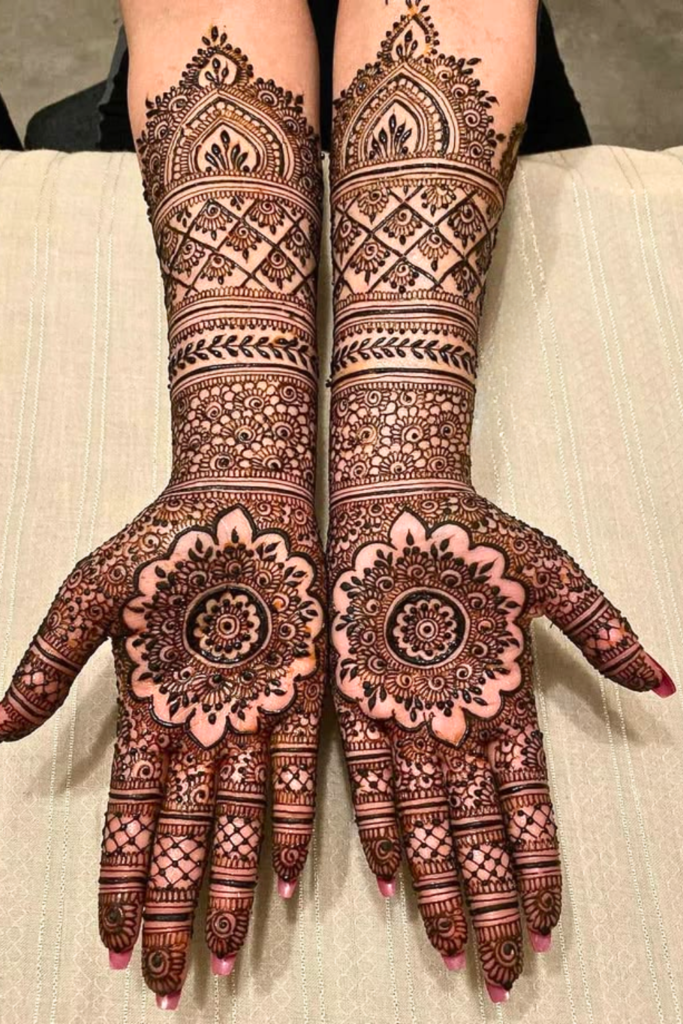
The palm side of the hand is considered the primary canvas and receives the most elaborate attention. A large central medallion dominates the palm, crafted from layered geometric rings, fine latticework, and floral bursts that expand toward the wrist. Delicate vines connect this focal point to an ornate cuff pattern framing the wrist like fine jewelry. Each finger bears its own refined composition of paisley teardrops, petal clusters, and crosshatch patterns running from knuckle to fingertip, finished with darkened tips for a polished, dramatic effect.
Back Hand Mehndi Design
The back of the hand is broader and more visible, making it the ideal showcase for the crown jewel of the entire design. Pakistani bridal artists typically place their most striking motif here: a full-bloom flower, an ornate peacock, or a layered mandala. Fine lines radiate outward toward each finger, often resembling delicate chains or jeweled bands that mimic the traditional haath phool hand ornament. The wrist is styled as a dense decorative cuff that transitions gracefully into the forearm, giving the bridal look its most photographed and memorable visual signature.
Feet Mehndi Design
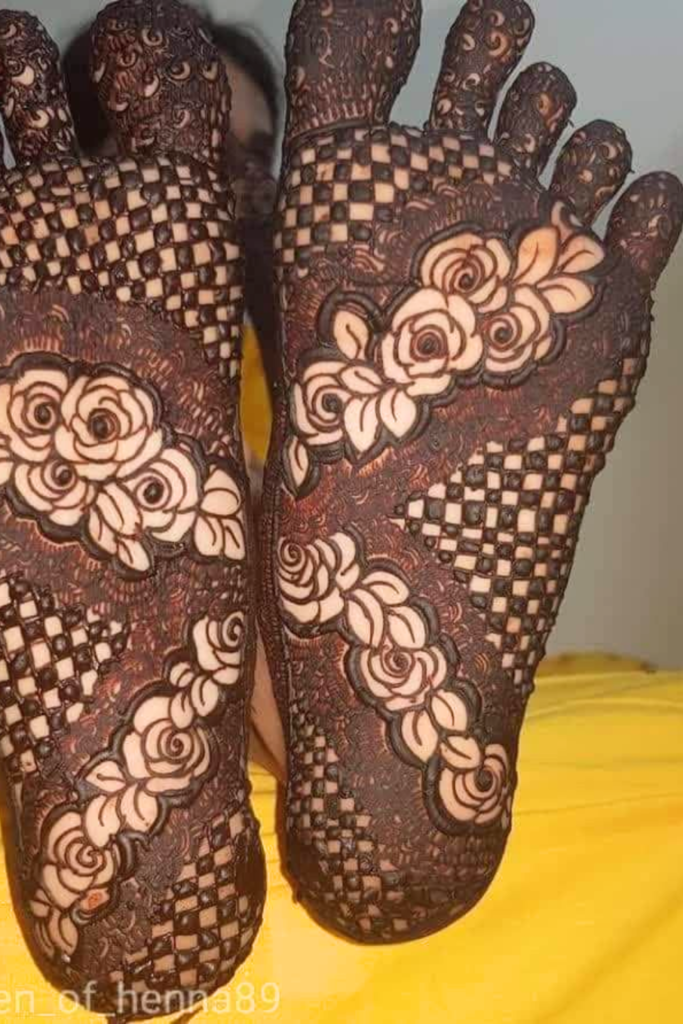
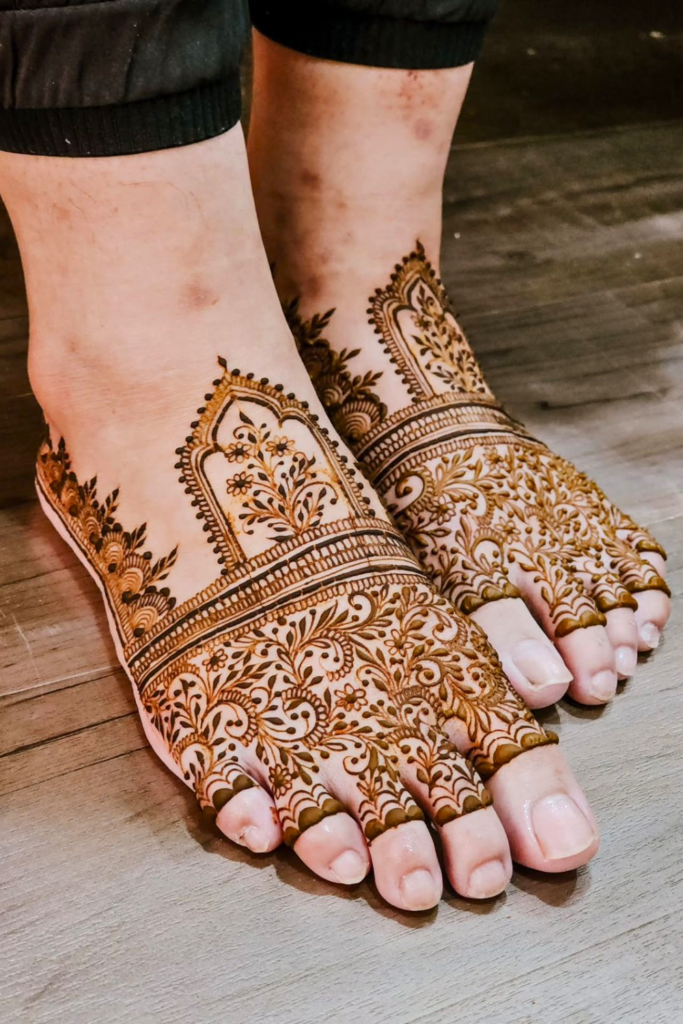
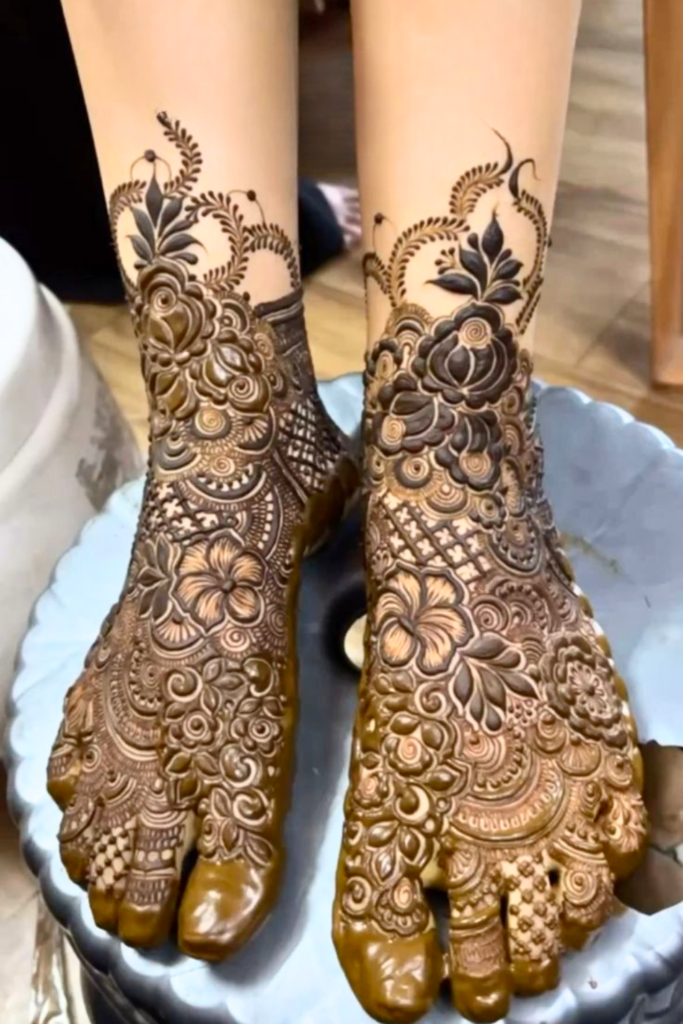
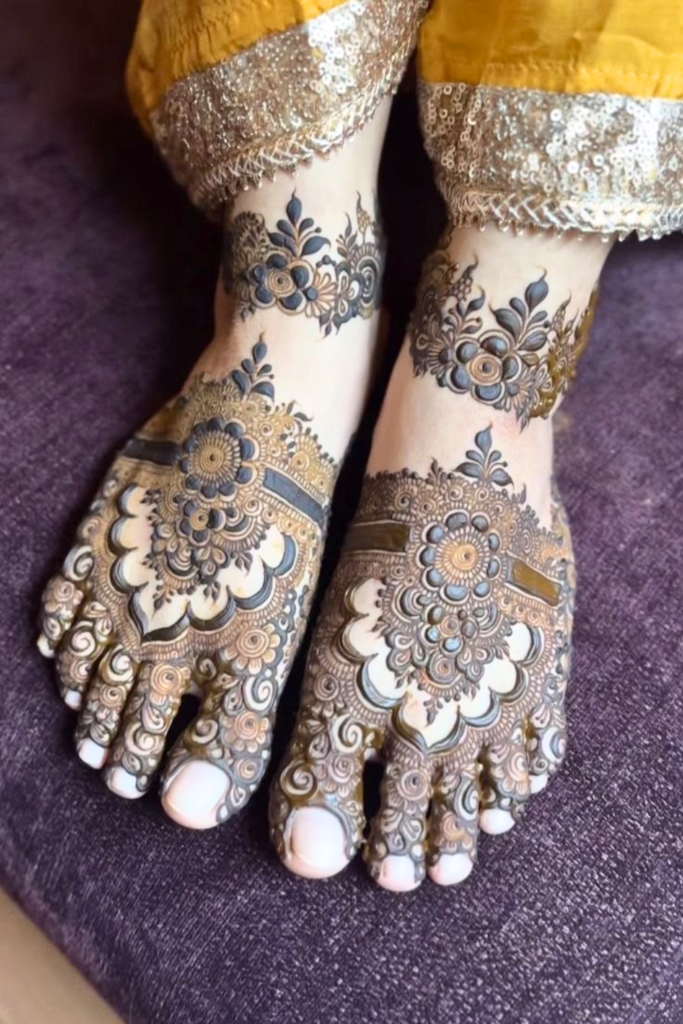
Bridal mehndi for the feet begins at the tips of the toes and extends across the top of the foot toward the ankle, sometimes climbing to the mid-calf. The upper foot features a large central motif, a blooming lotus, a peacock, or a tiered mandala surrounded by trailing vines that flow with the natural contour of the foot. Each toe is individually adorned with ring-like bands, while the ankle is treated as a bracelet, layered with geometric bands and teardrop accents that mirror the anklets a bride wears on her wedding day.
Symbolism and Sentiment
Every element of Pakistani bridal mehndi carries deliberate meaning. The peacock, a symbol of grace and natural beauty, is among the most frequently chosen motifs. The lotus represents purity and spiritual awakening, while the paisley with its distinctive teardrop shape is considered an emblem of fertility and good fortune. In many regional traditions, the initials or full name of the groom are hidden within the folds of the bride’s design, a playful custom that invites him to search for his name on the wedding night.
There is also a widely held belief that the darker the mehndi stain, the deeper the love between husband and wife. Brides are advised to keep the paste moist during the drying process, often sealing it with a mixture of lemon juice and sugar to deepen the final tone. The resulting shade, ranging from warm amber to deep mahogany, is considered auspicious and a sign of a marriage destined for happiness.
The Evolution of Style
While tradition anchors Pakistani mehndi to its cultural roots, the art form continues to evolve with each generation. Contemporary bridal mehndi artists experiment with fusion styles, blending Pakistani and Arabic elements to create designs that feel both timeless and distinctly modern. The rise of digital platforms has transformed the industry considerably, with talented artists building international followings and setting global trends from cities such as Lahore, Karachi, and Islamabad. Brides today engage with their mehndi artists weeks in advance, collaborating on custom designs that reflect individual personality while honoring inherited tradition.
More Than an Adornment
Pakistani bridal mehndi endures not merely because it is beautiful, but because it is layered with purpose. It marks a threshold, the final hours of one chapter of life and the first breath of another. For the bride who sits patiently as the artist works, it is a moment of stillness amid the whirlwind of wedding preparations, a quiet communion with tradition, family, and the women who came before her.
In that sense, mehndi is not simply applied to the hands. It is written into memory.