
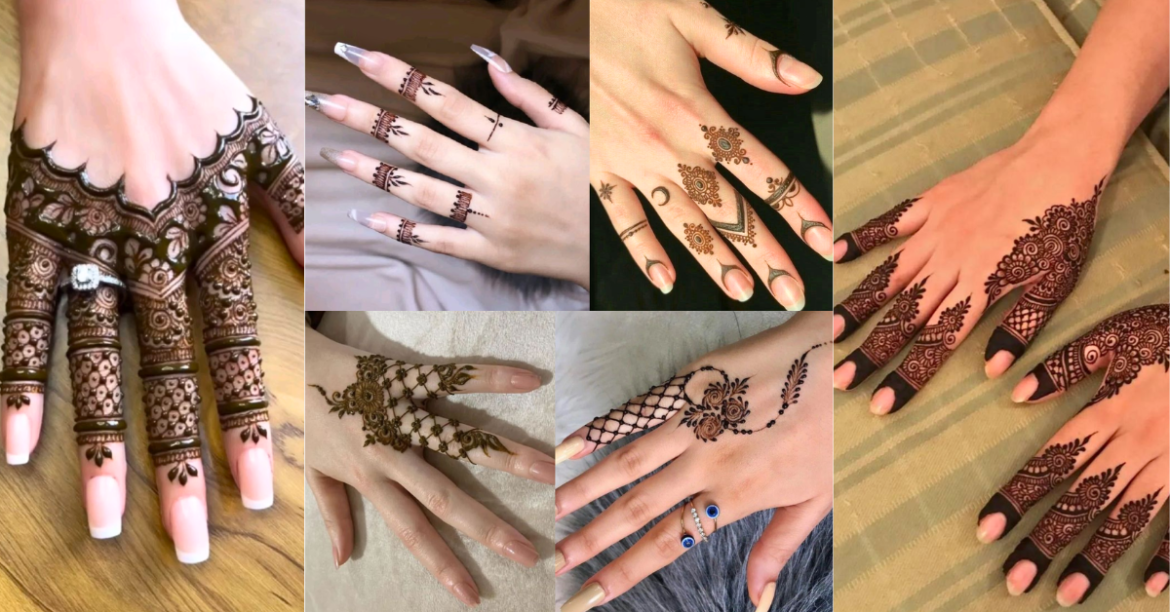
Mehndi, commonly known as henna, has been a cherished form of body art for centuries across South Asia, the Middle East, and North Africa. Among its many forms, finger mehndi design holds a particularly special place. Delicate, expressive, and deeply rooted in tradition, finger mehndi has evolved into one of the most sought-after styles for brides, festival-goers, and everyday enthusiasts alike. Whether you are preparing for a wedding celebration or simply exploring a creative outlet, understanding the beauty and variety of finger mehndi designs can help you make the most meaningful choice.
Why Finger Mehndi Is So Popular
The growing popularity of finger mehndi is no coincidence. Fingers are one of the most visible parts of the human body, especially during social events and ceremonies. A well-crafted mehndi pattern on the fingers draws immediate attention, frames the hands beautifully, and adds a layer of grace that no accessory can replicate. Unlike full-hand mehndi, finger-only designs offer a more subtle and modern appeal, making them ideal for women who prefer minimalist aesthetics without sacrificing traditional charm.
Back hand finger mehndi has become especially trendy in recent years. This style focuses on intricate patterns along the fingers while leaving the palm relatively open, creating a striking visual contrast that looks equally stunning in photographs and in person.
Popular Types of Finger Mehndi Designs
There are several distinct styles within finger mehndi art, each carrying its own character and cultural significance.
Arabic Mehndi Design is one of the most widely recognized styles. Known for its bold lines, floral motifs, and flowing patterns, Arabic mehndi tends to use negative space creatively, allowing the skin to breathe between design elements. This style suits all skin tones and looks particularly impressive when applied to the index finger and ring finger.
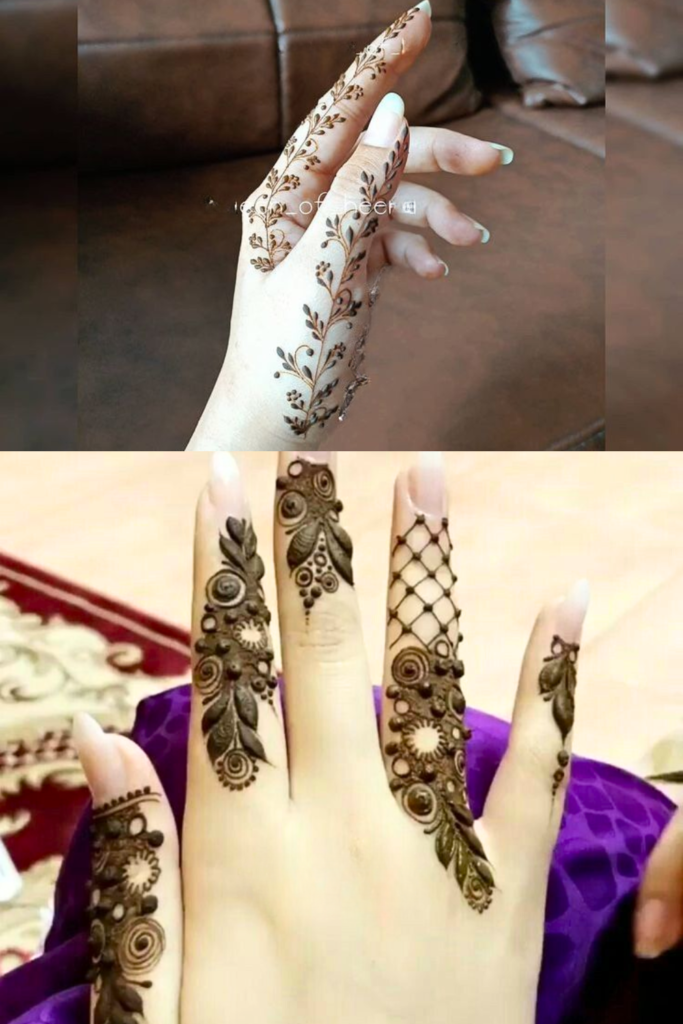
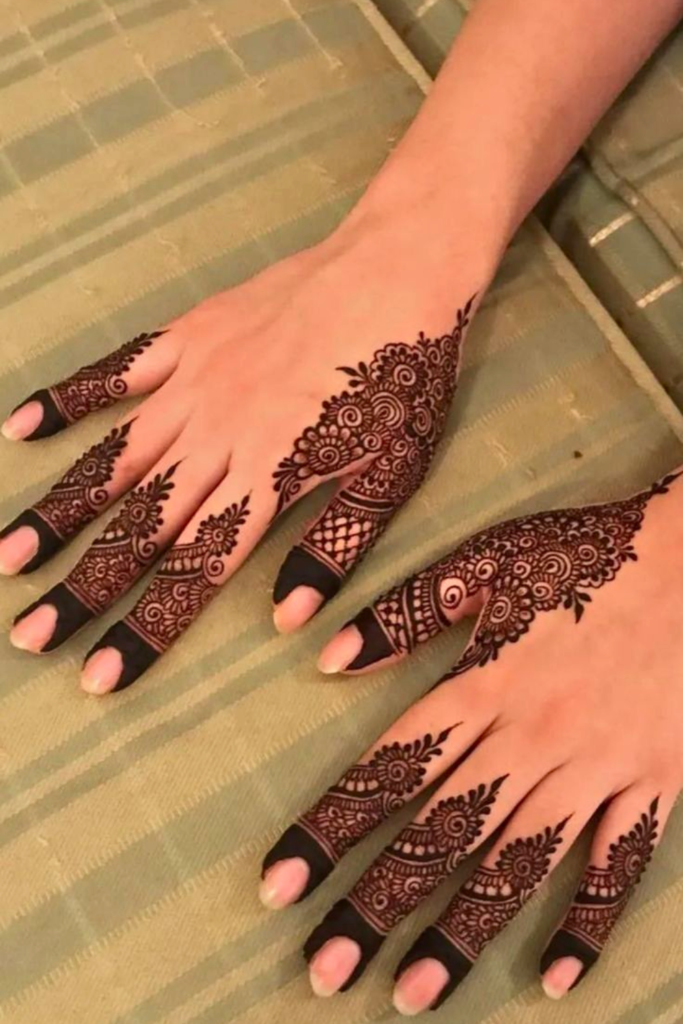
Source: Pinterest
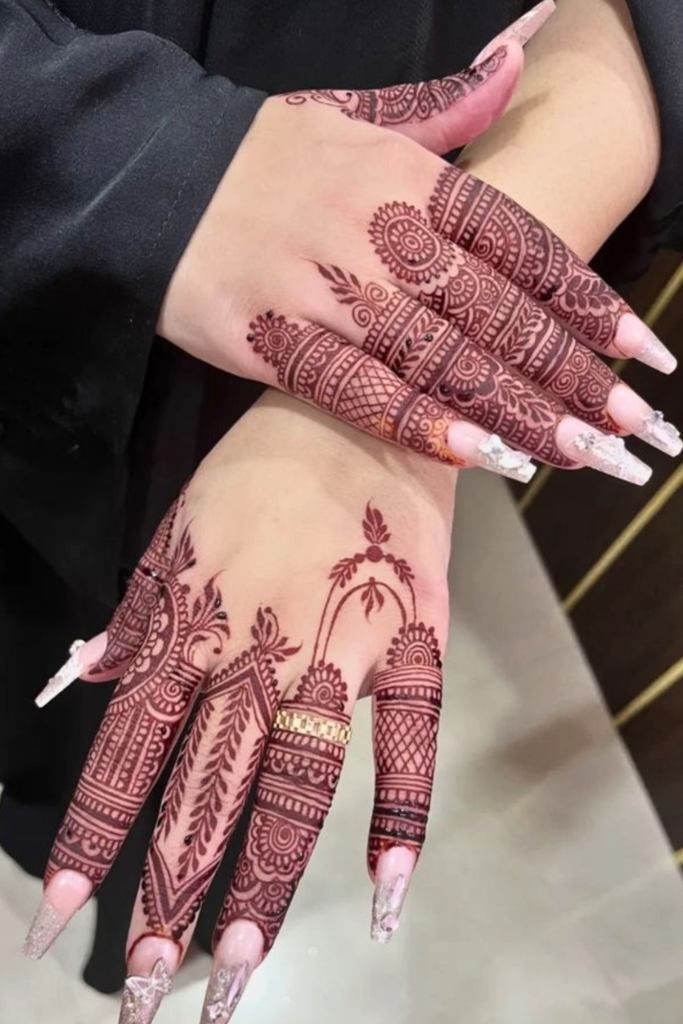
Bridal Mehndi Design takes elegance to its highest form. For brides, every finger becomes a canvas. Traditional bridal patterns incorporate peacocks, paisleys, lotus flowers, and interlocking vines. The designs are usually dense, rich, and layered, covering the fingers from tip to base and often connecting with wrist and palm patterns to create a seamless composition.
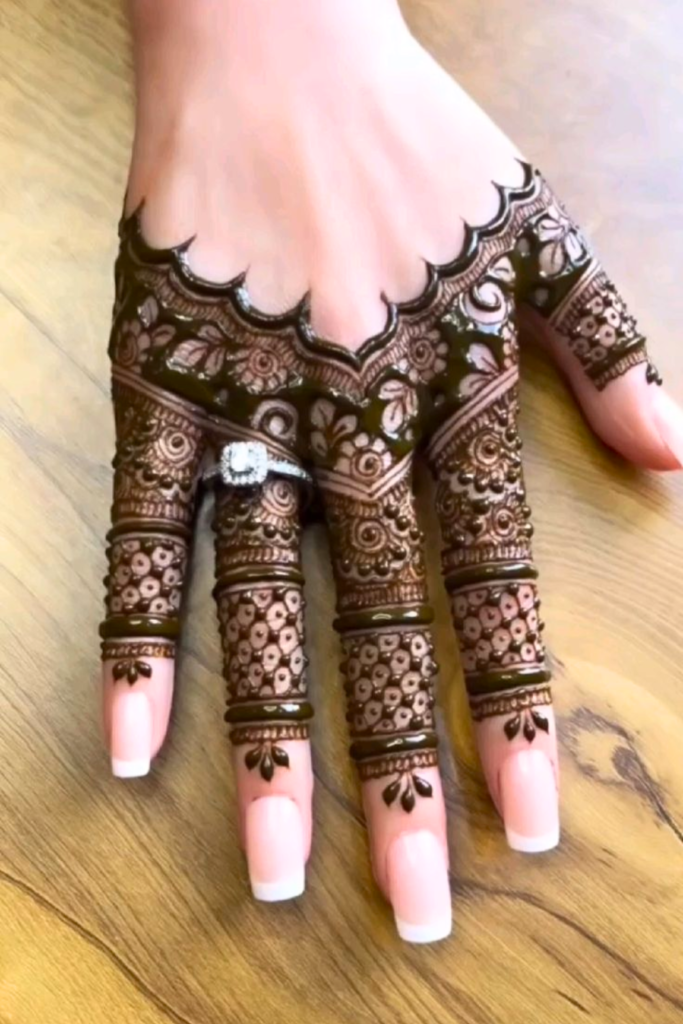
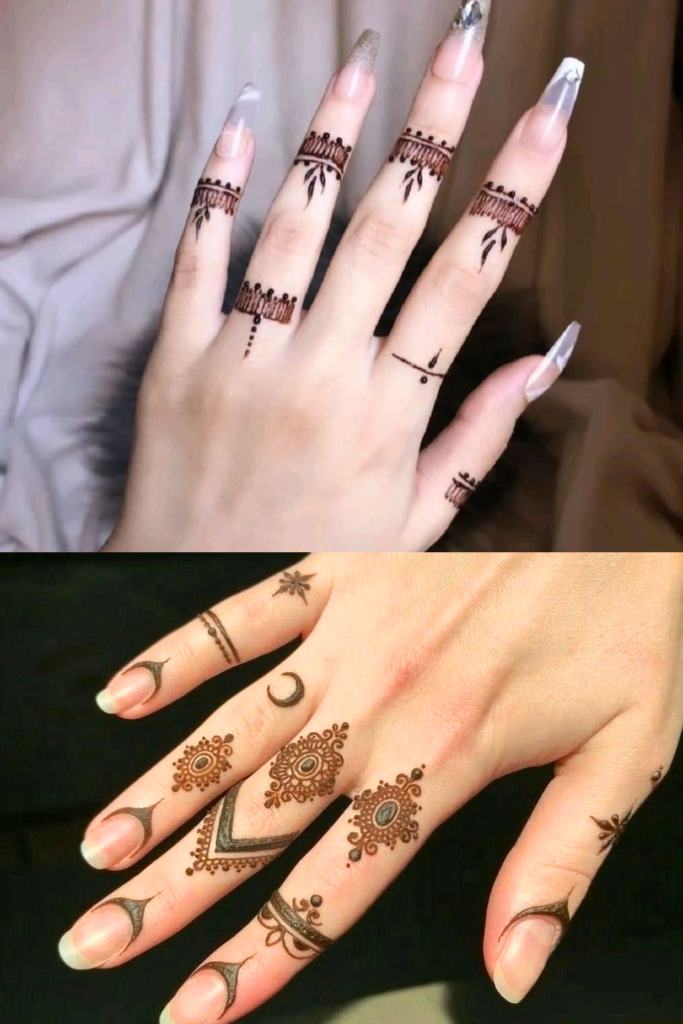
Simple Mehndi Design has found a large audience among younger generations and working professionals. These designs typically feature thin lines, geometric shapes, small dots, and minimalist florals placed on one or two fingers. They are quick to apply, easy to maintain, and perfectly suited for casual occasions or office wear.
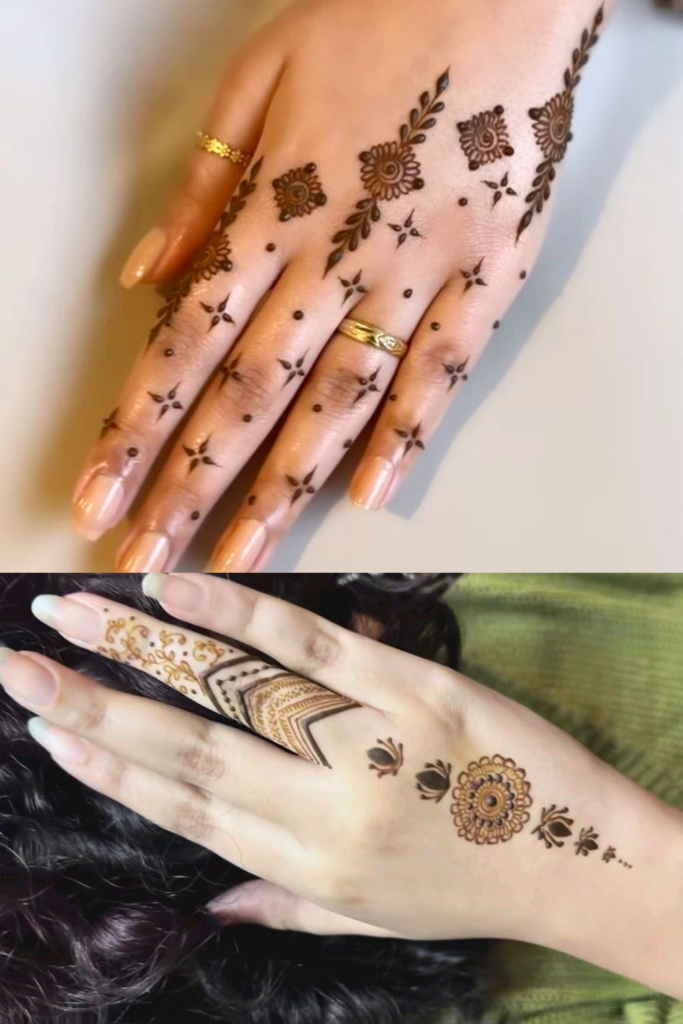
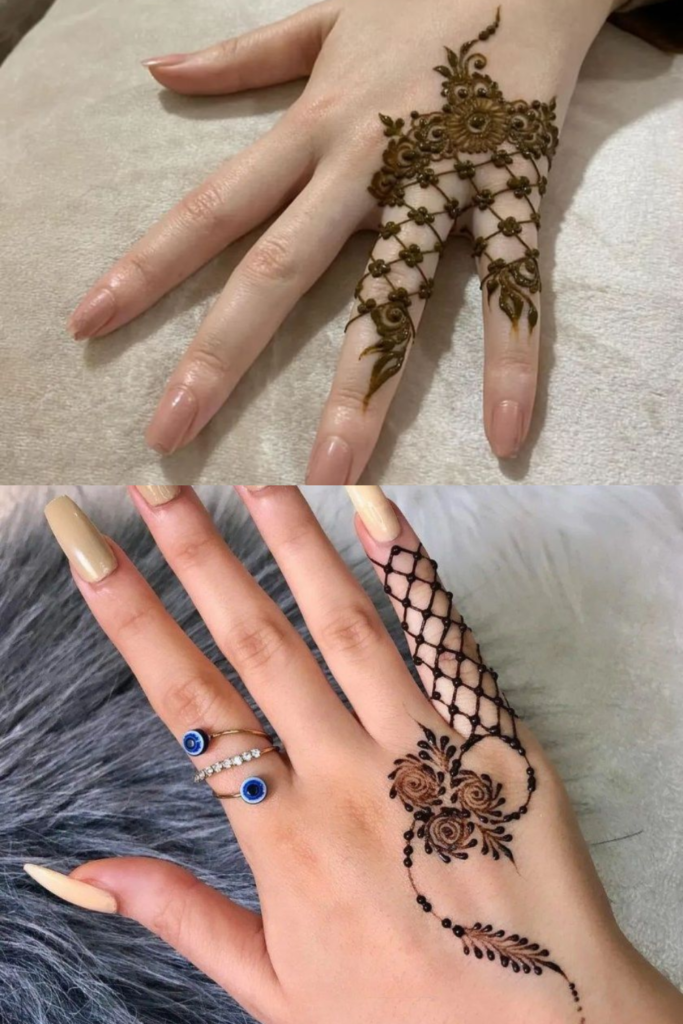
Easy Mehndi Design for Beginners usually consists of basic outlines, small leaves, or dotted trails that run along the sides or tips of the fingers. These patterns build confidence for those learning the art and still produce a beautiful result with minimal effort.
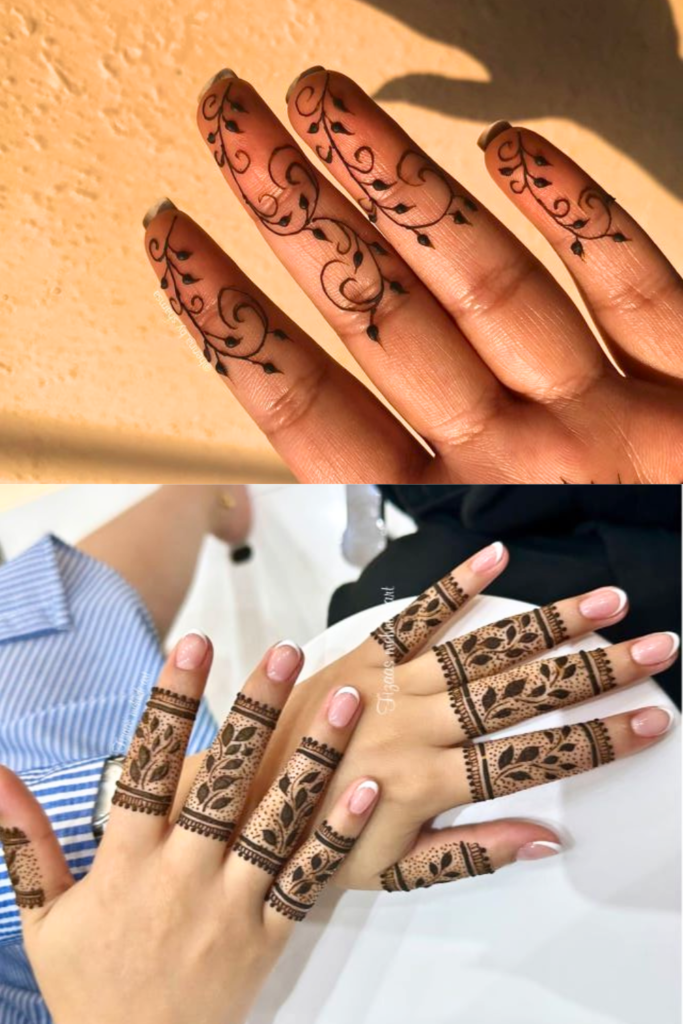
Techniques That Make Finger Mehndi Stand Out
The quality of a finger mehndi design depends heavily on the cone and the application technique. A fine-tipped mehndi cone allows for precise detailing, which is essential when working within the narrow surface area of a finger. Steady hand movement and consistent pressure are key to creating clean, unbroken lines.
The placement of design elements matters just as much as the pattern itself. A skilled artist considers the natural curves and joints of each finger, using them as guides to create designs that flow organically rather than appearing rigid or forced. Shadow shading, layered motifs, and symmetrical arrangements are techniques that elevate a simple finger mehndi into a work of art.
Caring for Your Finger Mehndi
Once applied, finger mehndi requires patience. Allowing the paste to dry naturally for at least two to three hours produces a deeper stain. Avoiding water for the first twelve hours after removal significantly enhances color retention. Natural oils such as coconut or mustard oil can be applied to keep the skin moisturized and help the design last longer.
Final Thoughts
It is far more than decoration. It is a language of beauty passed down through generations, adapted by each new era to reflect its own sensibilities. Whether you choose an elaborate bridal pattern, a graceful Arabic design, or a simple everyday motif, mehndi on the fingers carries a timeless elegance that speaks across cultures and occasions. Embrace this art form with care, and let your hands tell their own story.