
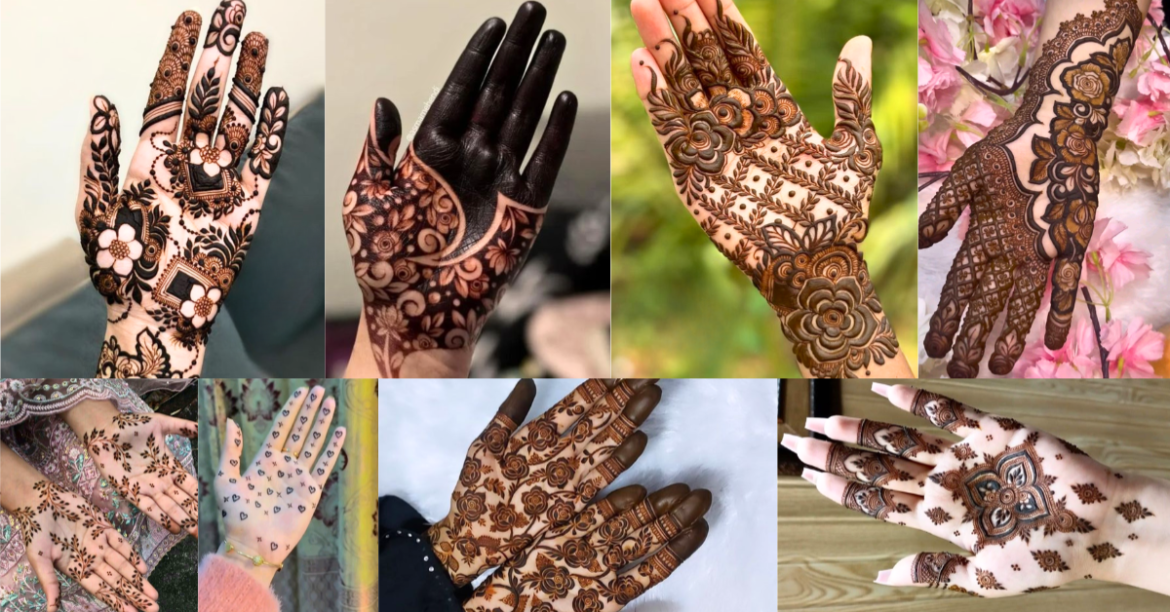
Mehndi, commonly known as henna, is one of the most enduring forms of body art across South Asian, Middle Eastern, and North African cultures. Among all areas adorned with mehndi, the front hand remains the most expressive canvas visible, personal, and steeped in tradition. Applied during weddings, festivals, and celebrations, it is a timeless art form that continues to evolve with modern sensibilities.
Popular Styles of Front Hand Mehndi Design
1. Traditional Indian Mehndi
Traditional Indian mehndi is known for its dense, elaborate patterns that fill the entire palm with intricate motifs. Peacocks, lotuses, paisleys, and mango (keri) shapes are among the most commonly used elements. Floral vines trail along the fingers, and geometric borders frame the central design. This style is particularly popular for bridal applications, where the richness of the pattern is considered a mark of artistry and elegance.
Indian mehndi on the front hand typically features a central focal motif on the palm, often a large peacock, mandala, or bride-and-groom scene surrounded by delicate fillers and intricate lattice work.
2. Arabic Mehndi
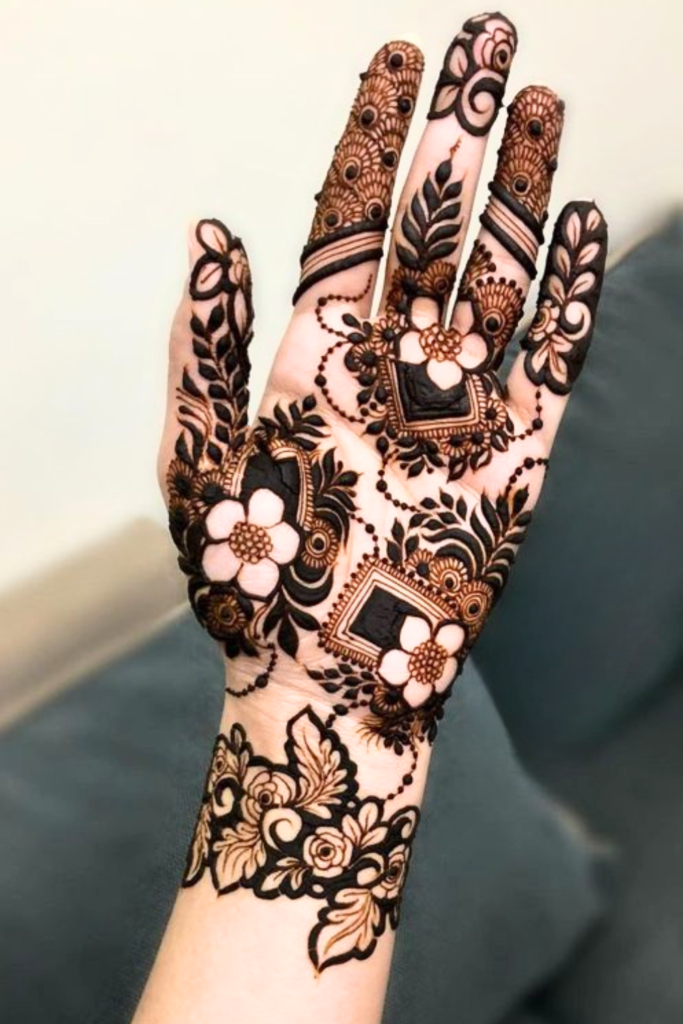
Arabic mehndi is characterized by bold, flowing patterns with generous empty spaces. Rather than filling the entire palm, Arabic designs use large floral and leaf motifs that trail from the wrist toward the fingers in a free-flowing, organic manner. This style is admired for its modern aesthetic and is highly favored by women who prefer a less dense but visually striking look.
On the front hand, Arabic designs often begin with a prominent floral cluster on the lower palm and extend upward with curved vines and teardrop leaves, leaving portions of the skin bare to enhance contrast.
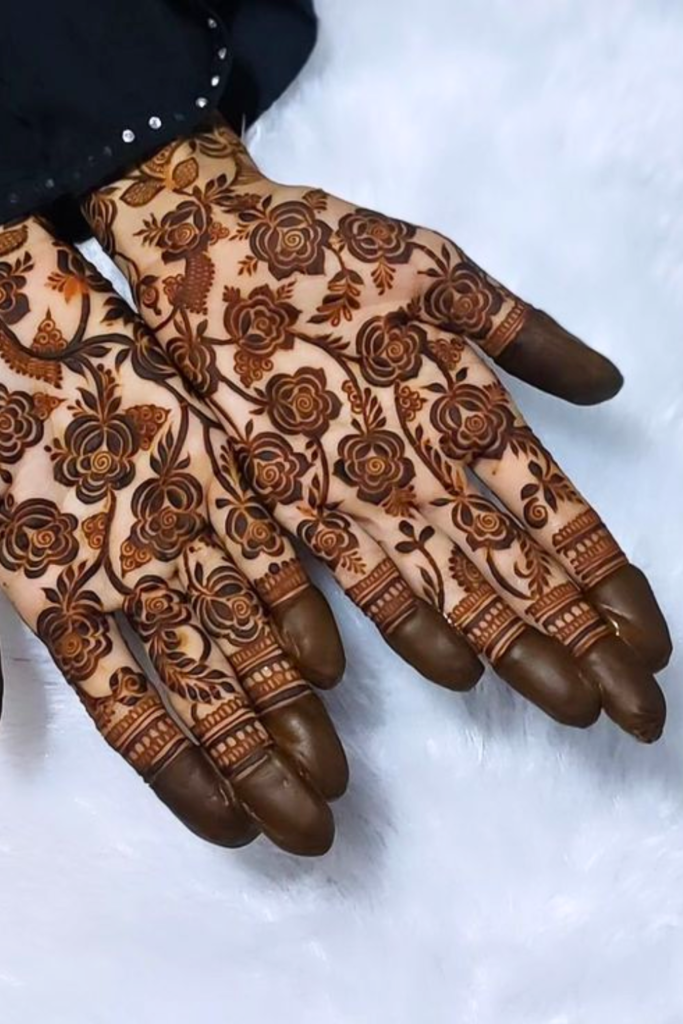
3. Pakistani Mehndi
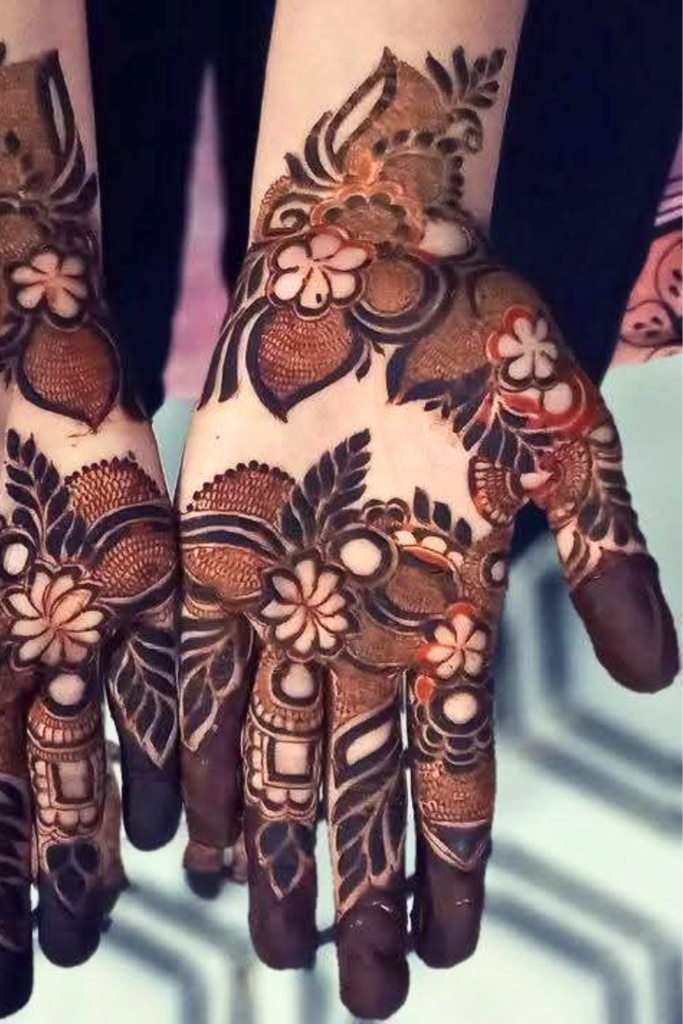
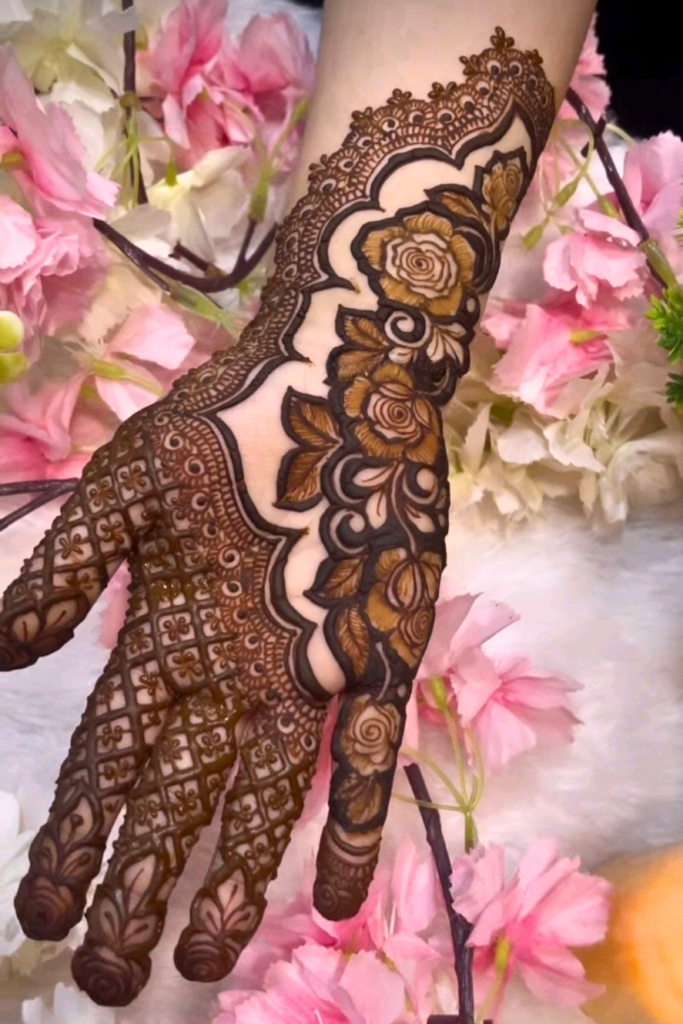
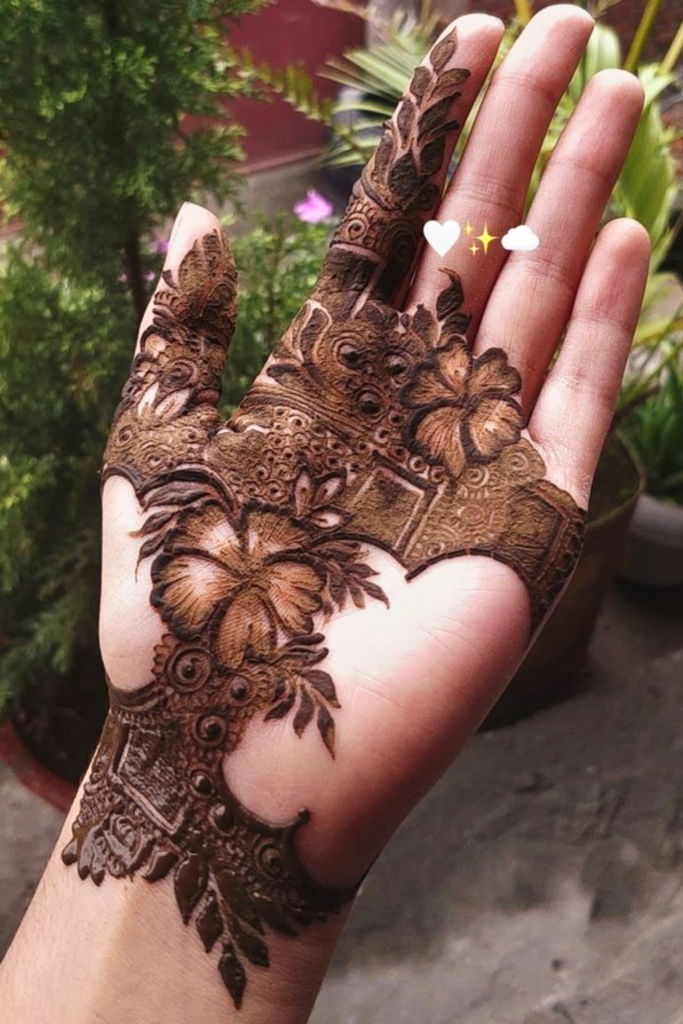
Pakistani front hand mehndi design is a sophisticated blend of Indian detail and Arabic boldness. It features shaded floral motifs, delicate lace-like patterns (jaali), and royal wrist-cuff designs that offer a balanced, elegant look. The use of intricate shading inside large petals creates a beautiful 3D depth across the palm. It remains a premier choice for those seeking a majestic, heavy front hand mehndi design that still maintains clear definition.
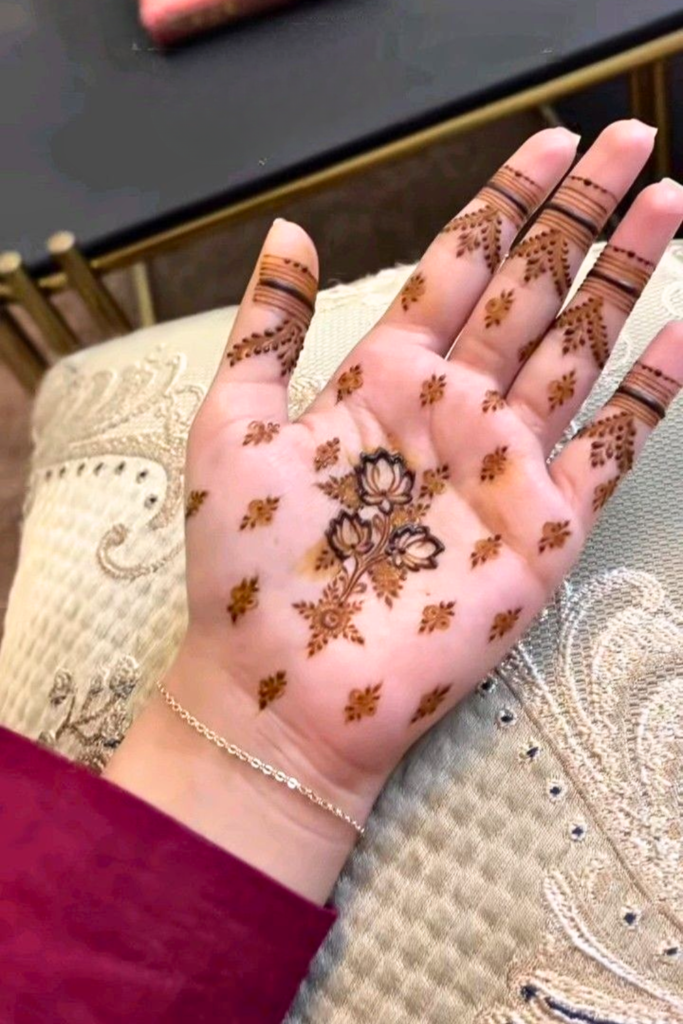
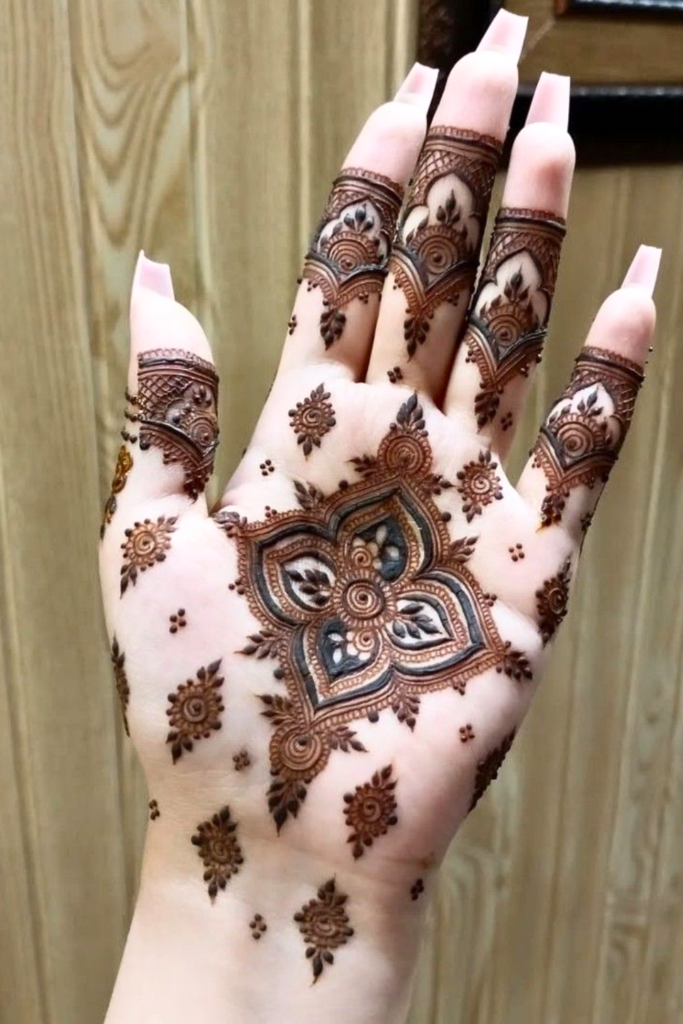
4. Indo-Arabic Fusion
As the name suggests, this style blends the density of Indian mehndi with the flowing elegance of Arabic designs. The result is a versatile pattern that fills key areas of the palm while leaving deliberate spaces for visual balance. Indo-Arabic fusion is one of the most popular choices today because it suits a wide range of occasions and personal preferences.
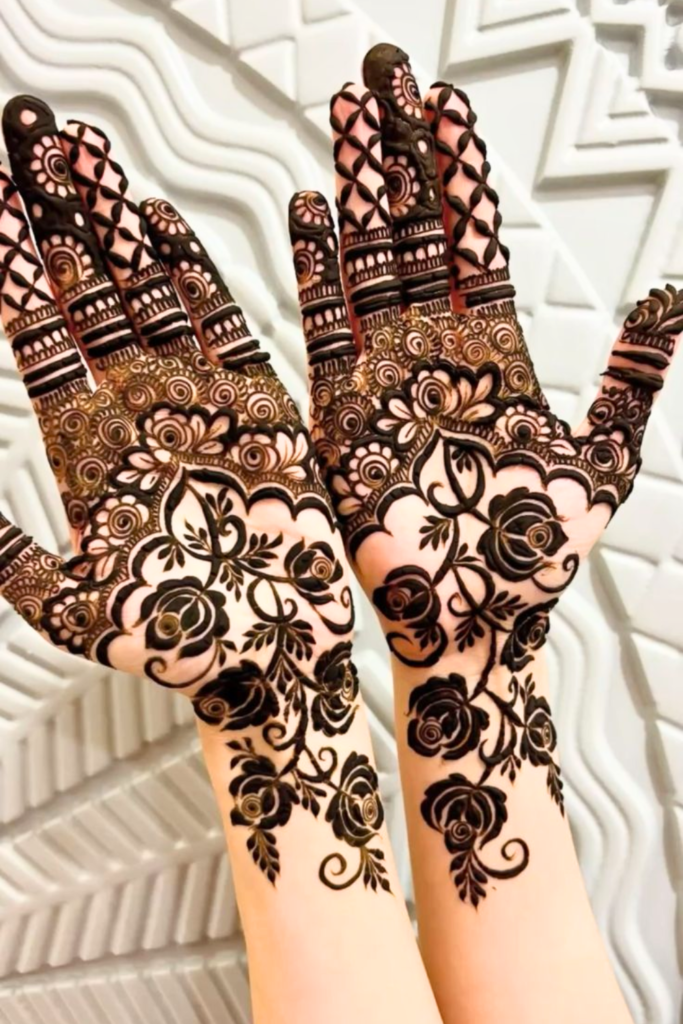
5. Minimalist Mehndi
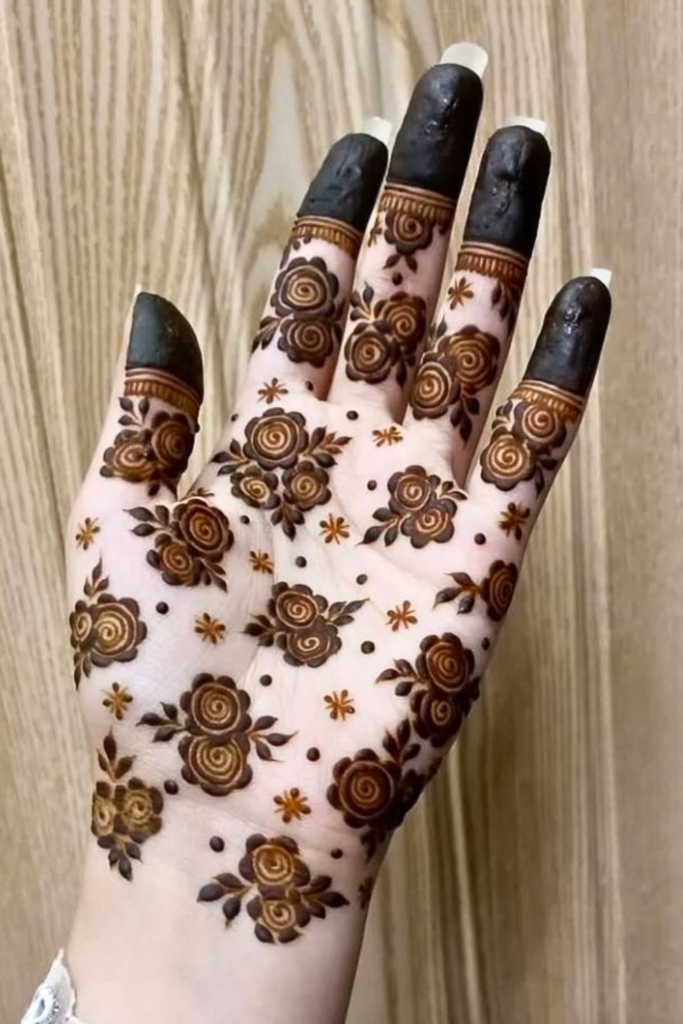
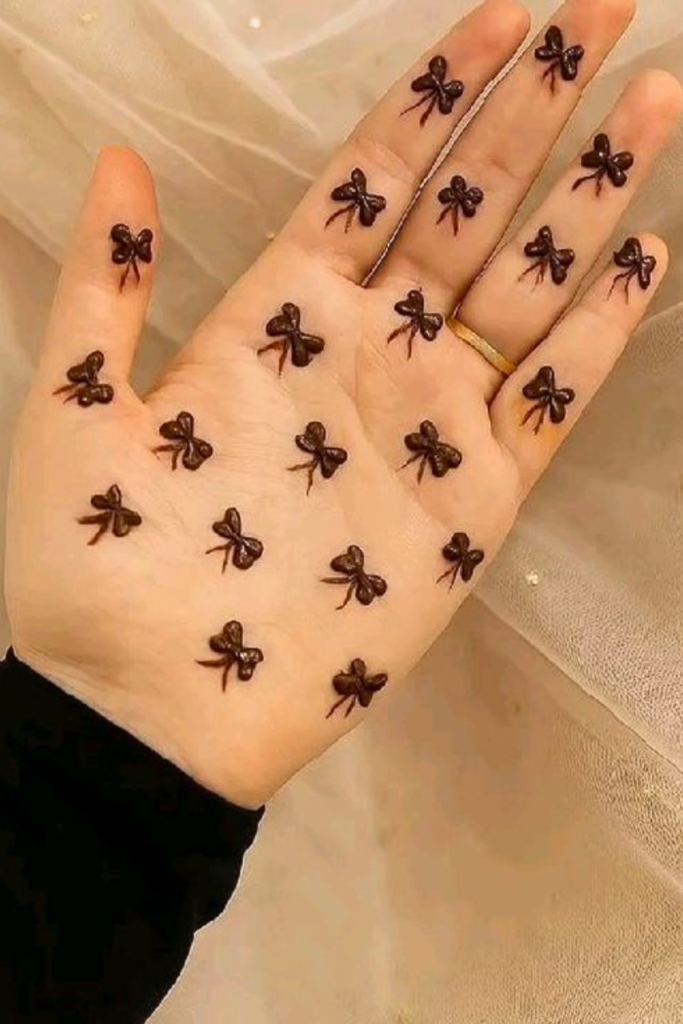
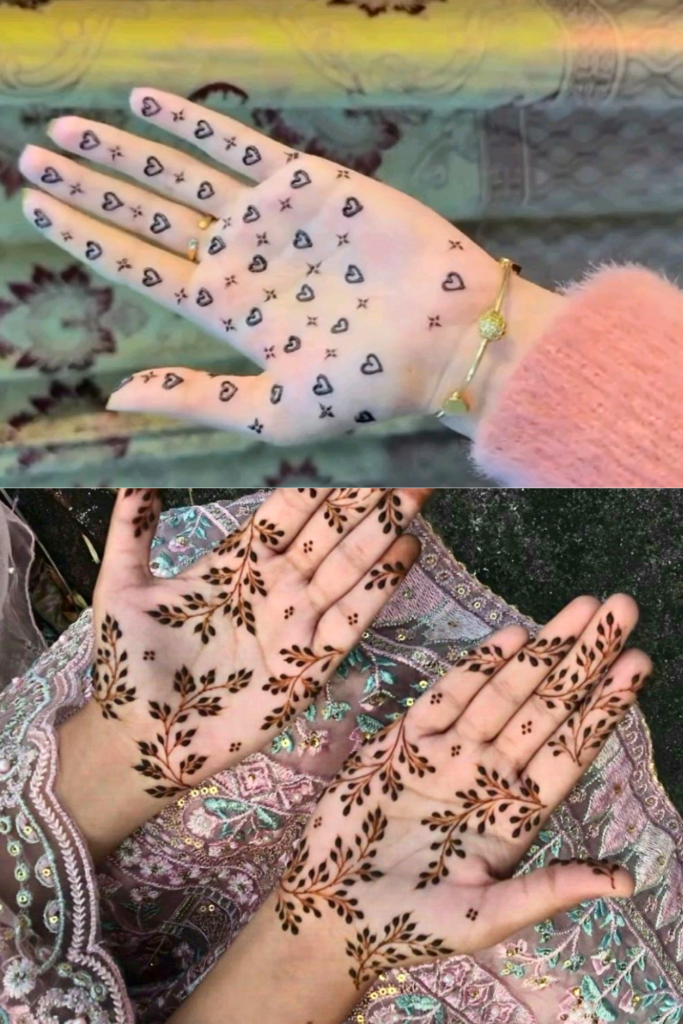
A growing trend in recent years, minimalist mehndi embraces simplicity and negative space. Single-line motifs, delicate dots, small florals, and subtle mandala patterns grace the front hand without overwhelming it. This style is ideal for casual events, office wear, or for those trying mehndi for the first time.
Source: Pinterest
Key Motifs Used in Front Hand Mehndi
The peacock symbolizes grace and prosperity and is one of the most beloved central motifs on the palm. The lotus represents purity and new beginnings, while the paisley, with a curved teardrop shape, is associated with fertility and abundance. Mandalas, radiating outward from the center of the palm, create powerful focal points, and flowing vines connect the entire composition from wrist to fingertips.
Front Hand Mehndi for Different Occasions
Bridal Mehndi
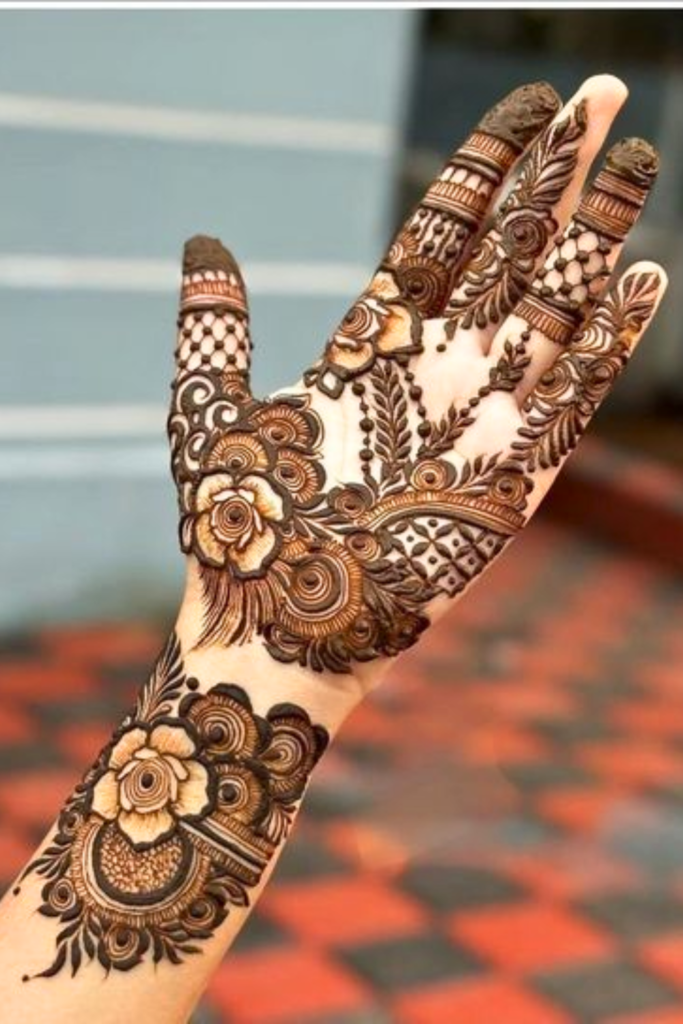
Bridal front hand mehndi is the most elaborate and detailed of all styles. It often covers the entire palm, each finger, and extends up the wrist and forearm. Traditional Indian or fusion designs are most commonly chosen, featuring the groom’s name hidden within the pattern, bridal couple motifs, and auspicious symbols such as the lotus, peacock, and kalash.
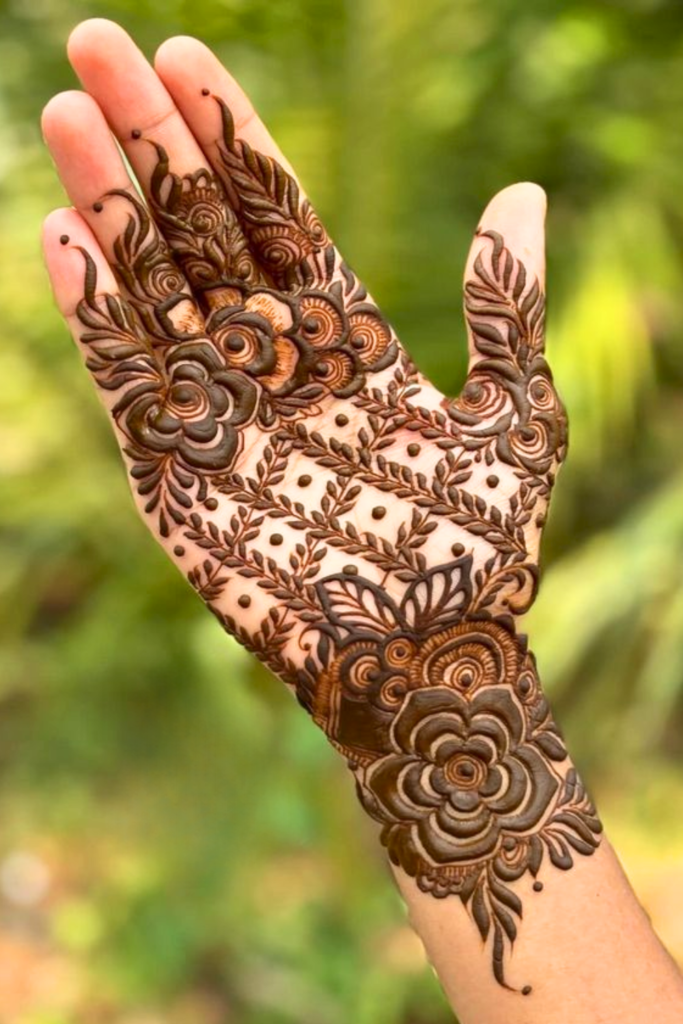
Contemporary and Fusion Occasions
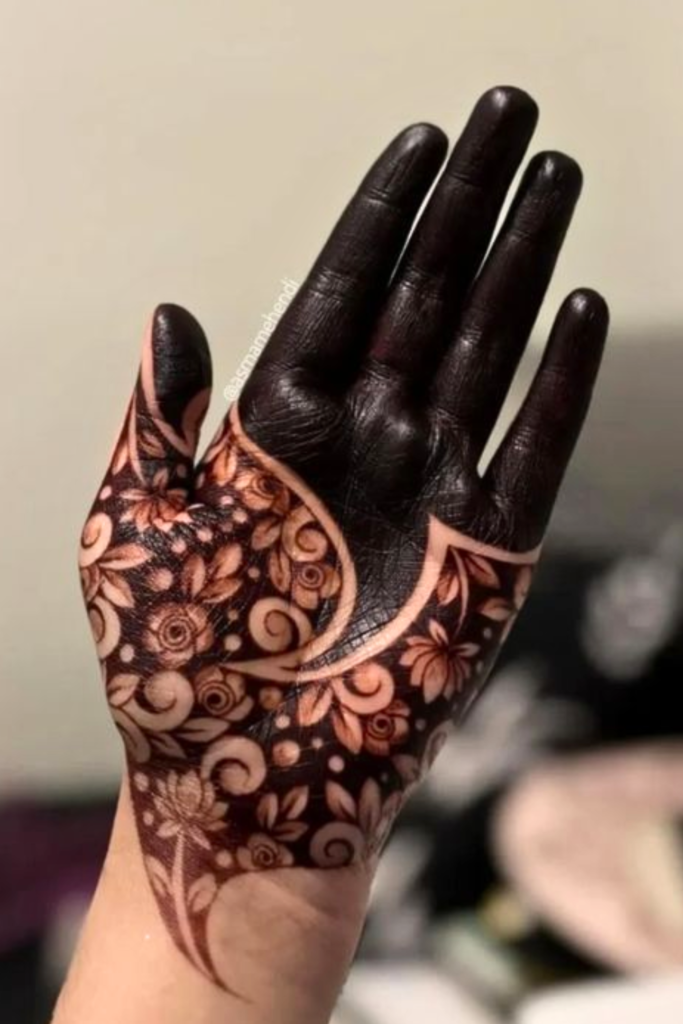
For modern celebrations such as baby showers, engagement parties, or haldi ceremonies, contemporary designs that blend traditional motifs with modern geometric elements are increasingly popular. These designs are versatile, stylish, and suit a range of personal aesthetics.
Trends in Modern Front Hand Mehndi Design
The world of mehndi is constantly evolving, with new trends emerging each season. Some of the most notable contemporary trends in front hand mehndi include:
Floral Overload Designs Maximalist floral patterns featuring oversized roses, lilies, and dahlias rendered in intricate detail across the entire palm.
Negative Space Mehndi Designs that intentionally leave large portions of the palm bare, using the contrast between stained and unstained skin as a design element in itself.
Personalized Mehndi Custom designs that incorporate initials, significant dates, portraits, or personal symbols to create a one-of-a-kind piece of wearable art.
Jewellery-Inspired Mehndi Designs that mimic the look of rings, bangles, and hand chains, using mehndi to recreate the elegance of fine jewellery directly on the skin.
Minimalist Line Art Fine, single-stroke lines and delicate botanical illustrations that bring a contemporary, artistic sensibility to traditional mehndi.
Conclusion
Front hand mehndi is a living art form that bridges cultural heritage with personal expression. Whether one prefers the grandeur of traditional Indian designs, the flowing elegance of Arabic patterns, or the simplicity of minimalist styles, front hand mehndi offers a design for every occasion, every aesthetic, and every story worth telling.