
Introduction
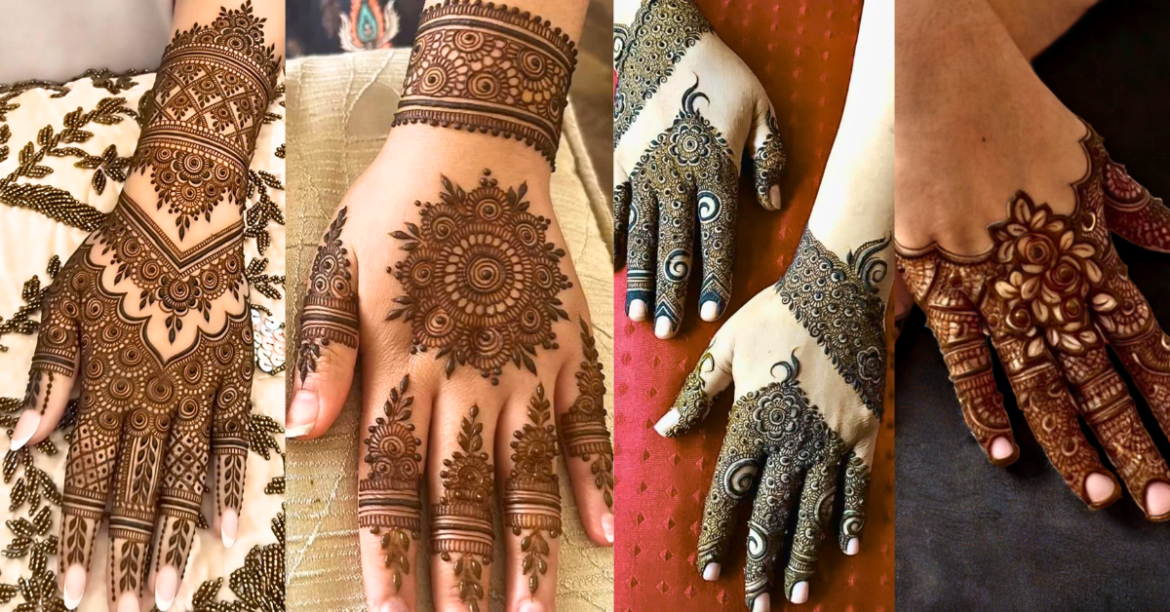
Mehndi, or henna, is one of the world’s oldest forms of body art, rooted in the traditions of South Asia, the Middle East, and North Africa. Among all surfaces used as a canvas, the backhand mehndi design stands out as the most prominent visible in every gesture, ceremony, and photograph. For this reason, backhand mehndi has evolved into a refined art form that blends elegance, symbolism, and creativity.
Historical Background
The use of henna dates back over five thousand years, with evidence found in ancient Egypt and the Indian subcontinent. Over generations, distinct regional styles developed from the dense storytelling patterns of Rajasthan to the bold florals of Arabic tradition and the geometric precision of Moroccan design. The backhand has always served as the primary canvas across all these cultures.
Major Styles of Backhand Mehndi Design
Over centuries of artistic development, several distinct styles of backhand mehndi have emerged. Each carries its own aesthetic identity and cultural heritage.
Indian Style
Indian backhand mehndi is characterized by its density and storytelling quality. Patterns are typically rich with detail, incorporating peacocks, lotus flowers, elephants, paisleys, and intricate latticework. The composition often covers the entire backhand, extending up the wrist and onto each finger. Bridal designs in this tradition frequently include hidden images, a small groom’s face concealed within the pattern, which the groom must search for on the wedding night.
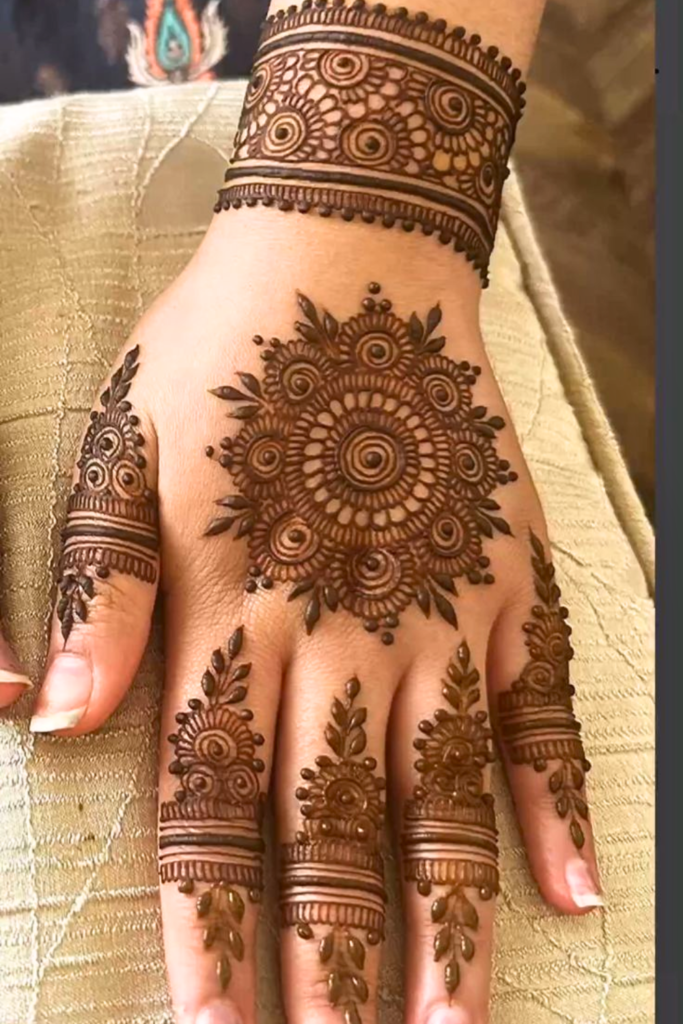
This style favours fine lines, close patterning, and a layered approach where multiple motifs are nested within one another. The result is a tapestry-like effect that rewards close examination.
Arabic Style
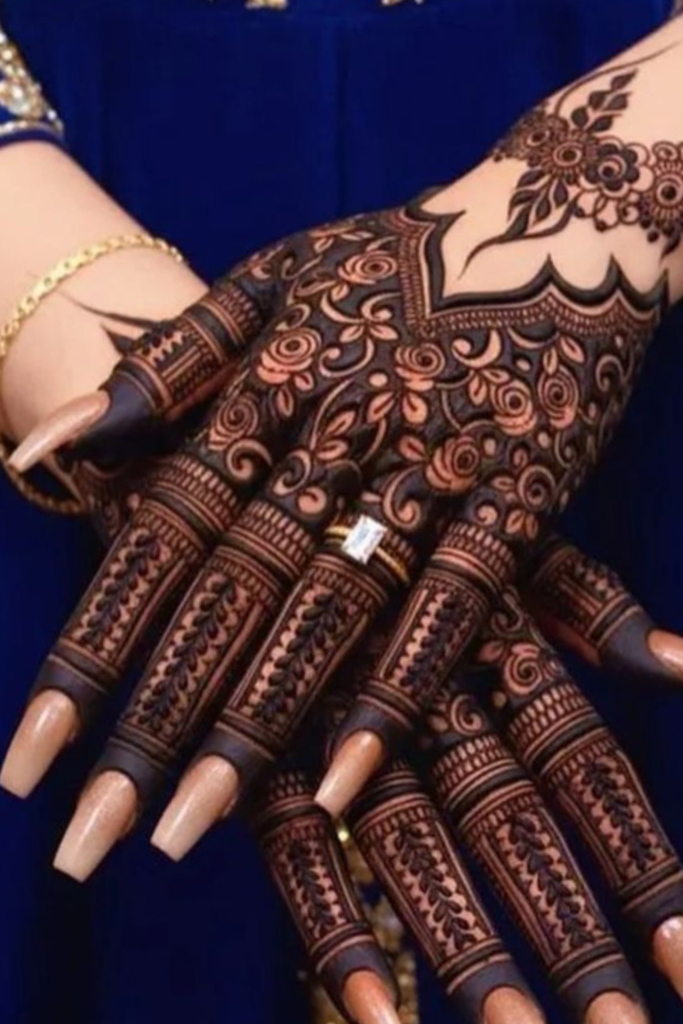
Arabic mehndi design is defined by its bold outlines, open spaces, and fluid floral forms. Where Indian design fills every inch of skin, Arabic design breathes. Large flower heads, sweeping vines, and bold leaves are placed with deliberate spacing, allowing the natural skin tone to become part of the composition.
Source: Pinterest
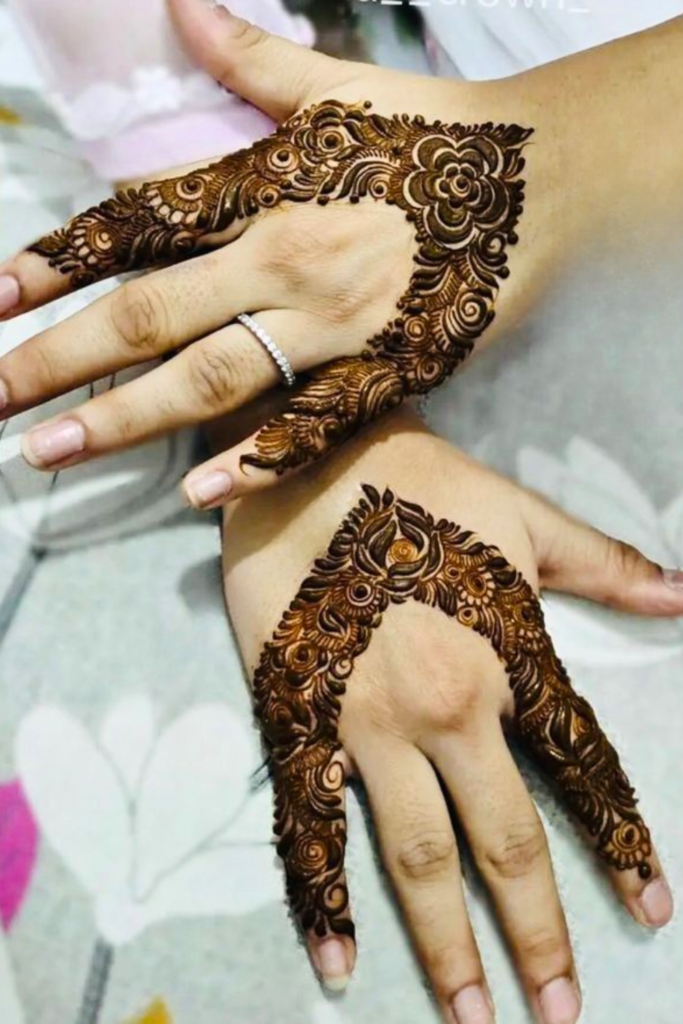
On the backhand, Arabic designs often feature a central large flower or mandala surrounded by trailing vines that extend toward the fingers and wrist. The contrast between the dark henna and the open skin creates a striking visual effect that photographs beautifully.
Pakistani Style
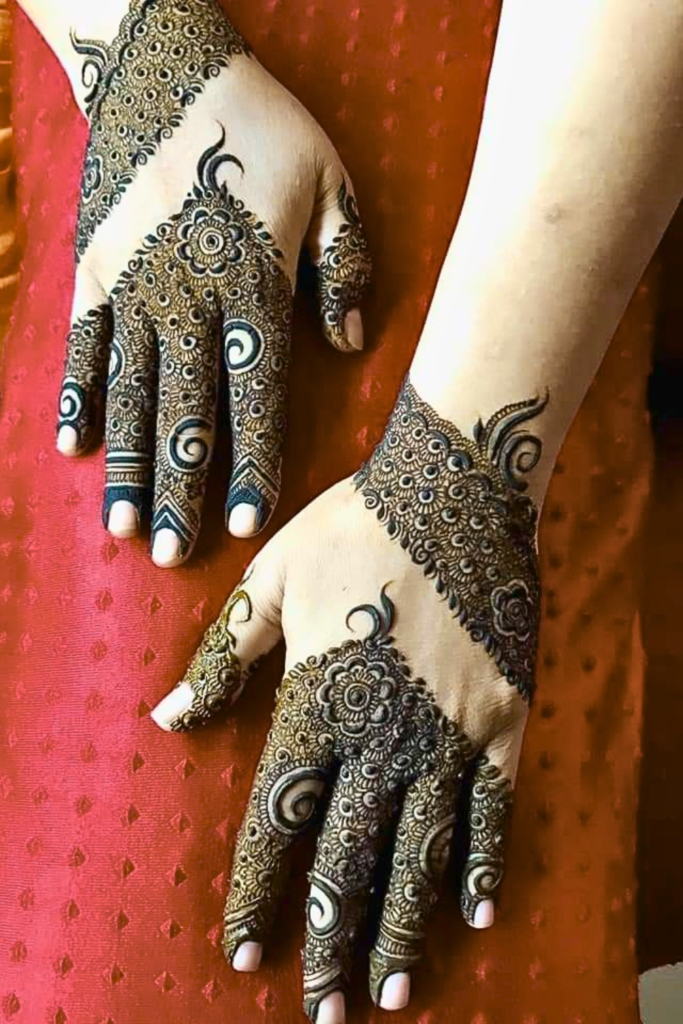
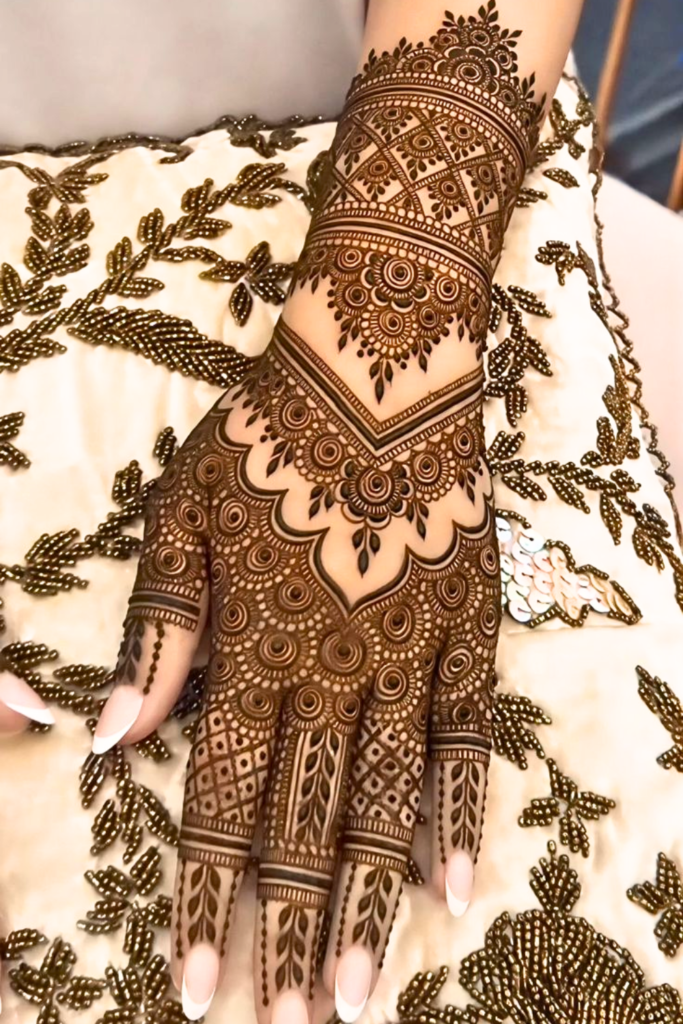
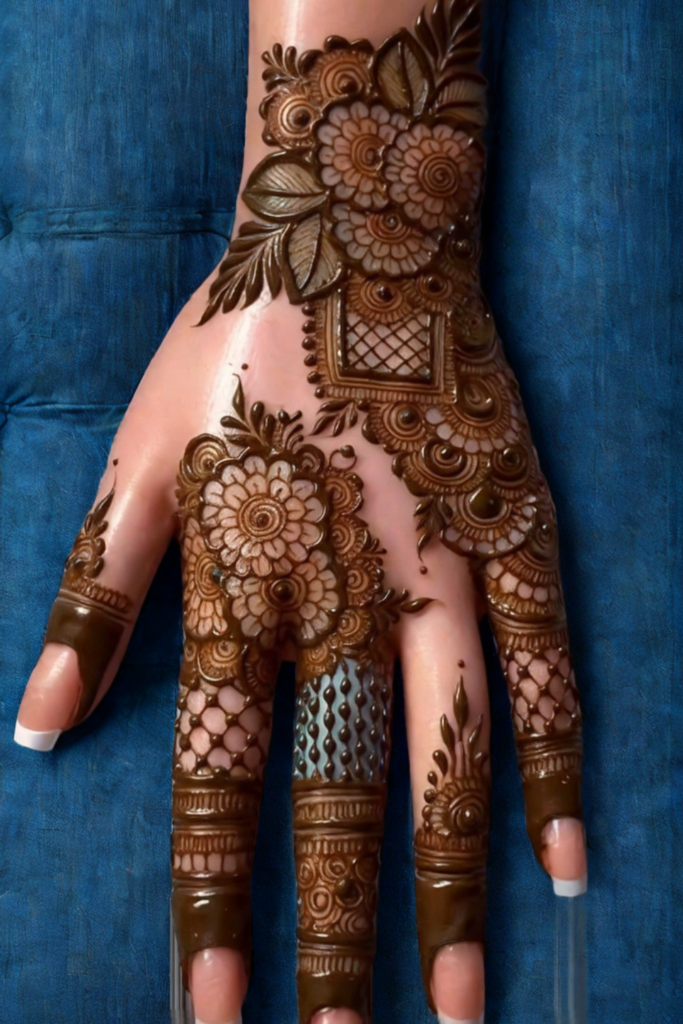
Pakistani mehndi, while closely related to Indian tradition, tends to favour slightly more open compositions with a greater emphasis on floral clusters and vine networks. The patterns are intricate but carry a somewhat lighter feel compared to the densely packed Indian style. Finger designs in Pakistani mehndi are particularly elaborate, with each digit receiving its own detailed treatment.
Contemporary and Fusion Style
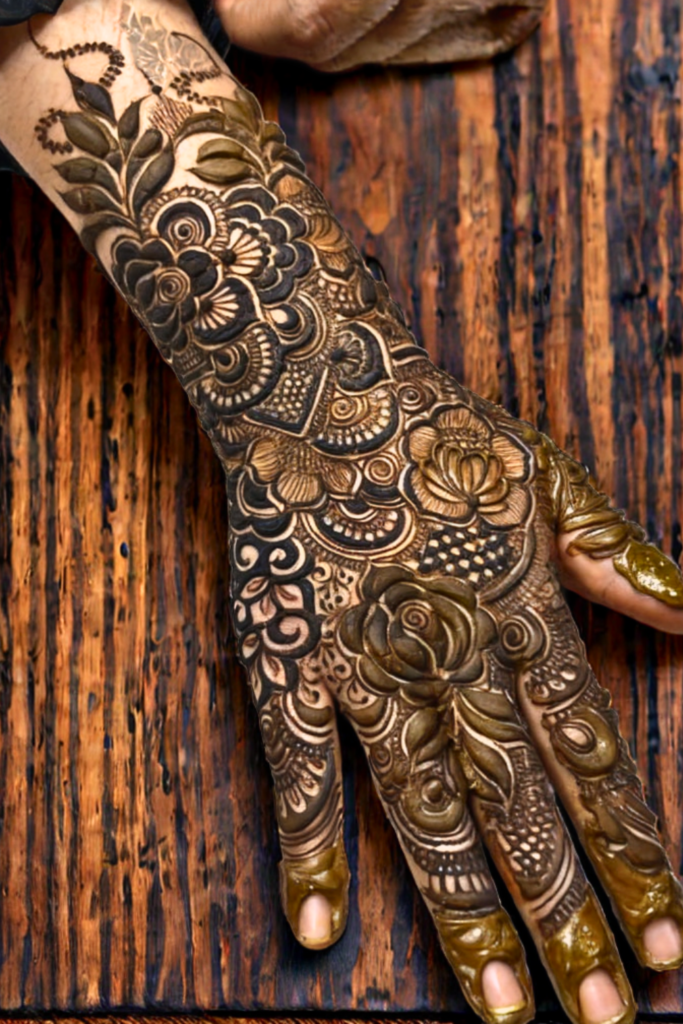
In recent decades, a new category of backhand mehndi has emerged, one that draws freely from all traditions while incorporating modern sensibilities. Fusion designs might combine Arabic florals with Moroccan geometry, or blend traditional Indian motifs with minimalist negative-space compositions.
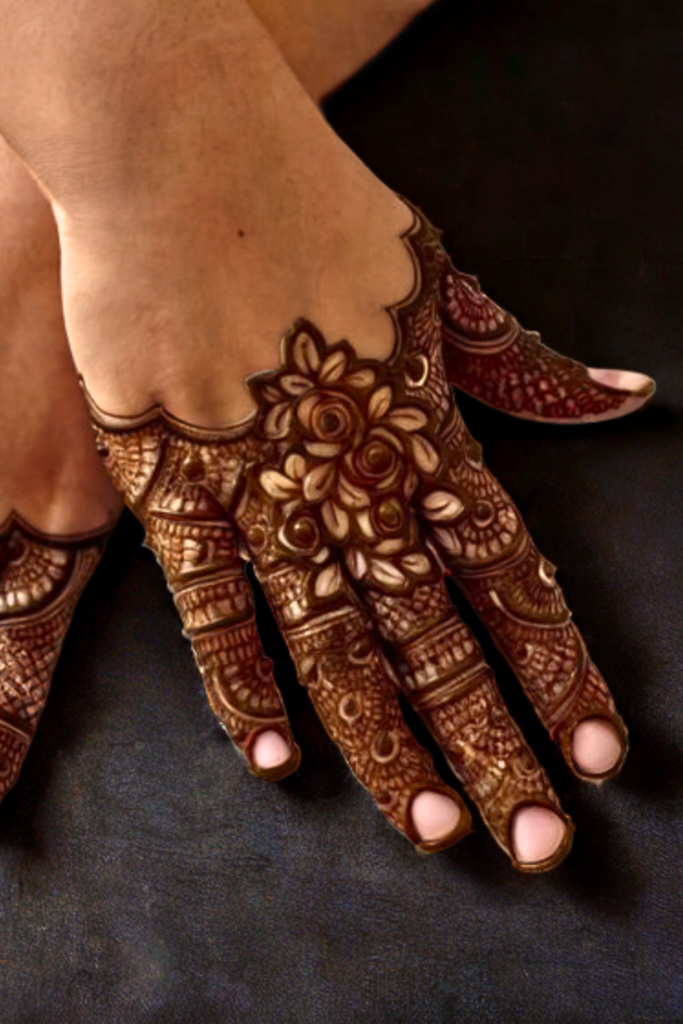
Source: Pinterest
Contemporary designs also increasingly incorporate non-traditional elements such as feathers, dreamcatchers, mandalas of non-traditional proportions, abstract swirls, and even fine-line portrait work. This style appeals strongly to younger wearers and those applying mehndi outside of traditional cultural contexts.
Common Motifs
The peacock represents beauty and grace. The lotus symbolises purity. Paisleys are among the most versatile and widely used shapes in all mehndi traditions. Vines and leaves connect individual motifs and guide the flow of the design. Mandalas serve as powerful central focal points, while the sun and moon represent cosmic balance.
Application Process
Quality henna paste is prepared from powdered henna leaves mixed with lemon juice, sugar, and essential oils, then left to rest for several hours. The paste is applied through a cone with steady pressure, beginning from the central motif and working outward. After application, the paste must remain on the skin for at least two to eight hours before being scraped off. The stain starts orange and deepens to a rich reddish-brown within forty-eight hours.
Occasions and Aftercare
Mehndi is most commonly worn at weddings, Eid, Diwali, Teej, and other cultural celebrations. Bridal backhand designs are the most elaborate, often requiring hours of skilled application. After removing the paste, avoid water for at least six to twelve hours and apply coconut or olive oil to deepen the stain. The design naturally fades over one to three weeks.
Conclusion
Backhand mehndi is far more than decoration. It is a living art form that connects the wearer to centuries of tradition, marking moments of joy, love, and celebration. Whether simple or elaborate, every design tells a story written on the most visible canvas the hand has to offer.