
Introduction
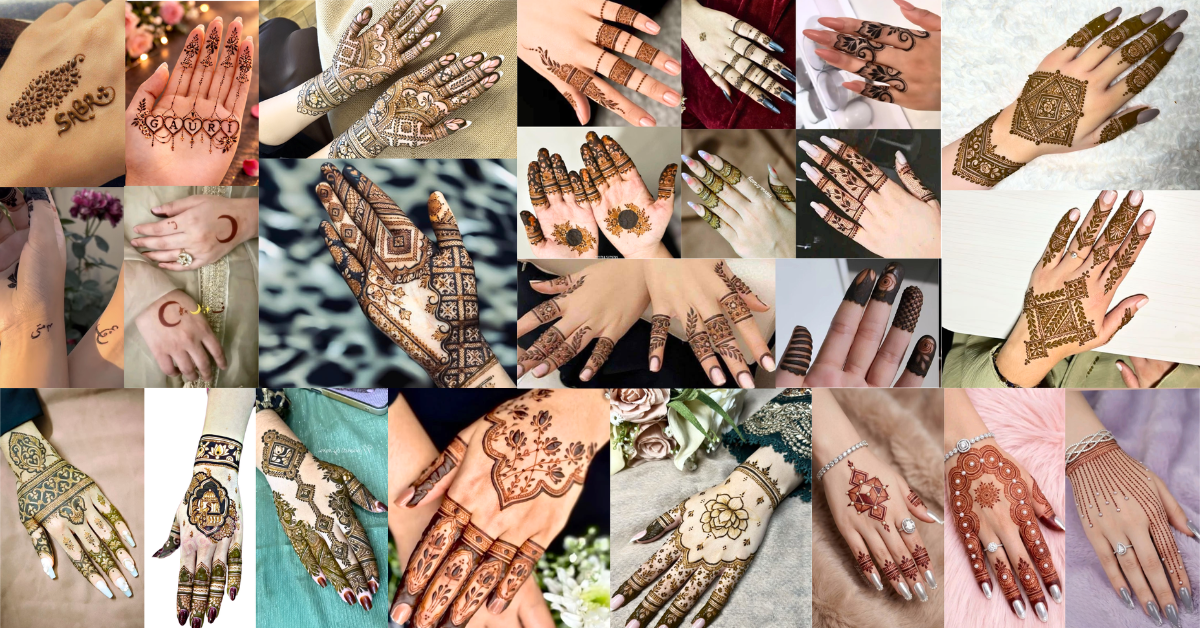
Mehndi, commonly known as henna, is one of the most beloved traditions associated with Eid celebrations. Applied on the eve of Eid, fondly known as Chand Raat, it is a symbol of joy, festivity, and cultural identity cherished by women and girls across South Asia, the Middle East, and beyond. More than a decorative art, Eid Mehndi design is a timeless expression of beauty passed down through generations.
Cultural Significance
The practice of adorning hands and feet with Mehndi on Eid holds deep-rooted cultural meaning. It signifies blessings, happiness, and gratitude. Families gather together, Mehndi artists set up stalls at festive bazaars, and the ritual becomes a shared experience that strengthens bonds and keeps traditions alive.
Popular Styles of Eid Mehndi Designs
Over the centuries, Mehndi artistry has evolved into numerous regional styles, each with its own distinctive character and technique. The following are among the most admired and widely practiced styles for Eid.
Arabic Mehndi Designs
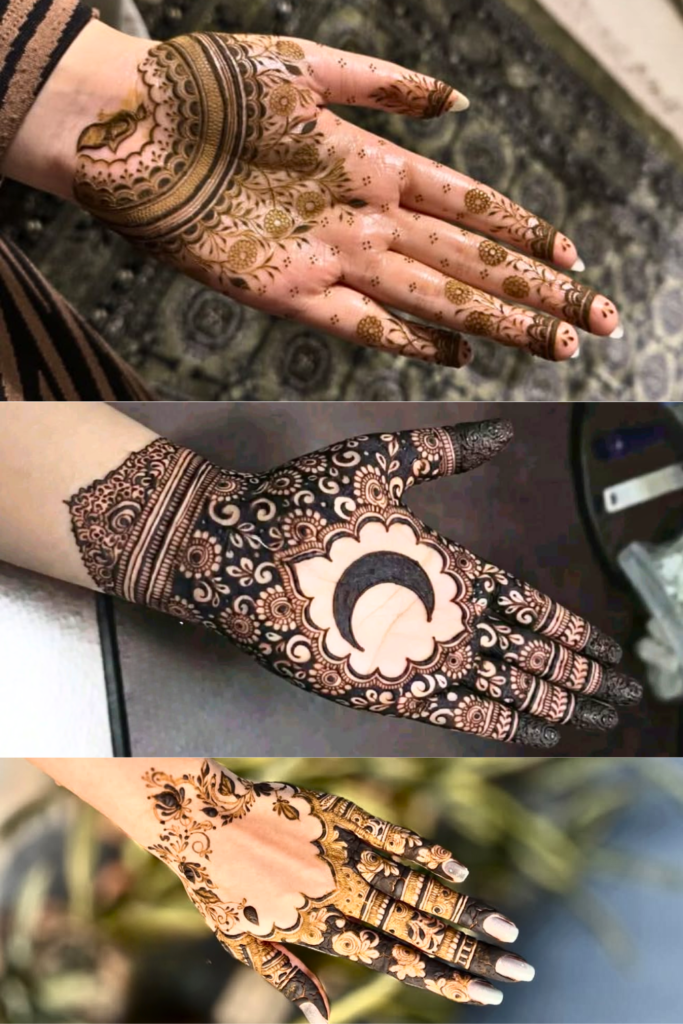
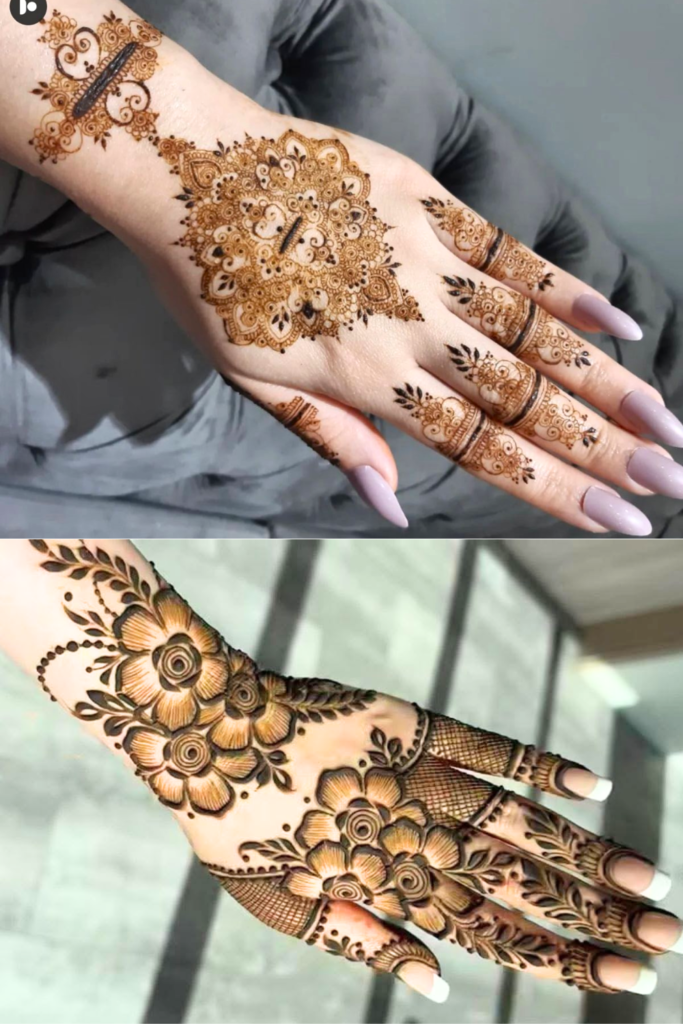
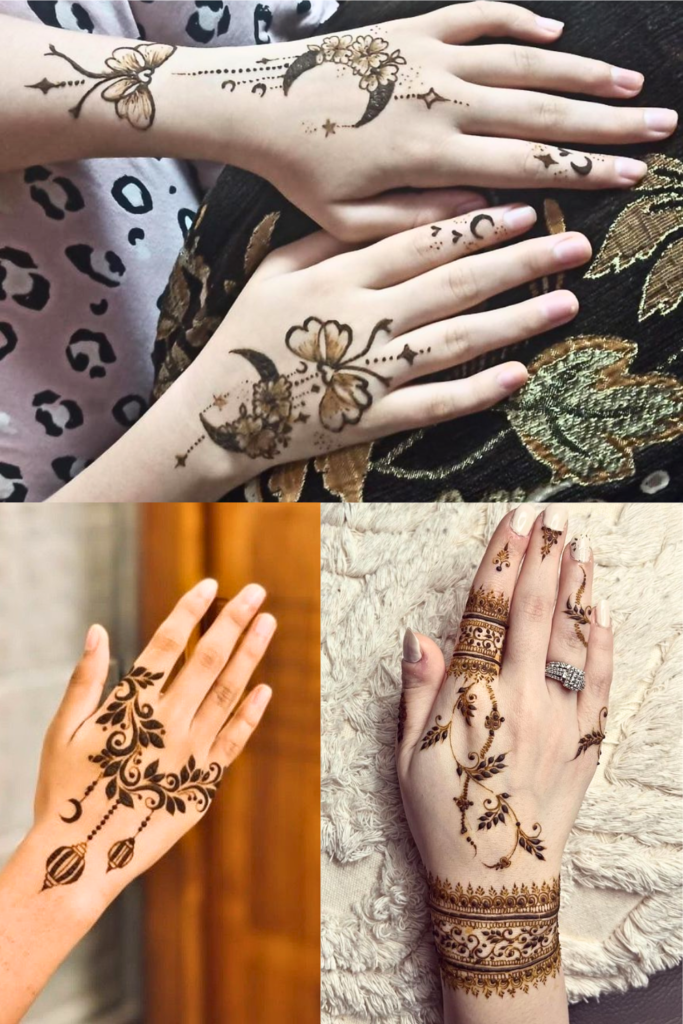
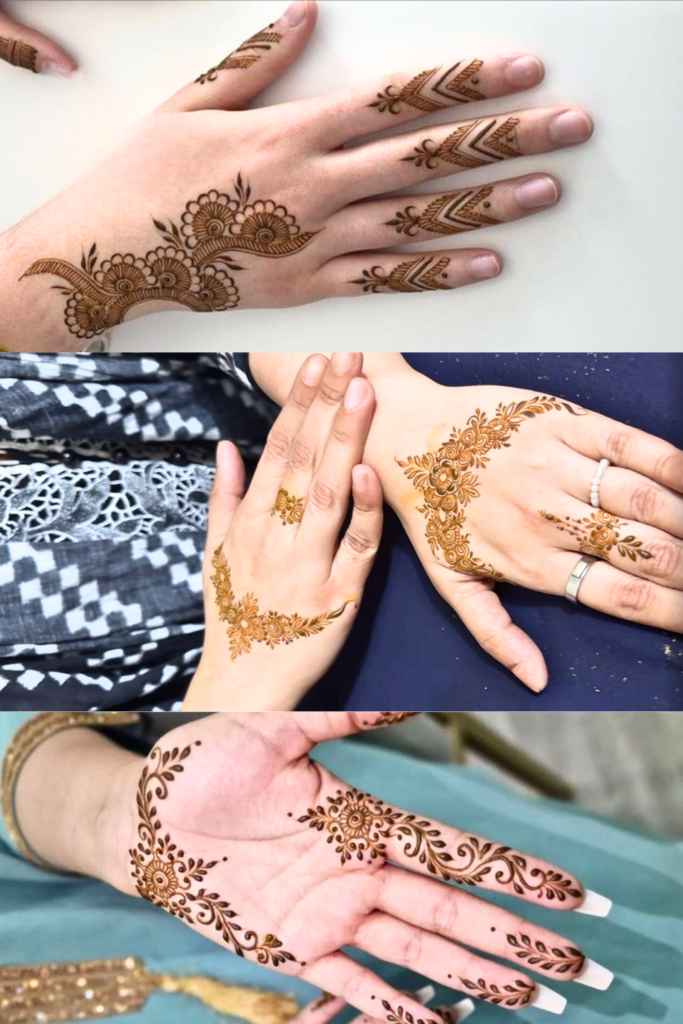
Arabic Mehndi is perhaps the most popular style chosen for Eid celebrations. It is characterized by bold, flowing floral patterns, large leaves, and graceful vines that spread across the back of the hand and fingers. The designs are typically spaced out, leaving considerable negative space, which gives them an elegant and modern appearance. Arabic patterns are quick to apply and visually striking, making them a preferred choice for those who want a sophisticated look without overly dense detailing.
Pakistani and Indian Bridal Mehndi
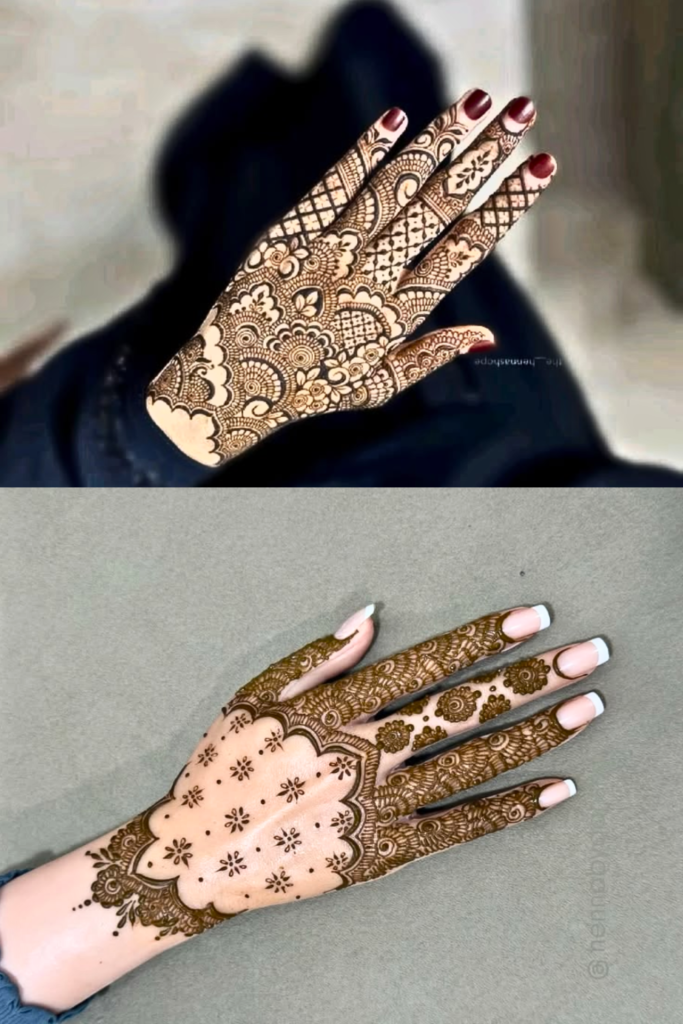
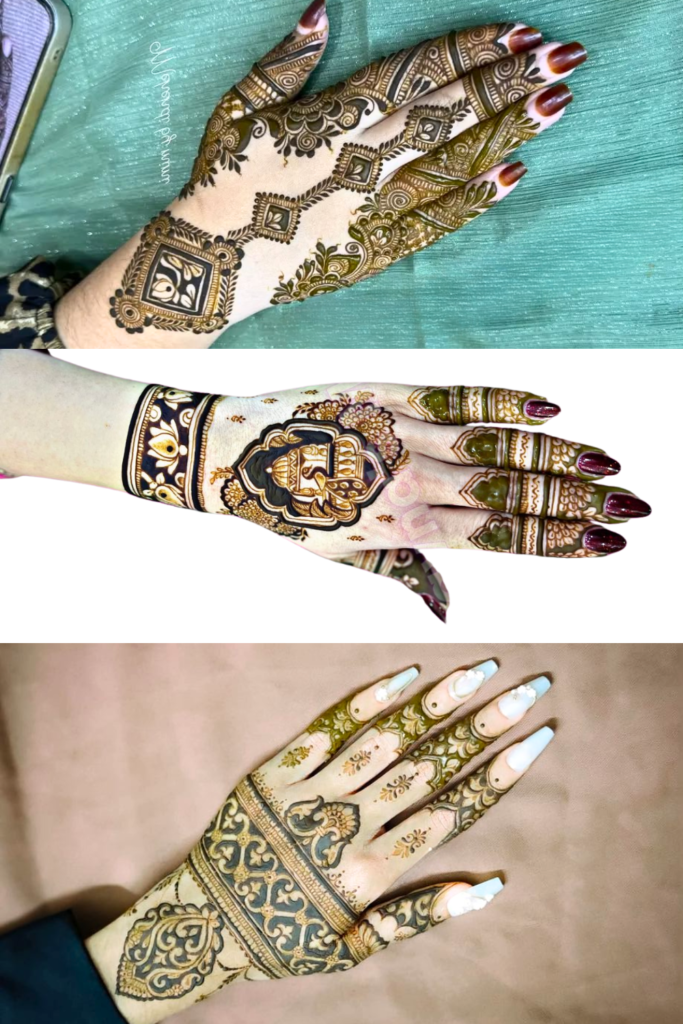
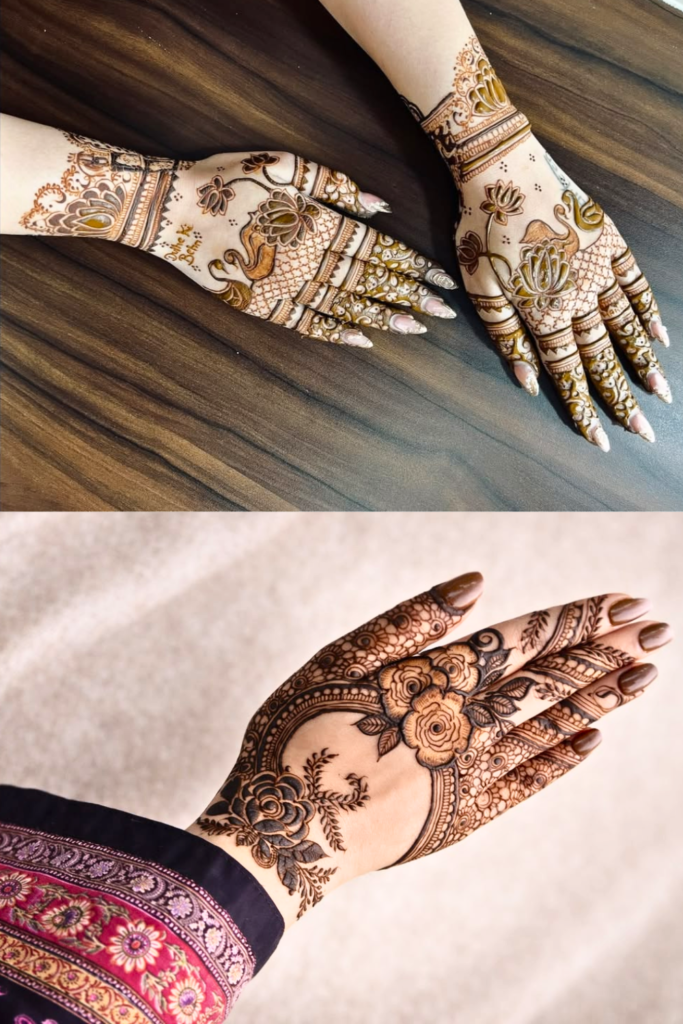
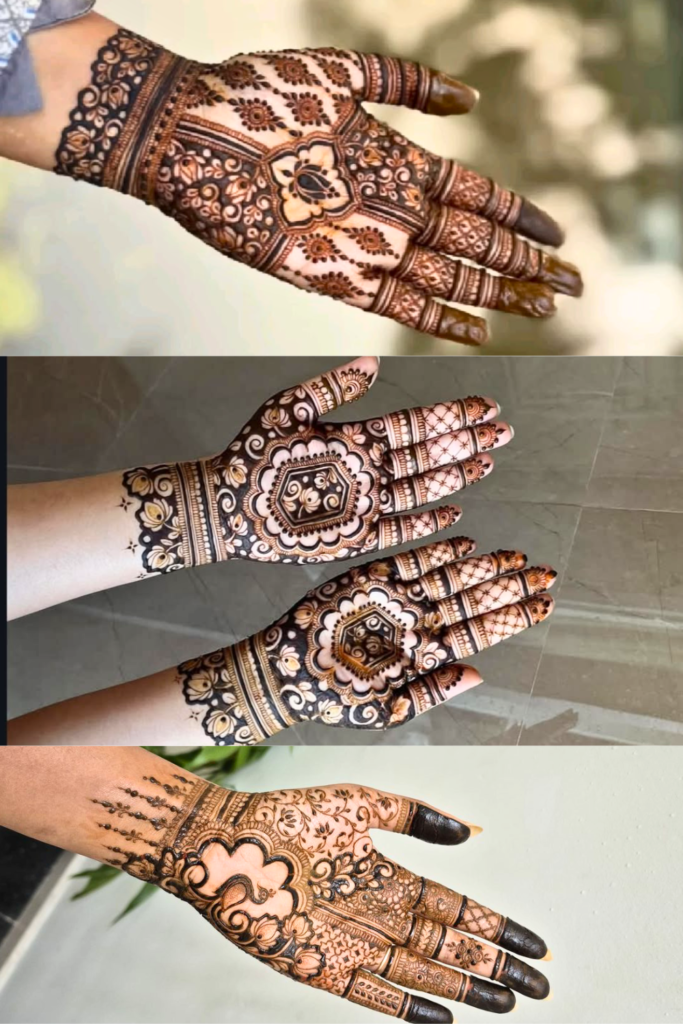
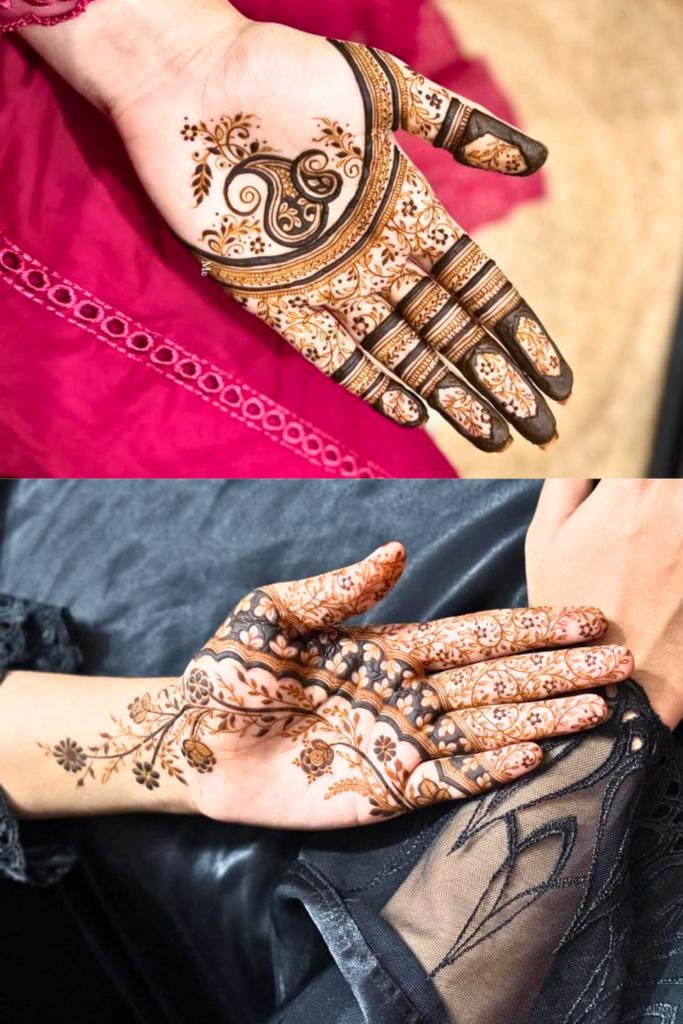
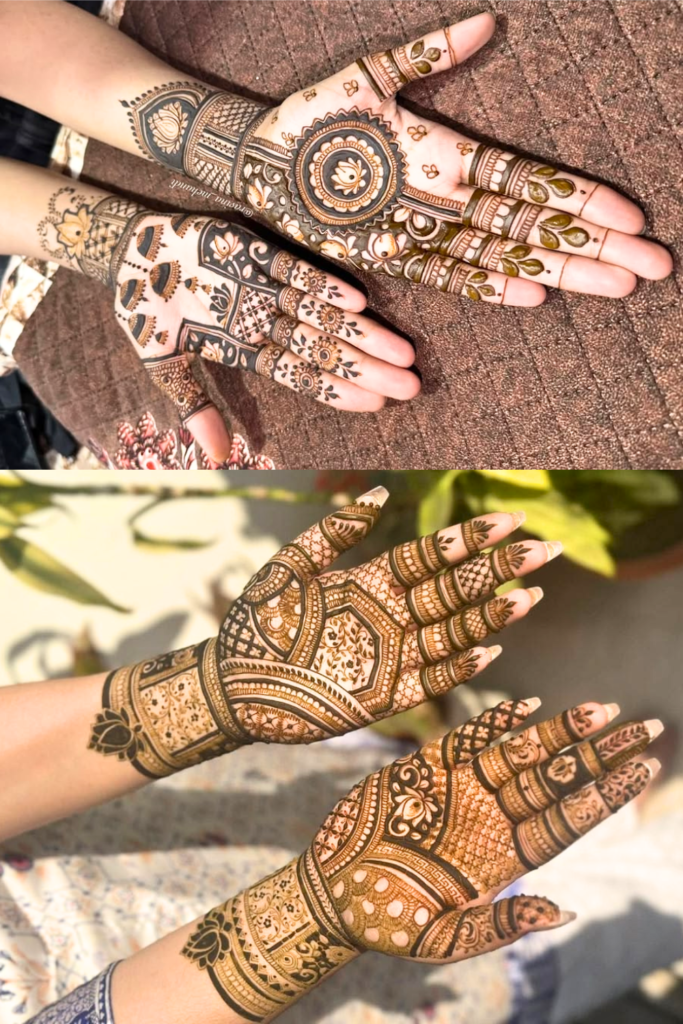
Pakistani and Indian Mehndi styles are known for their extraordinary intricacy and density. These designs cover the hands and arms extensively, featuring elaborate geometric patterns, paisleys, peacocks, floral motifs, and fine lacework. Although traditionally associated with bridal occasions, many women opt for dense, full-coverage Mehndi patterns during Eid as well, particularly for Eid ul-Adha and Eid ul-Fitr celebrations.
Moroccan Mehndi Designs
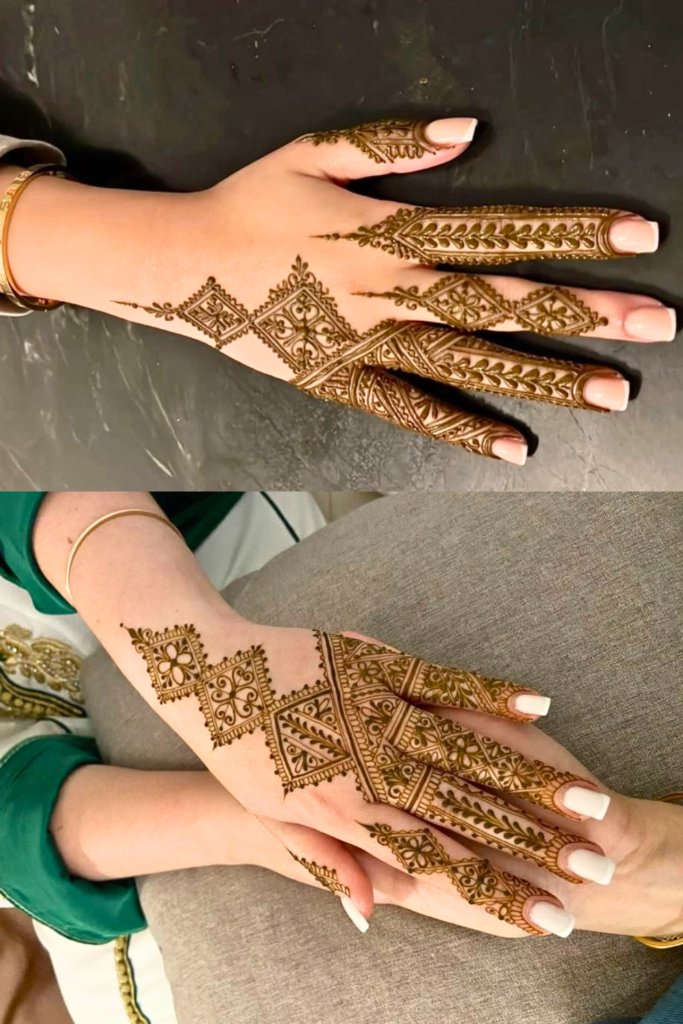
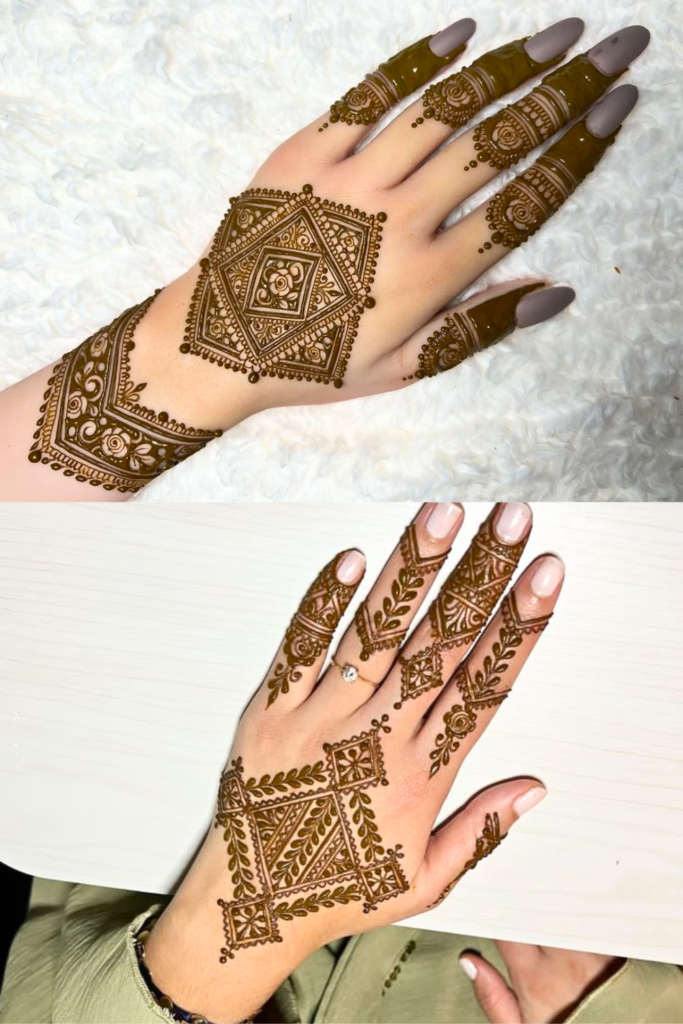
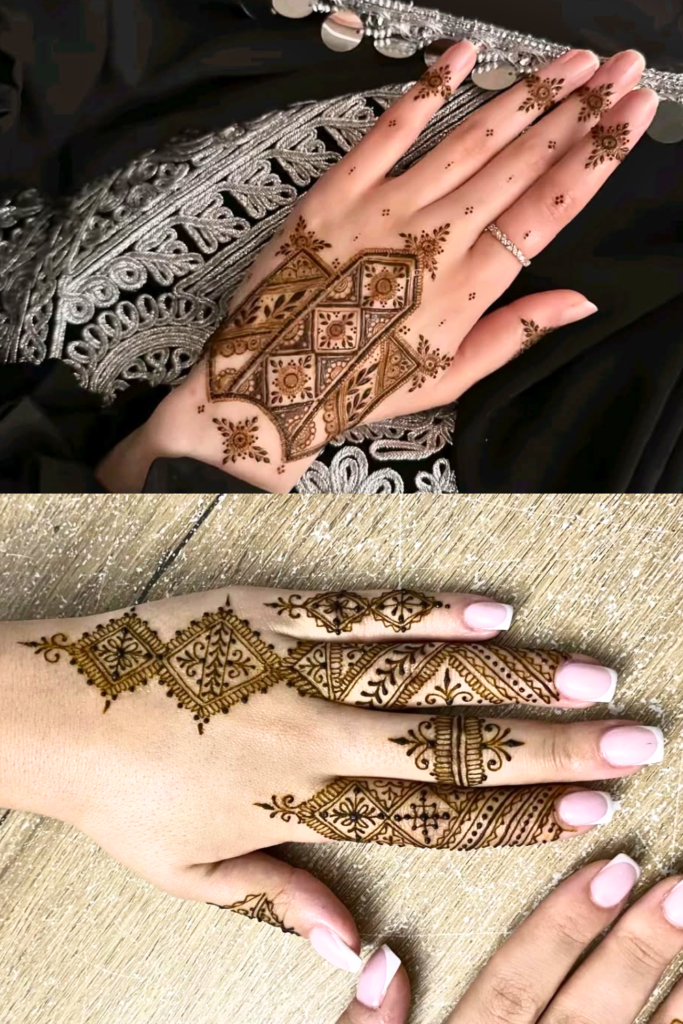
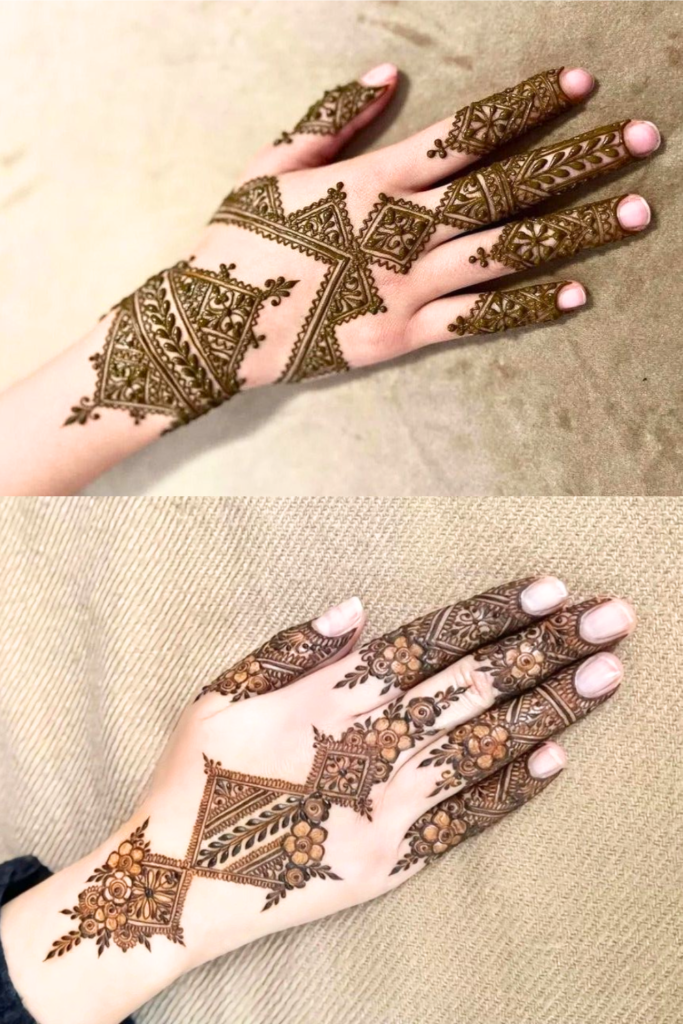
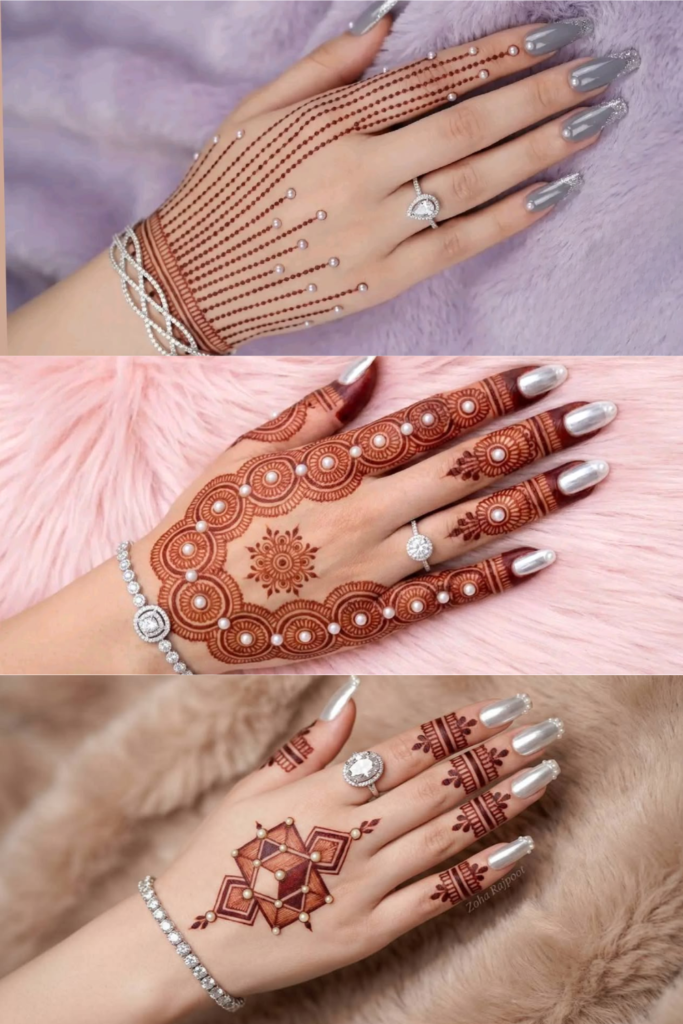
Moroccan Mehndi reflects the artistic heritage of North Africa and is distinguished by its strong geometric patterns, angular lines, and symmetrical compositions. Unlike the flowing curves of Arabic designs, Moroccan Mehndi relies on precise shapes such as diamonds, triangles, and interlocking grids. This style carries a bold and structured aesthetic that appeals to those who prefer minimalist yet powerful designs.
Indo-Arabic Fusion Designs
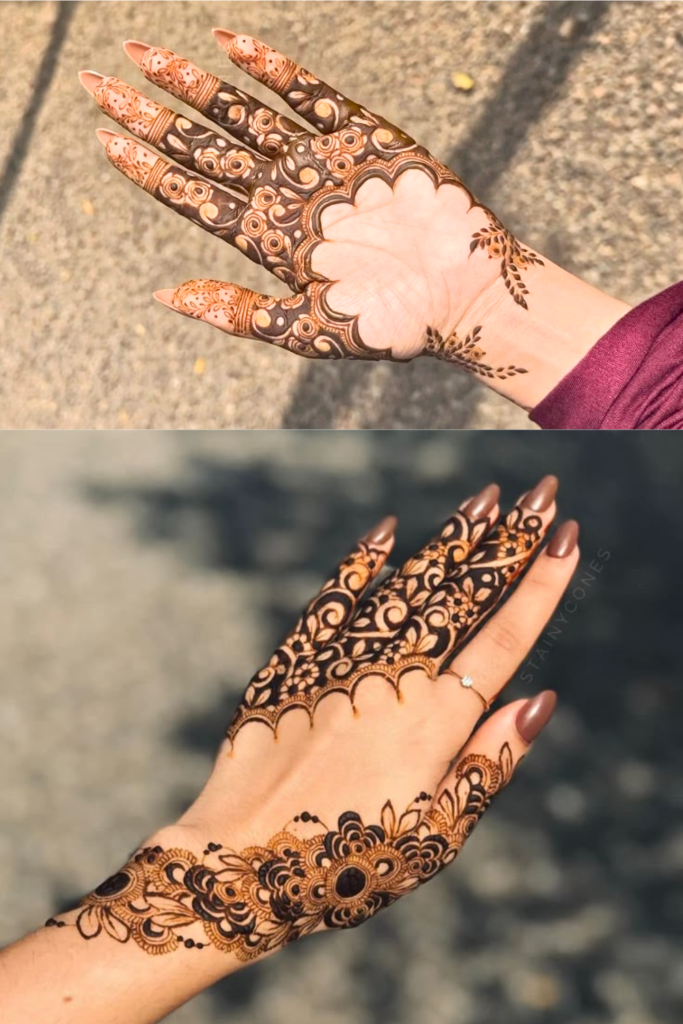
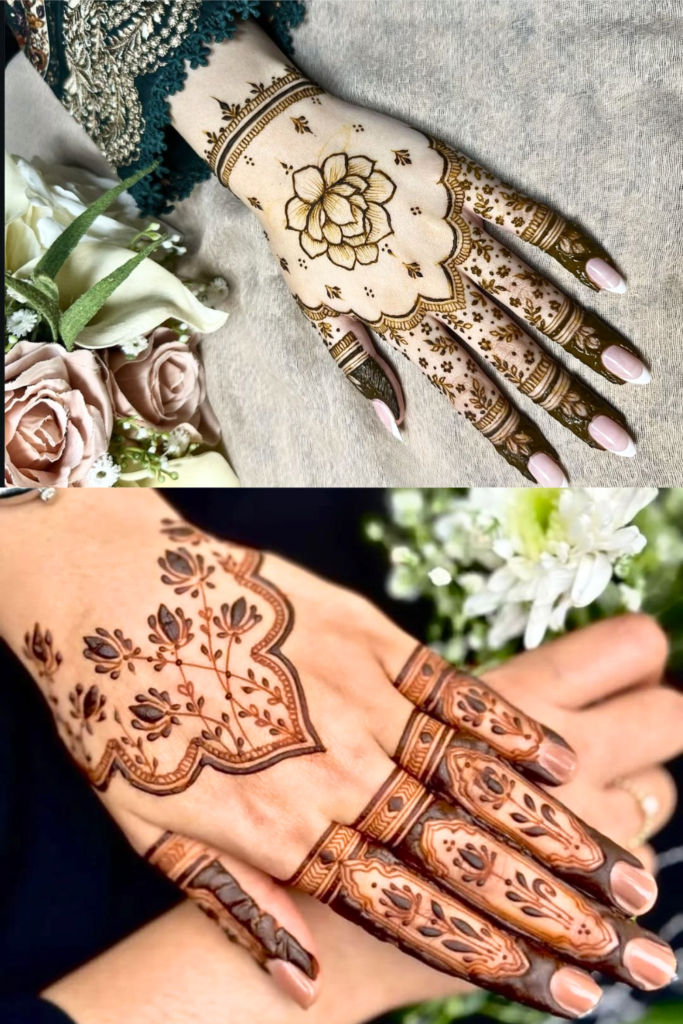
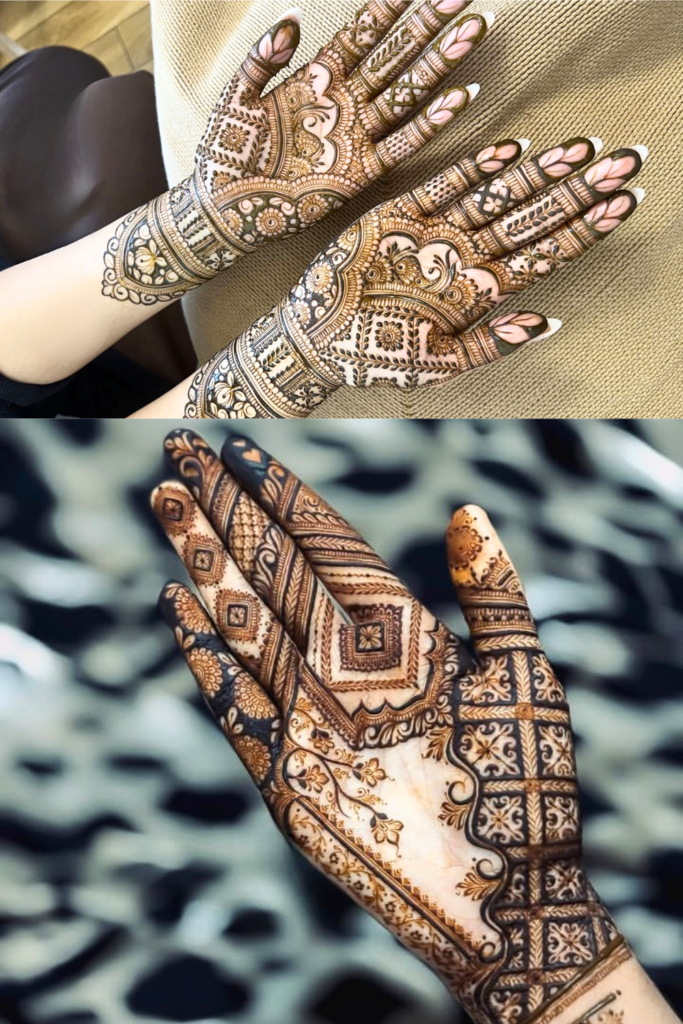
In recent years, the fusion of Indian and Arabic styles has grown immensely popular. These hybrid designs combine the fine detailing of Indian Mehndi with the open, flowing elements of Arabic patterns. The result is a balanced composition that is simultaneously intricate and elegant, making it a highly sought-after style for Eid.
Minimalist and Contemporary Mehndi
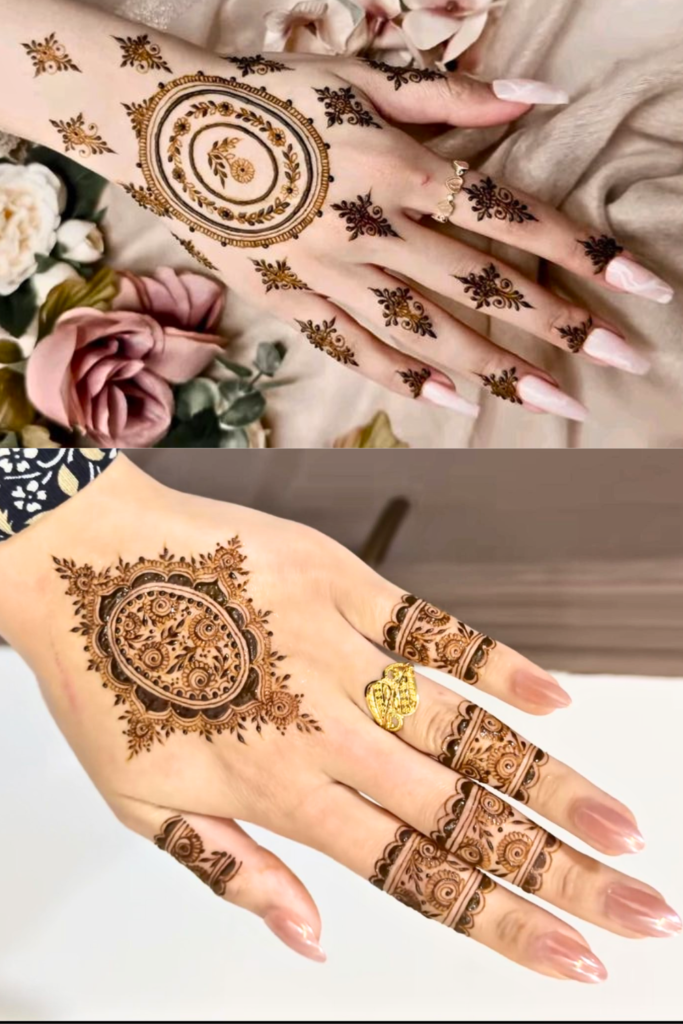
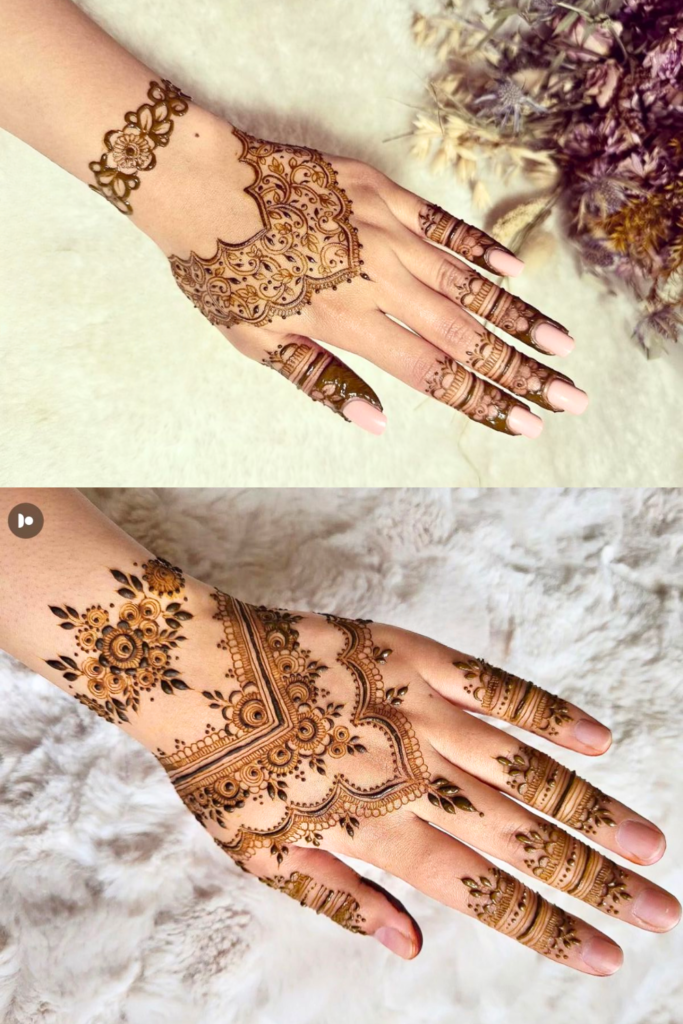
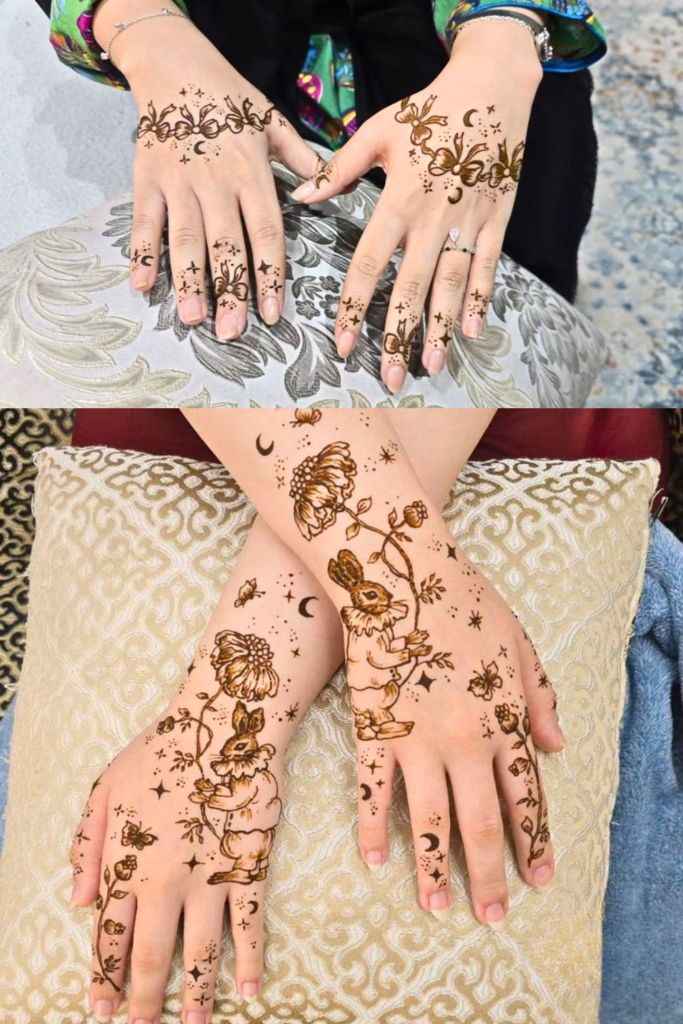
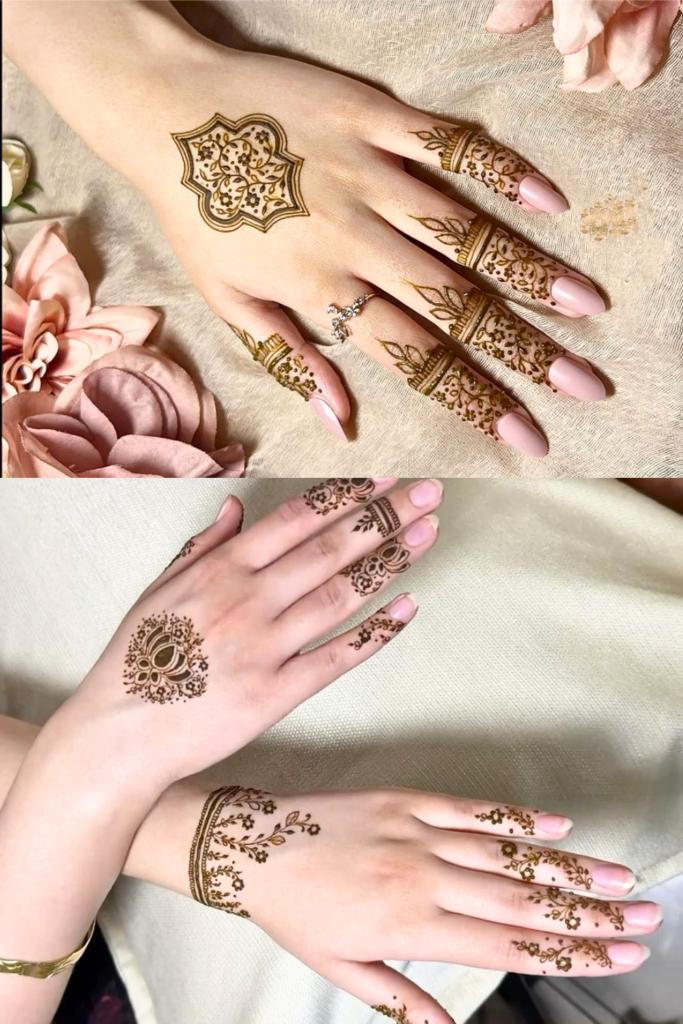
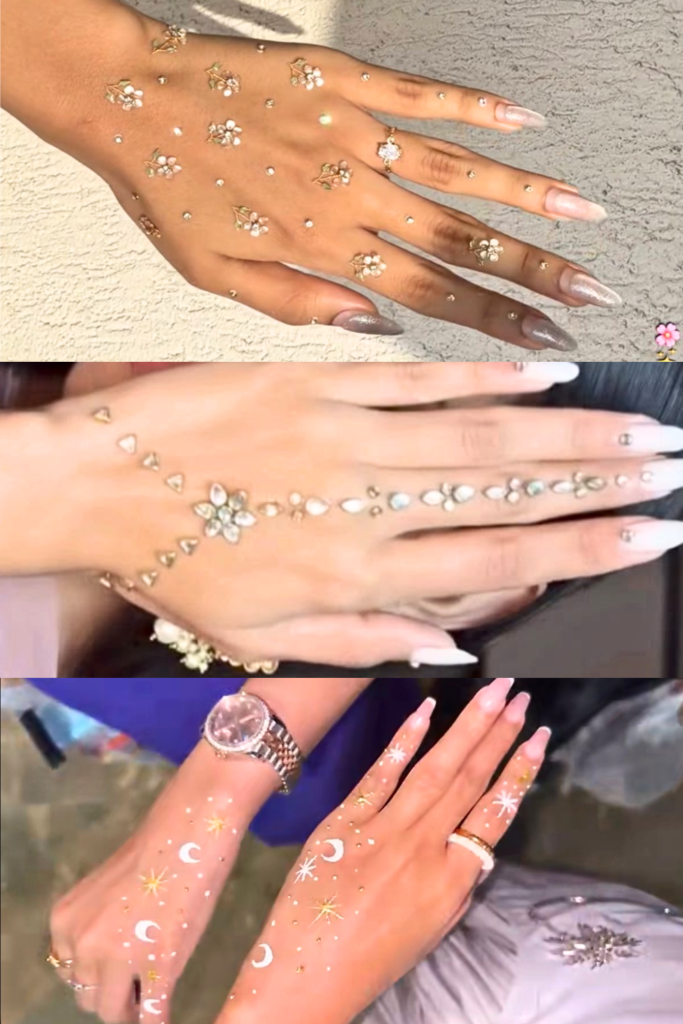
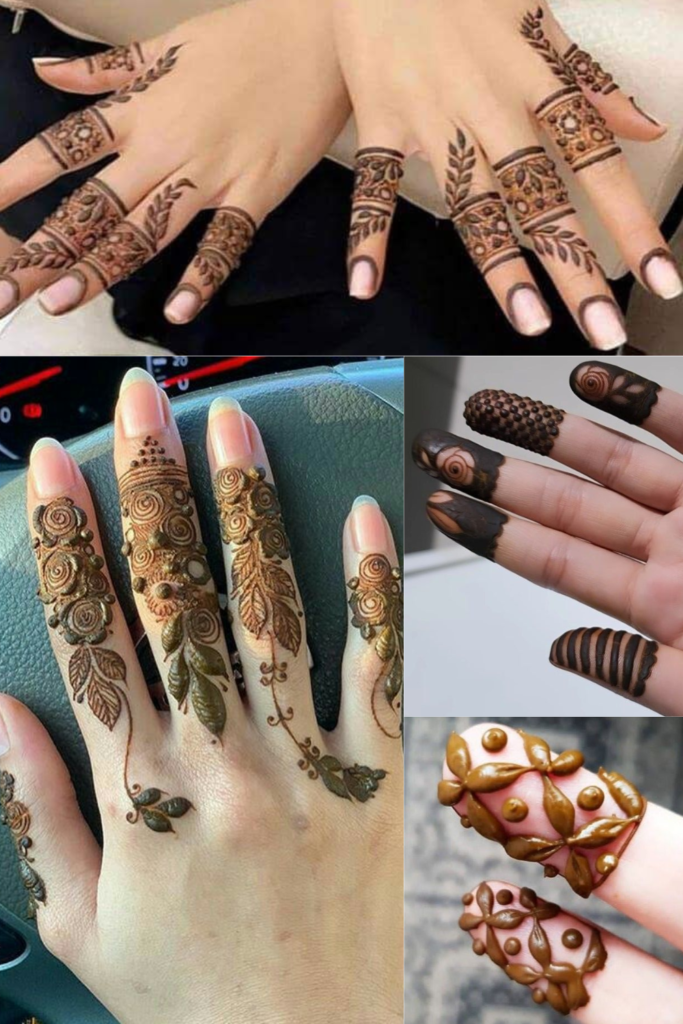
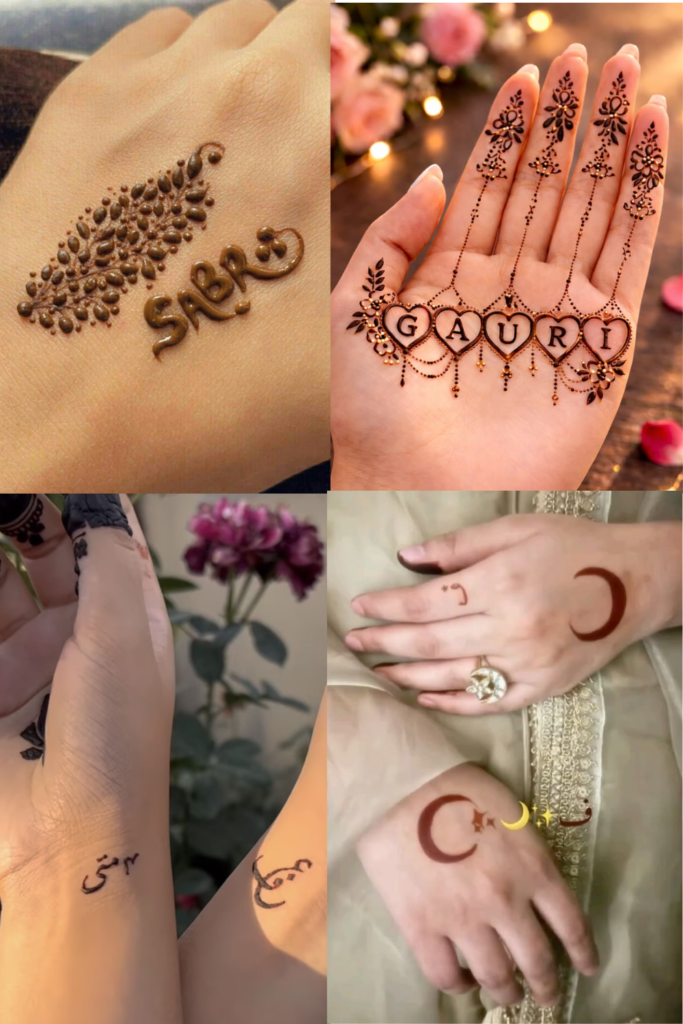
Modern Mehndi trends have embraced minimalism, particularly among younger generations. Simple outlines, single motifs, finger-tip designs, and delicate bracelet patterns have become fashionable choices. These contemporary styles are quick to apply and suit those who prefer a subtle yet tasteful adornment for the occasion.
Modern Trends in Eid Mehndi
Contemporary Mehndi artistry continues to evolve with changing tastes and global influences. Several noteworthy trends have emerged in recent years.
Glitter and Rhinestone Embellishments are increasingly used to enhance dried Mehndi designs, adding a festive sparkle that complements Eid attire.
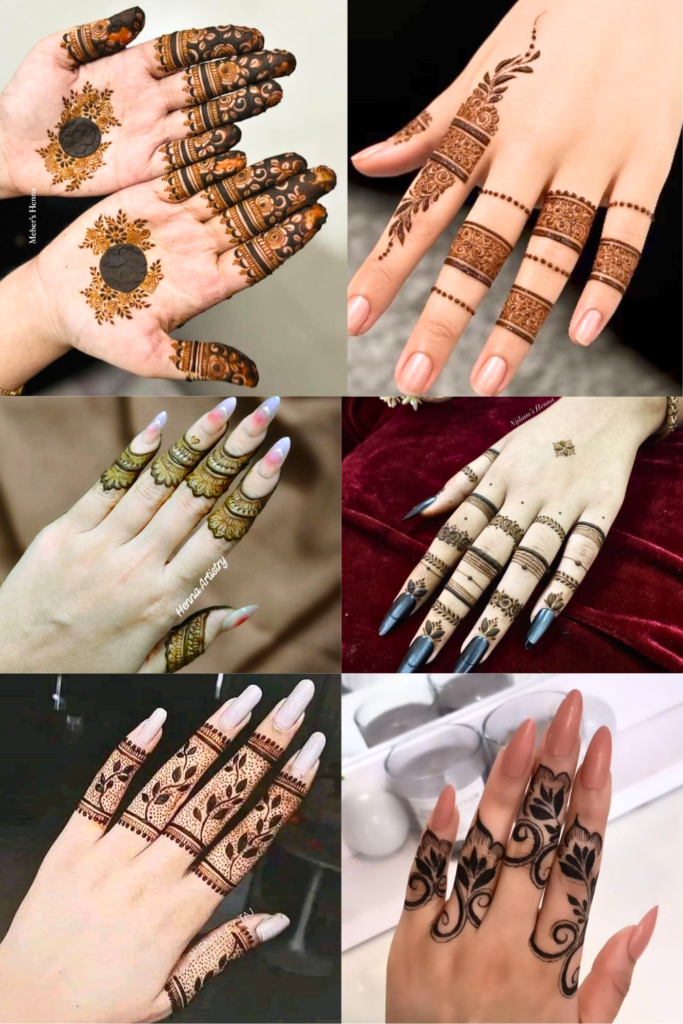
Finger-Only Designs have become a fashionable minimalist choice, focusing intricate work exclusively on the fingers for a refined, modern aesthetic.
Negative Space Designs utilize the natural skin tone as part of the design by leaving specific areas unhennaed, creating a striking contrast and a contemporary artistic effect.
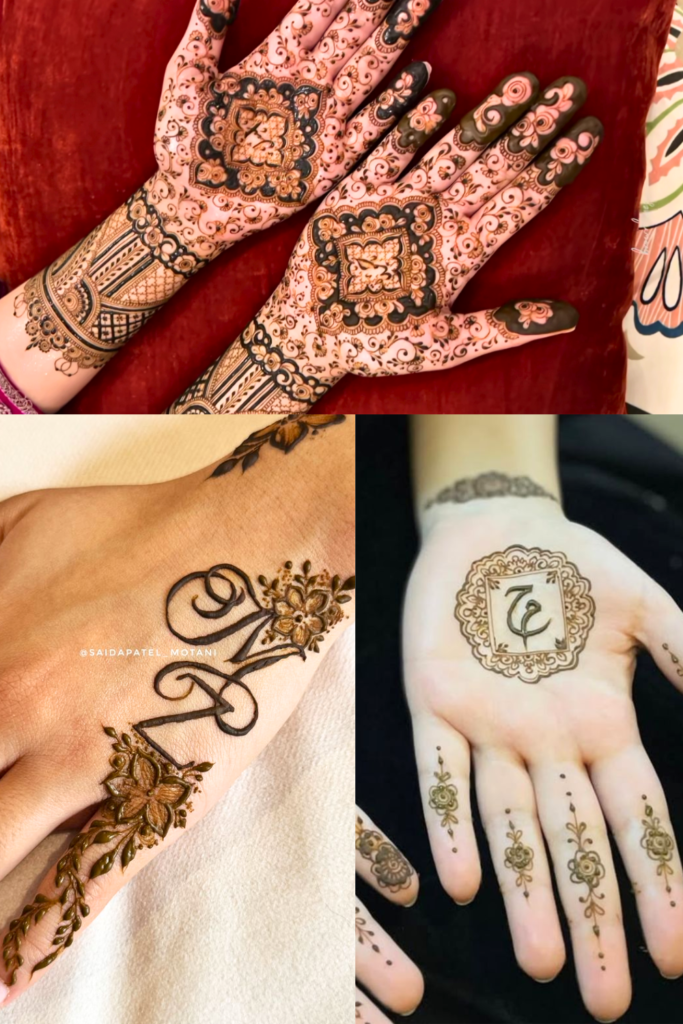
Personalized and Themed Designs incorporating names, dates, or symbolic elements have also grown popular, particularly for milestone Eid celebrations.
Common Motifs and Their Meaning
Mehndi designs draw from a rich vocabulary of motifs. Floral patterns represent beauty and prosperity, the iconic paisley or mango motif symbolizes abundance, peacock designs reflect grace and elegance, and geometric patterns convey structure and artistic precision. Together, these elements create compositions that are both visually striking and culturally meaningful.
Placement of Mehndi: Hands, Feet, and Beyond
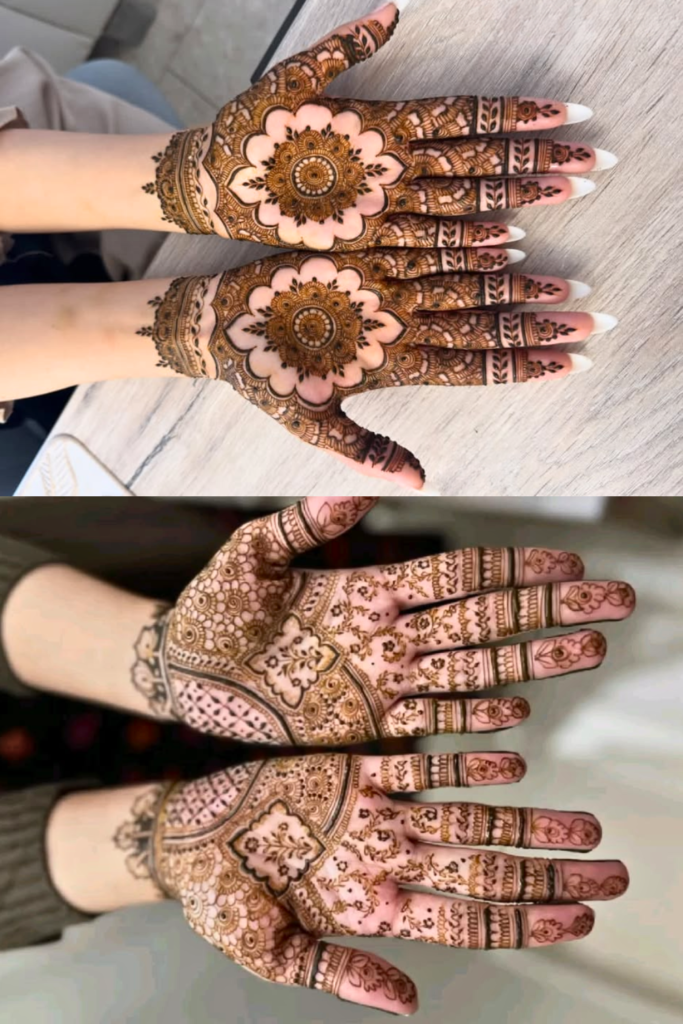
Traditionally, Mehndi is applied to the palms and the back of the hands, extending up the wrists and forearms. For festive occasions like Eid, many women choose to adorn both sides of the hand as well as the feet and ankles. Full-arm Mehndi, which extends from the fingertips to the elbow or even the shoulder, has also gained popularity for special celebrations.
Foot Mehndi typically features ankle bracelet designs, toe patterns, and motifs across the top of the foot. These designs complement footwear and add a complete, head-to-toe festive appearance.
Tips for Long-Lasting Mehndi
To achieve the best results, always use fresh, natural henna paste and ensure the skin is clean before application. Allow the paste to dry for at least four to six hours before removing it, and avoid contact with water for several hours afterward. Applying a lemon-sugar mixture over the dried design helps deepen the stain significantly.
Mehndi as a Festive Experience
Beyond its visual beauty, Mehndi is a social ritual. The process of gathering with family, selecting designs, and watching intricate patterns take shape is an experience full of warmth and celebration. It connects generations, preserves cultural heritage, and adds a personal, meaningful touch to every Eid occasion.
Conclusion
Eid Mehndi design is a beautiful blend of art, tradition, and community spirit. Whether one prefers elaborate patterns or simple modern designs, Mehndi remains an enduring symbol of festivity and grace, a cherished ritual that makes every Eid truly special.
“Mehndi is not merely applied to the hands; it is etched into the heart of every celebration.”