
Introduction
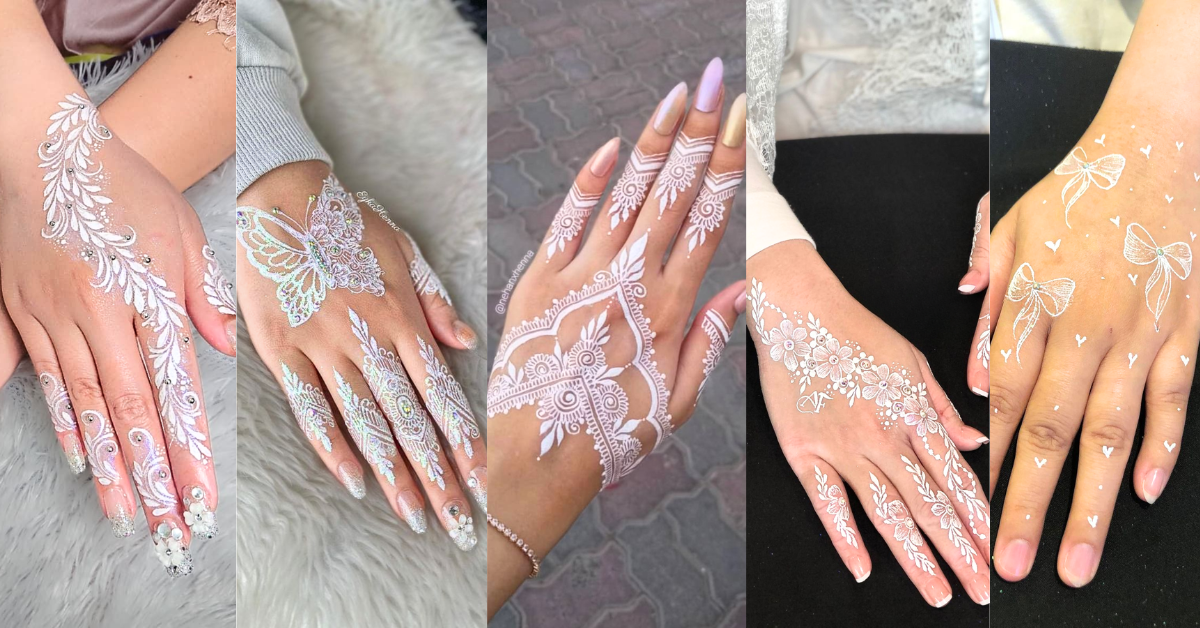
If you’ve ever seen white henna design in person, you know the feeling: you stop, stare, and wonder how something so intricate ended up on someone’s skin. It looks like lace. Like jewelry. Like a dream someone drew by hand. That’s the magic of white henna . And honestly? It’s only getting more popular.
What Is White Henna ?
Surprise, it’s not actually henna. Real henna stains your skin brown using a plant dye. White henna is a body-safe paste that sits on top of your skin, dries into a raised design, and washes off in a few days. Some versions have shimmer in them. Some even glow under UV light. It’s less of a dye and more of a tiny wearable art piece.
Some formulations also incorporate:
- Body-safe latex for a slightly raised, 3D effect
- Cosmetic glitter or shimmer pigments for an iridescent finish
- UV-reactive compounds for glow-in-the-dark festival aesthetics
History
Henna itself has been used for thousands of years at weddings and festivals across South Asia, the Middle East, and North Africa. It’s always meant something: love, celebration, protection.
White henna is the modern chapter of that story. It picked up steam in the early 2000s and exploded once Instagram gave artists a place to share their work. Just remember, those beautiful patterns have deep roots. Knowing where they come from makes wearing them feel a whole lot more meaningful.
The Aesthetic Appeal of White Henna
It shows up beautifully. White pops against every skin tone, bold and dramatic on deeper tones, soft and romantic on lighter ones. It photographs like a dream every single time.
It fits anywhere. Wedding? Festival? Beach? Fashion shoot? White henna just belongs. It doesn’t feel out of place the way traditional brown mehndi might in certain settings; it adapts and elevates whatever vibe you’re going for.
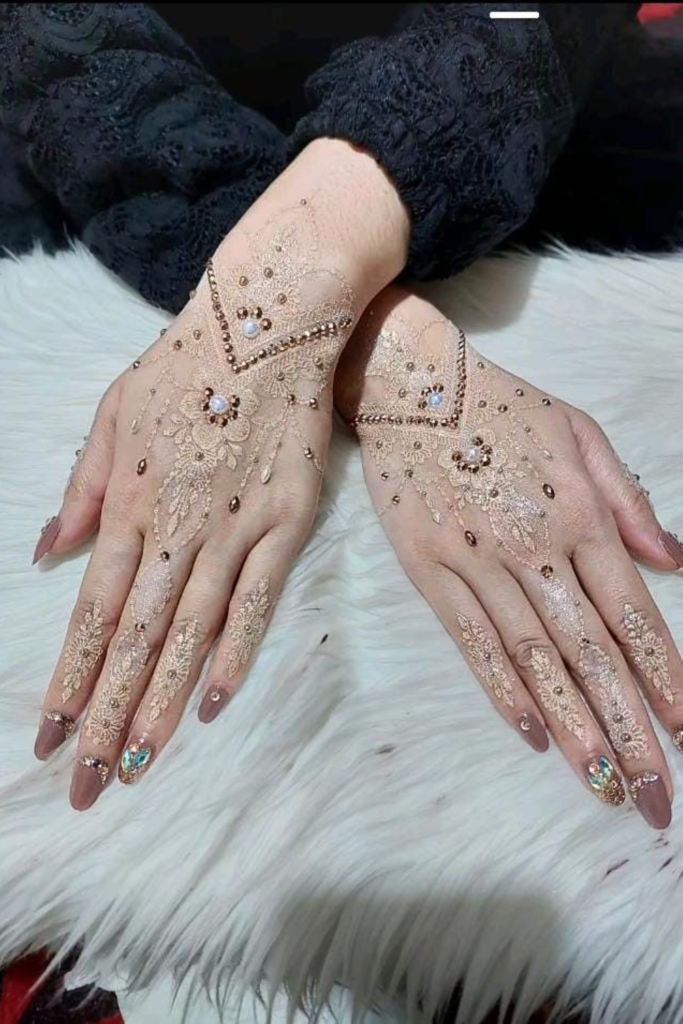
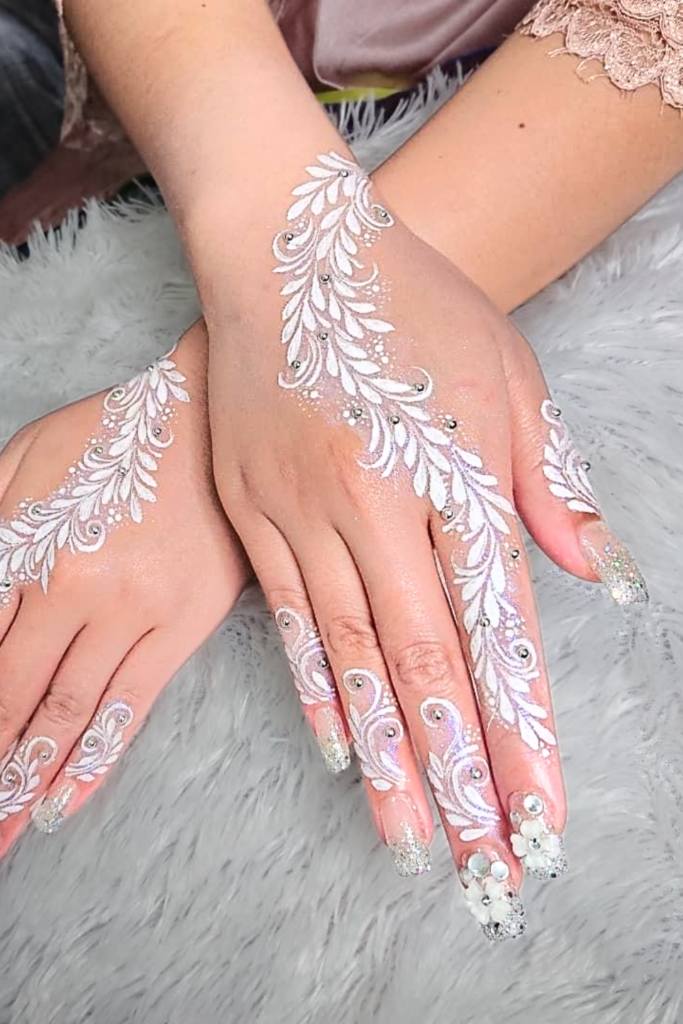
You can dress it up even more. While the paste is still fresh, artists press in crystals, gold flakes, or tiny gems. Suddenly, it’s not just body art, it’s body jewelry.
It looks good on everyone. That’s really the bottom line. No matter your skin tone, white henna finds a way to look like it was made just for you.
Popular Design Styles and Motifs
White henna designs draw heavily from traditional mehndi patterns but have also evolved to incorporate contemporary and fusion aesthetics. Some of the most popular styles include:
Traditional Mehndi-Inspired Patterns
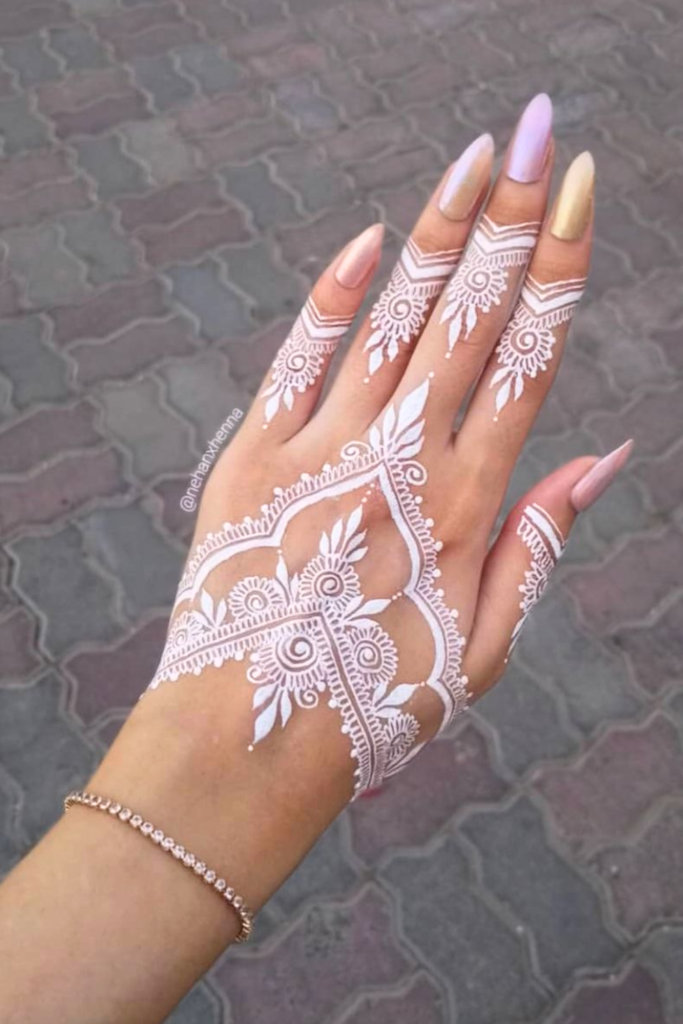
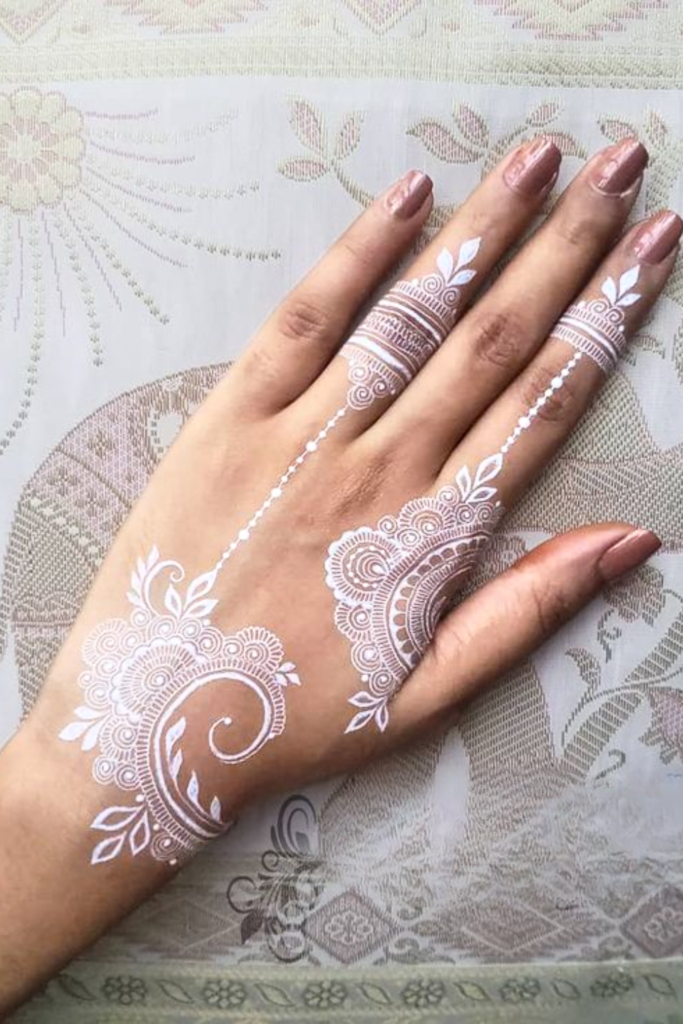
Intricate floral mandalas, paisleys (boteh), lotus flowers, and geometric lattice work form the foundation of many white henna designs. These motifs carry centuries of artistic refinement and remain timelessly beautiful.
Source:Pinterest
Source:Pinterest
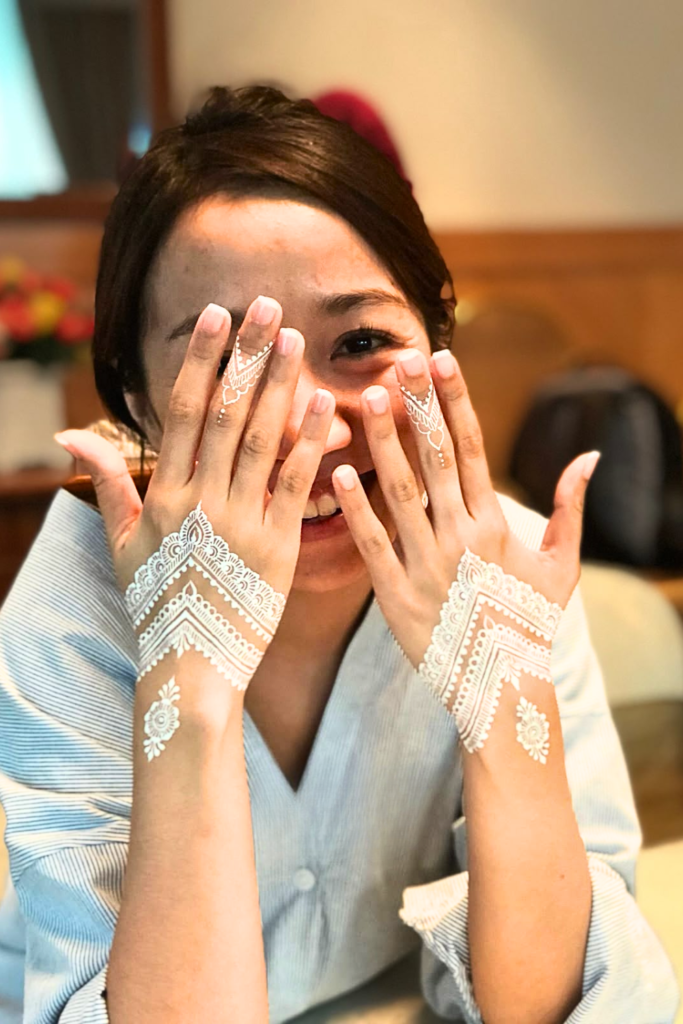
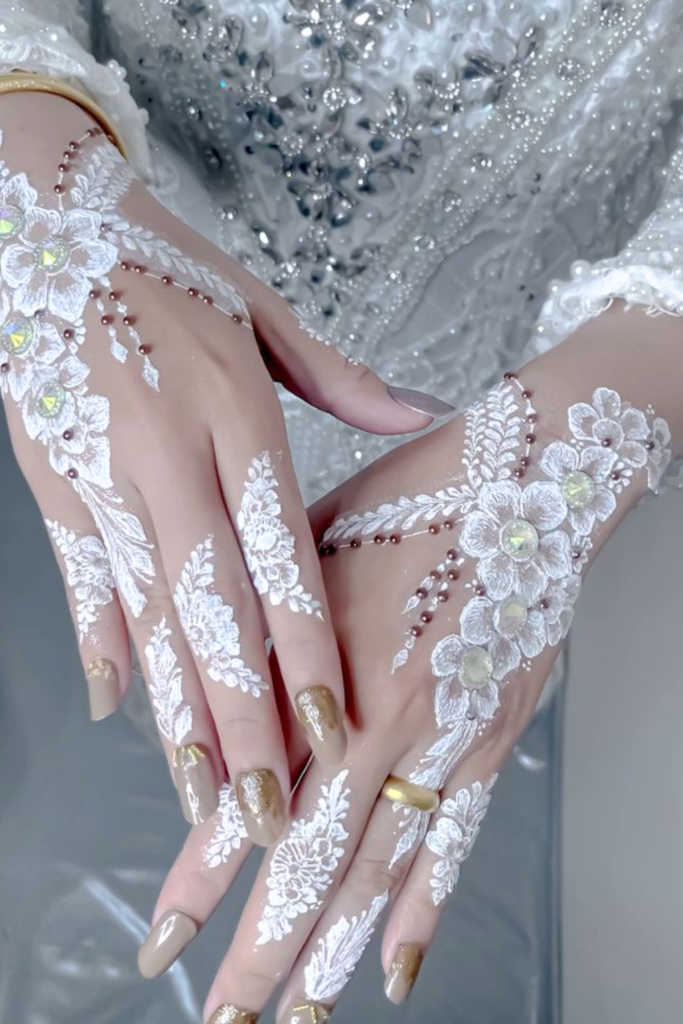
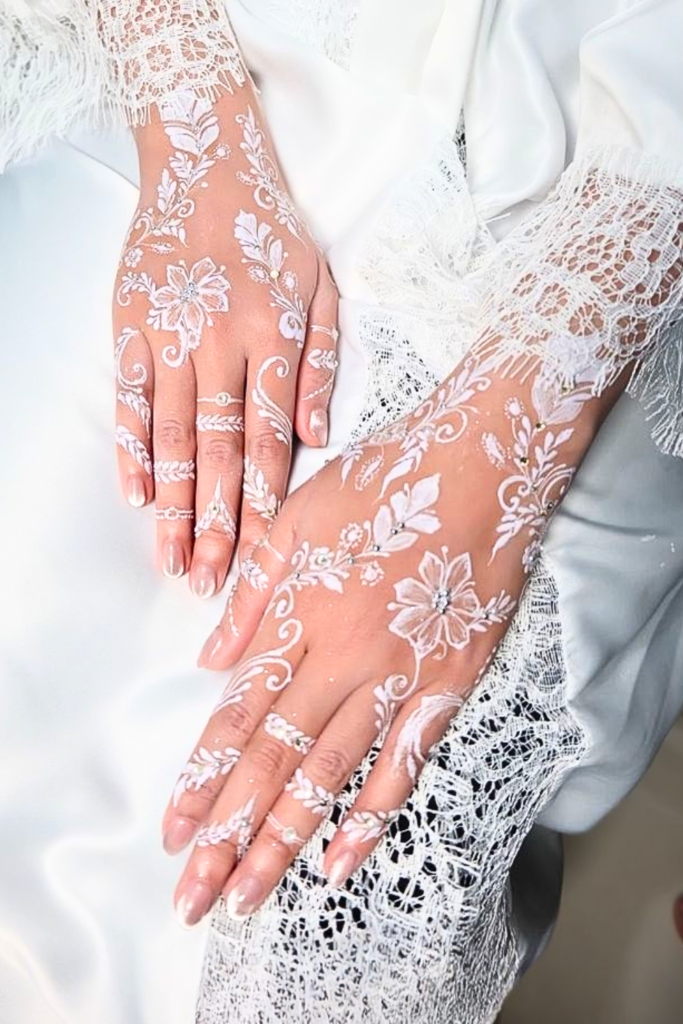
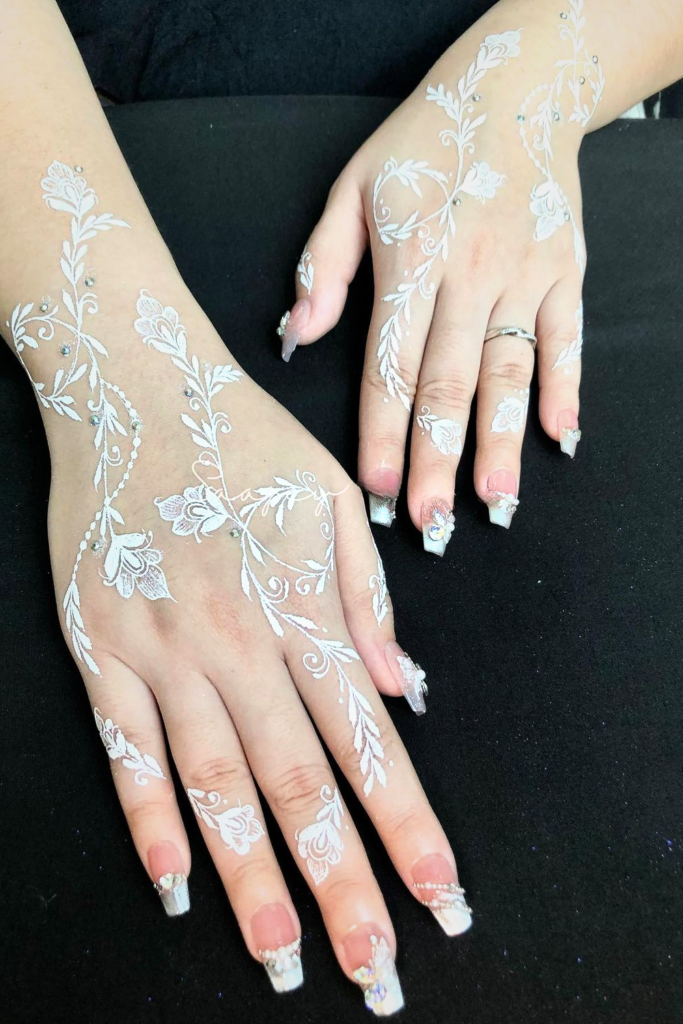
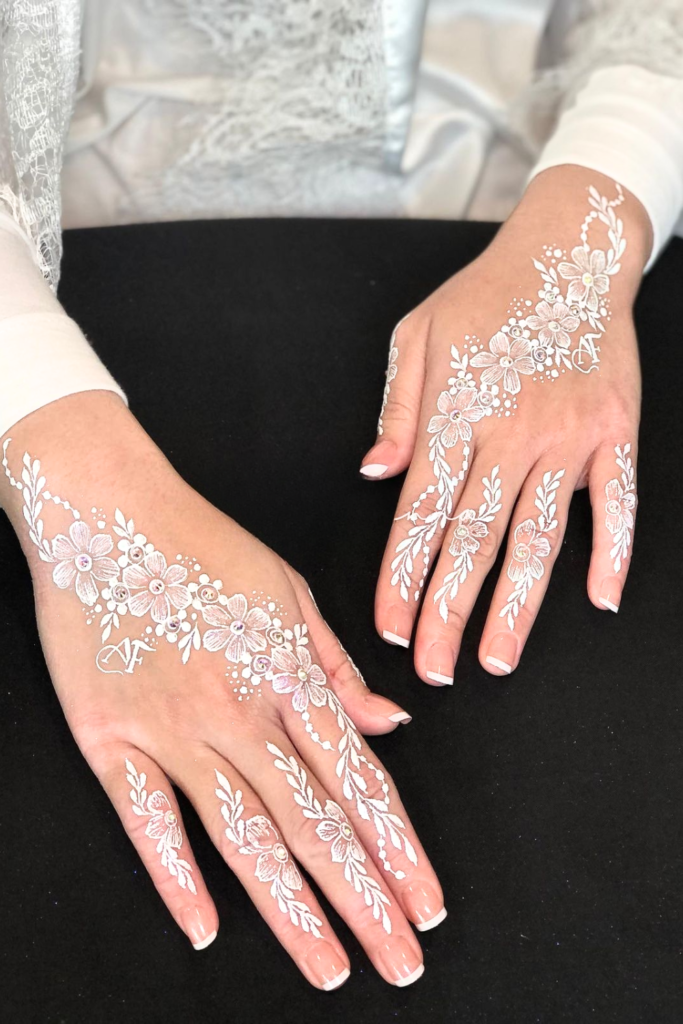
Floral and Botanical Designs
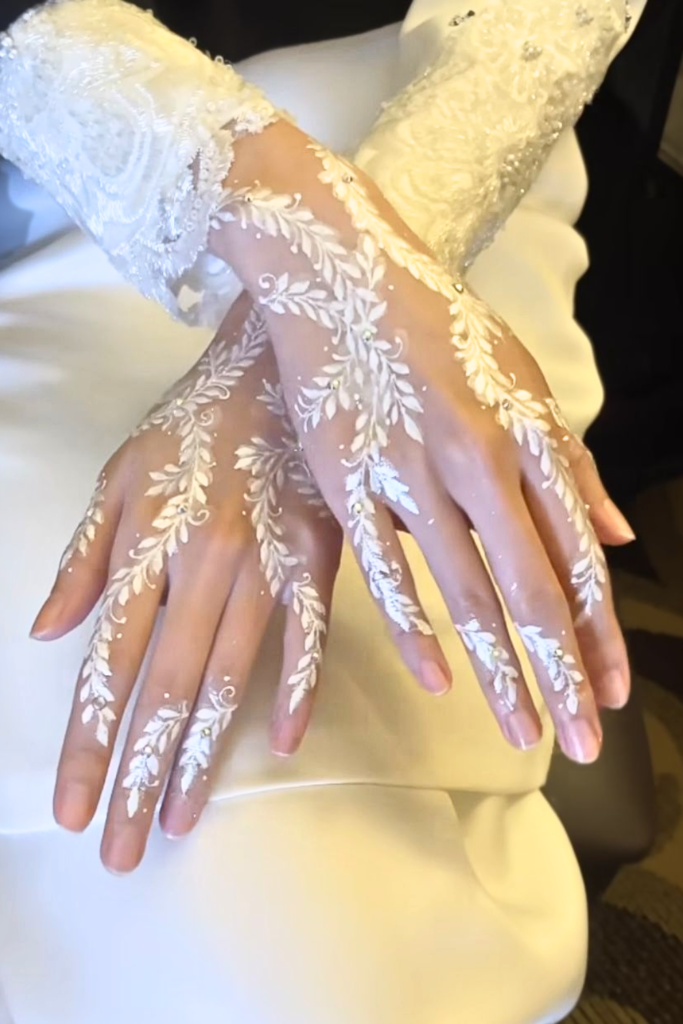
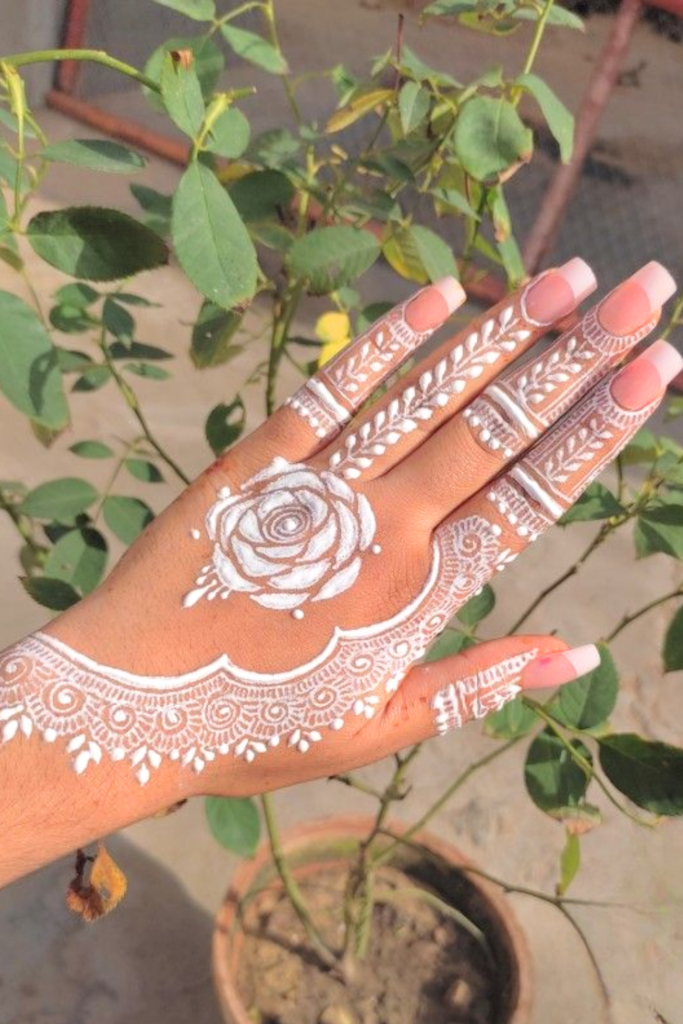
Delicate roses, trailing vines, cherry blossoms, and leaf clusters are favored for their romantic and organic quality. These designs work particularly well for bridal applications on the hands, wrists, and collarbones.
Source:Pinterest
Source:Pinterest
Source:Pinterest
Source:Pinterest
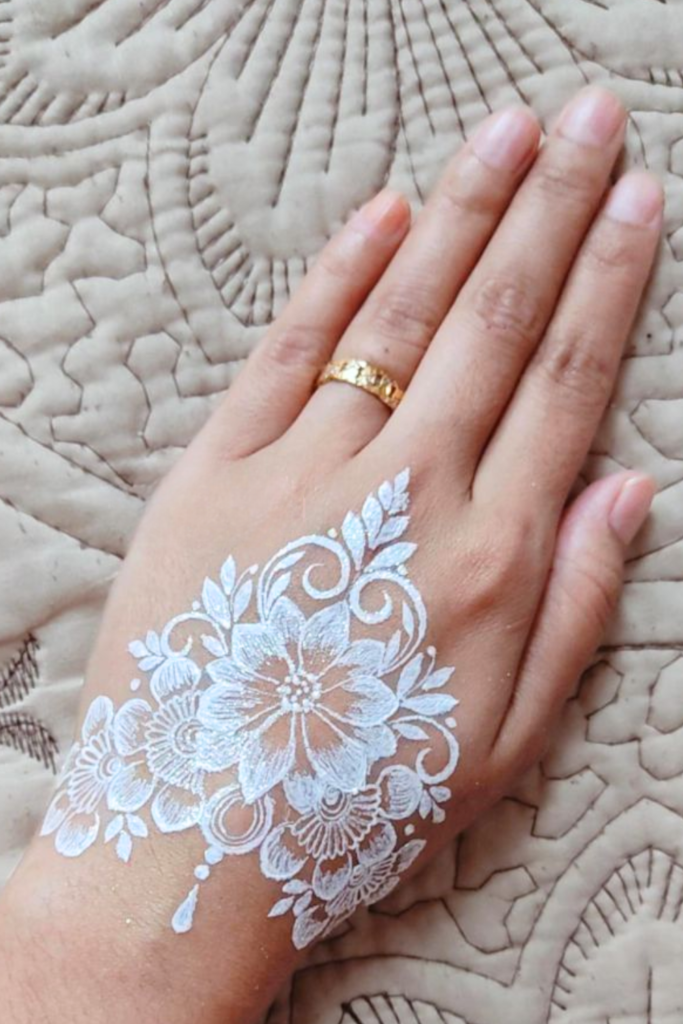
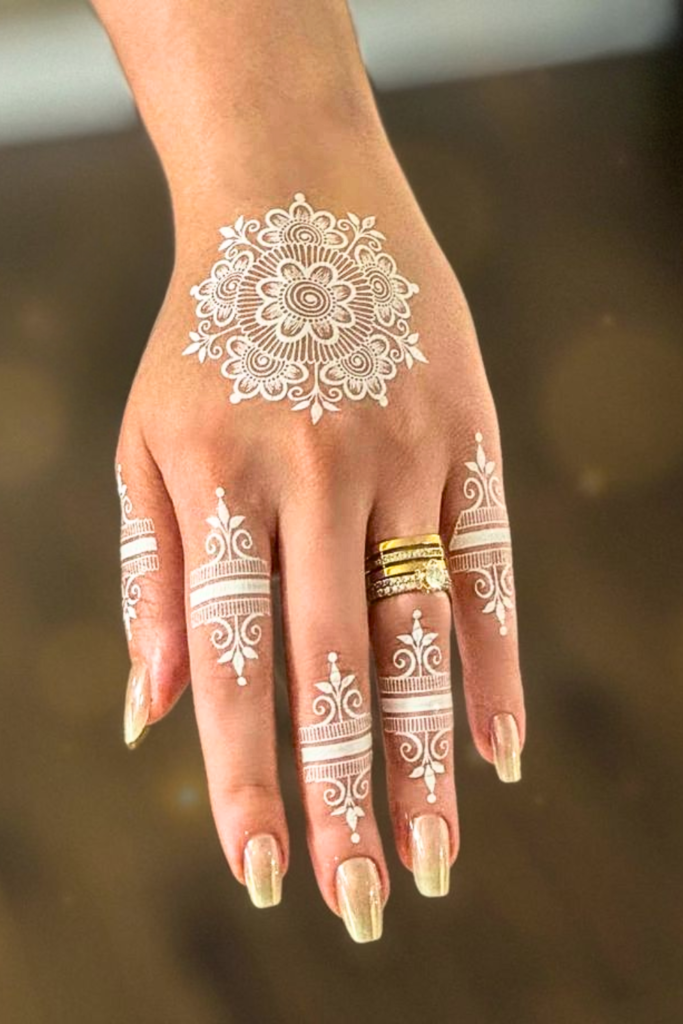
Mandala Art
Circular, symmetrical mandala designs have a meditative quality and make powerful standalone pieces on the back of the hand, upper arm, or sternum. Their structured geometry contrasts beautifully with the fluid nature of organic motifs.
Source:Pinterest
Source:Pinterest
Source:Pinterest
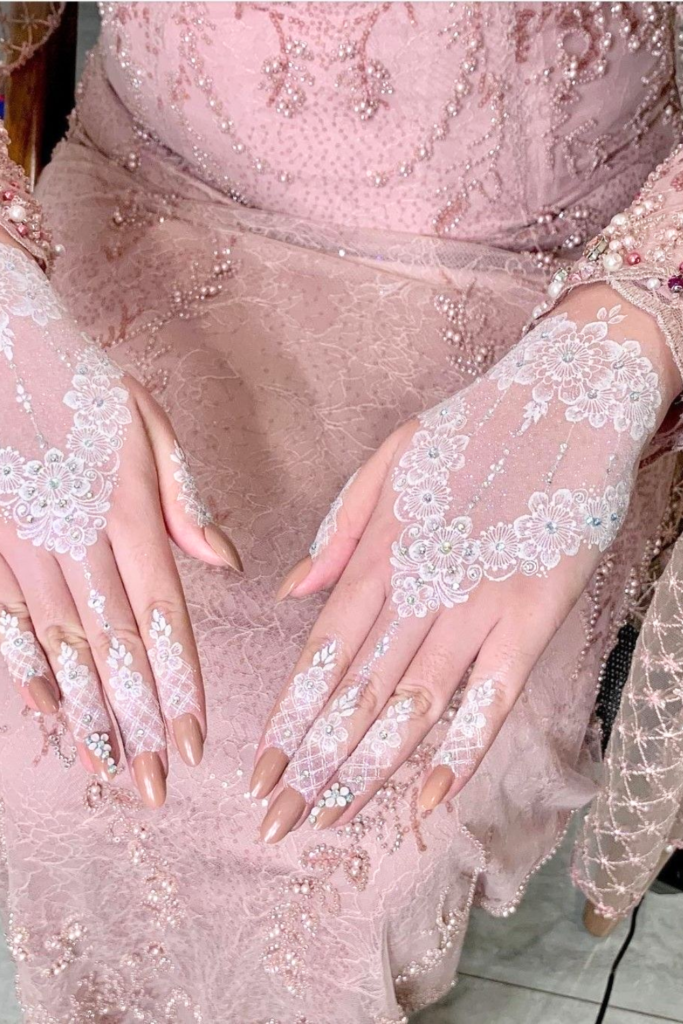
Source:Pinterest
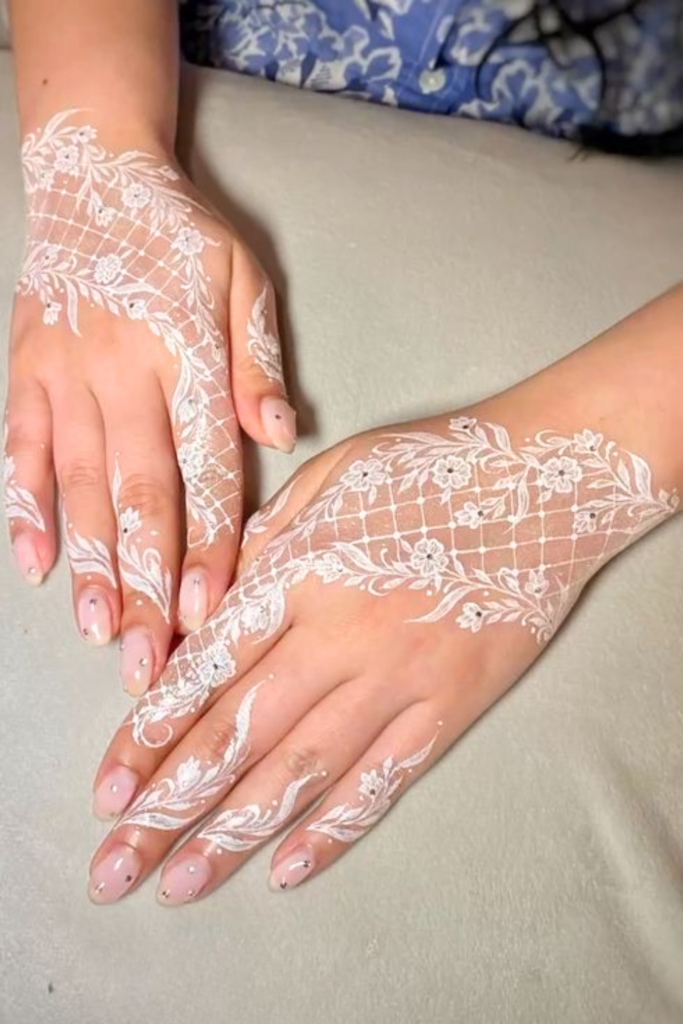
Lace and Filigree Patterns
Inspired by European lacework, these designs feature fine, interwoven lines that create the illusion of delicate fabric laid against the skin. Exceptionally popular in bridal and editorial contexts.
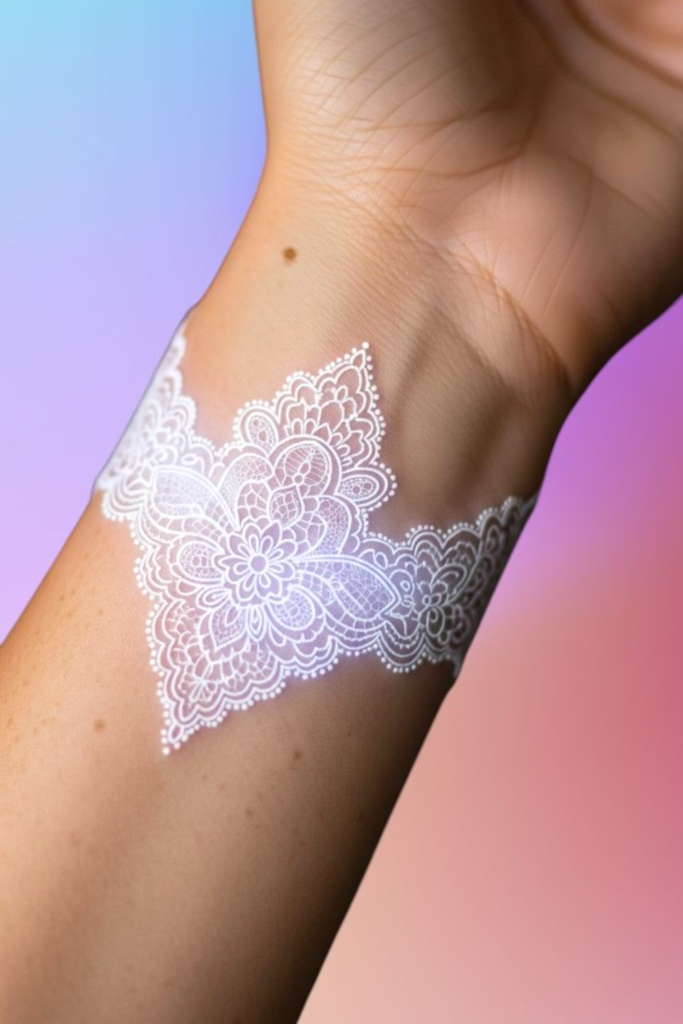
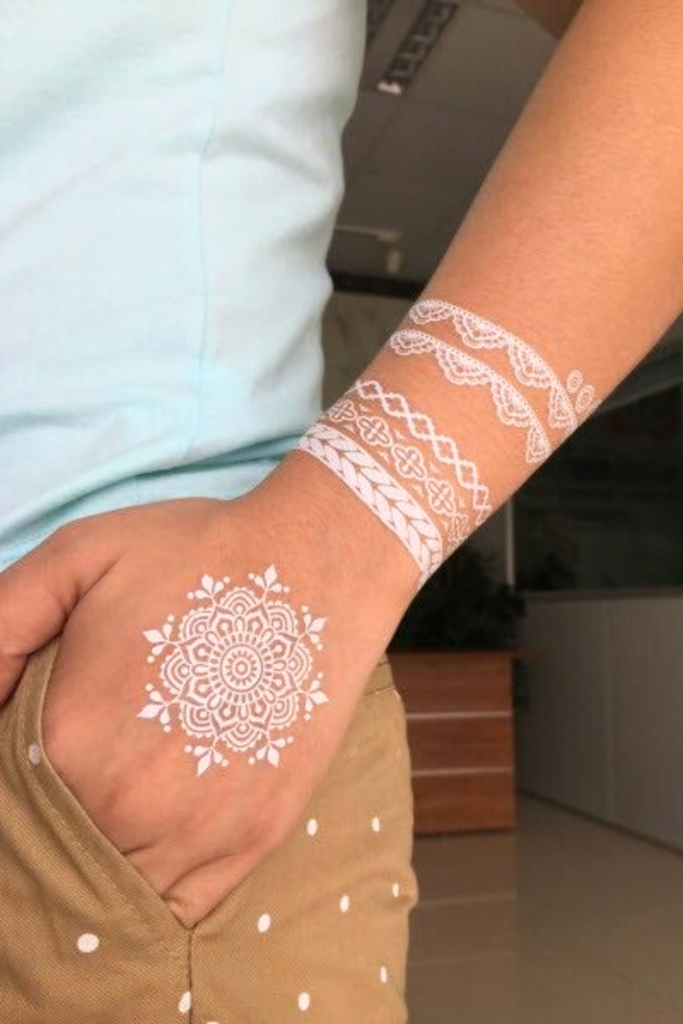
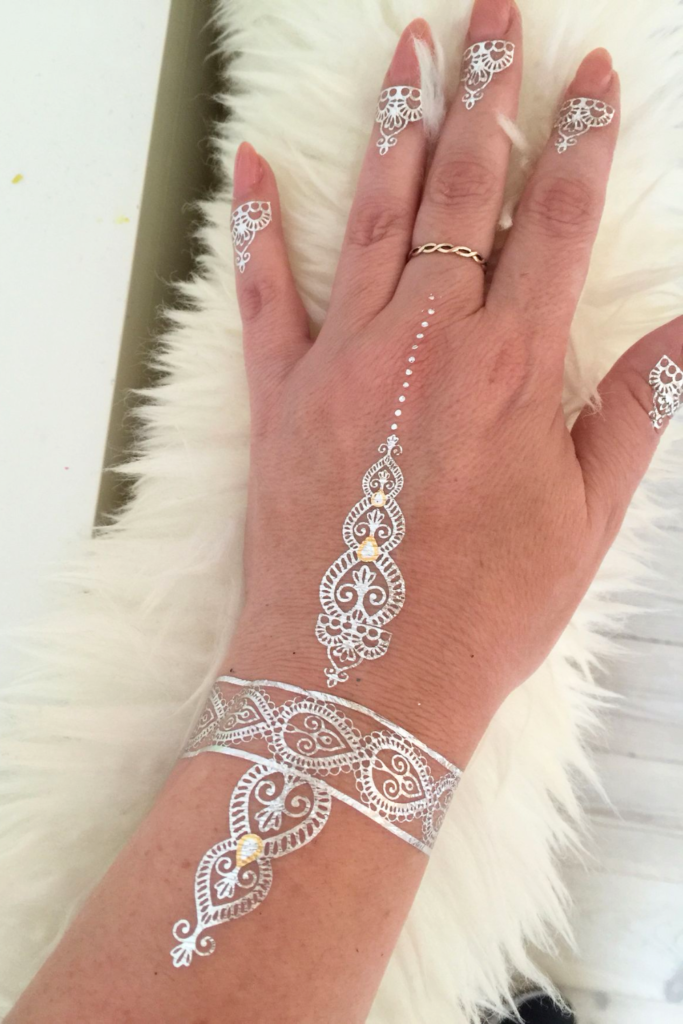
Source:Pinterest
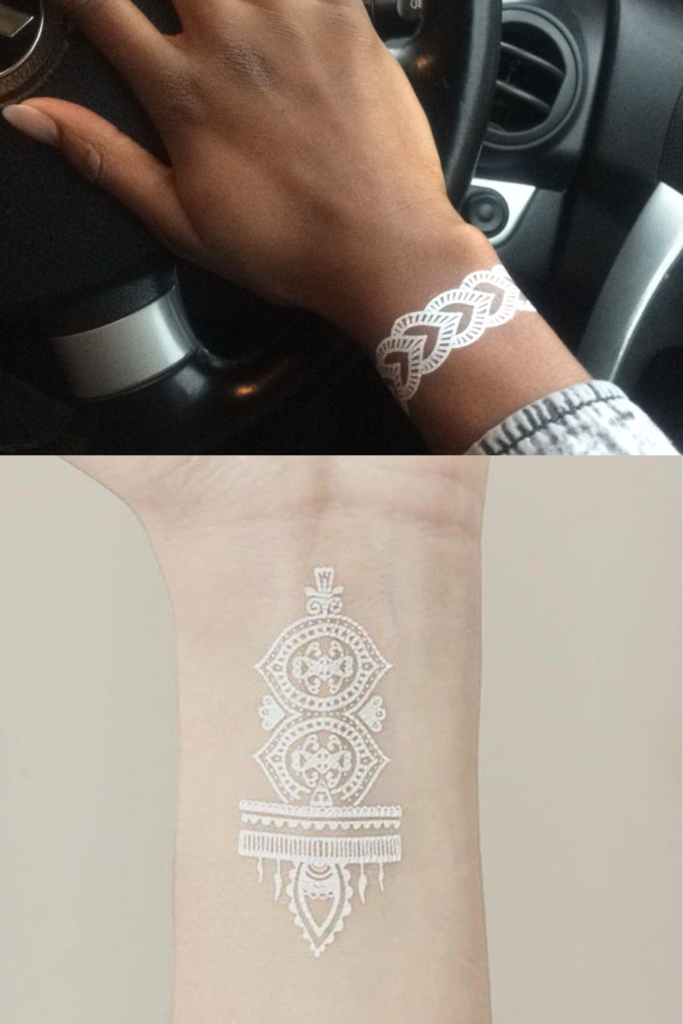
Minimalist and Geometric
A modern evolution of the art form, minimalist white henna uses clean lines, dots, triangles, and negative space to create bold, contemporary designs suited to fashion-forward aesthetics.
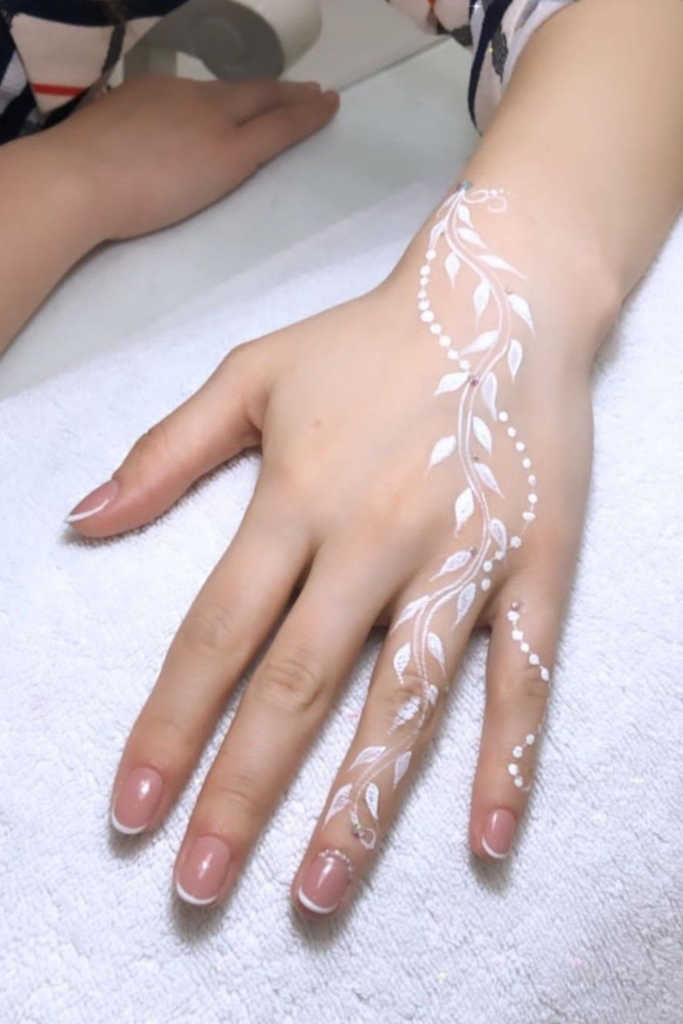
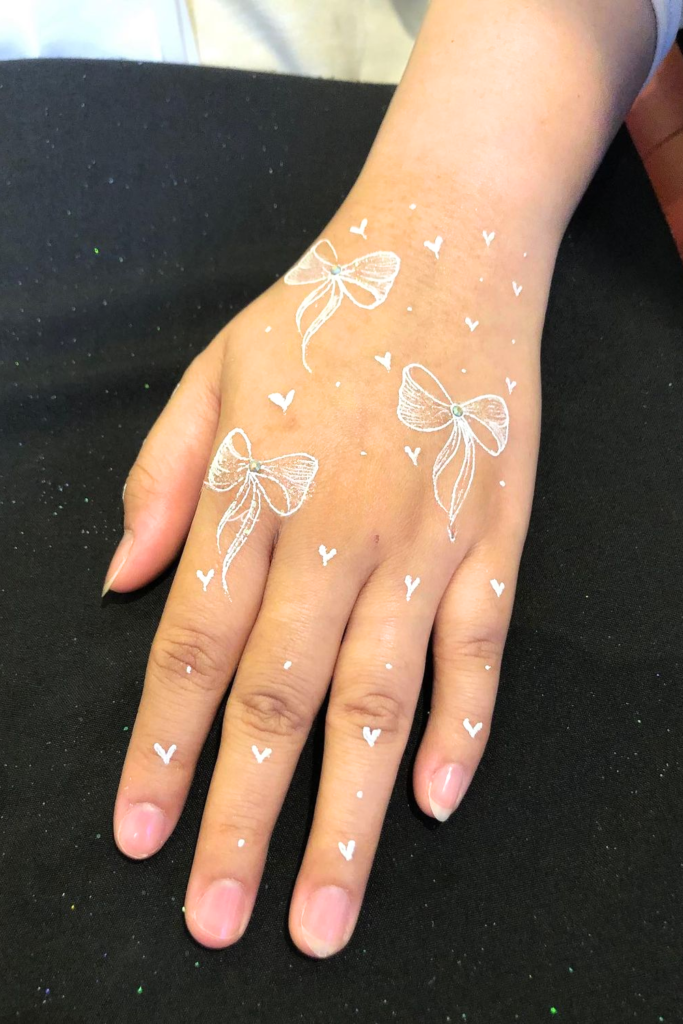
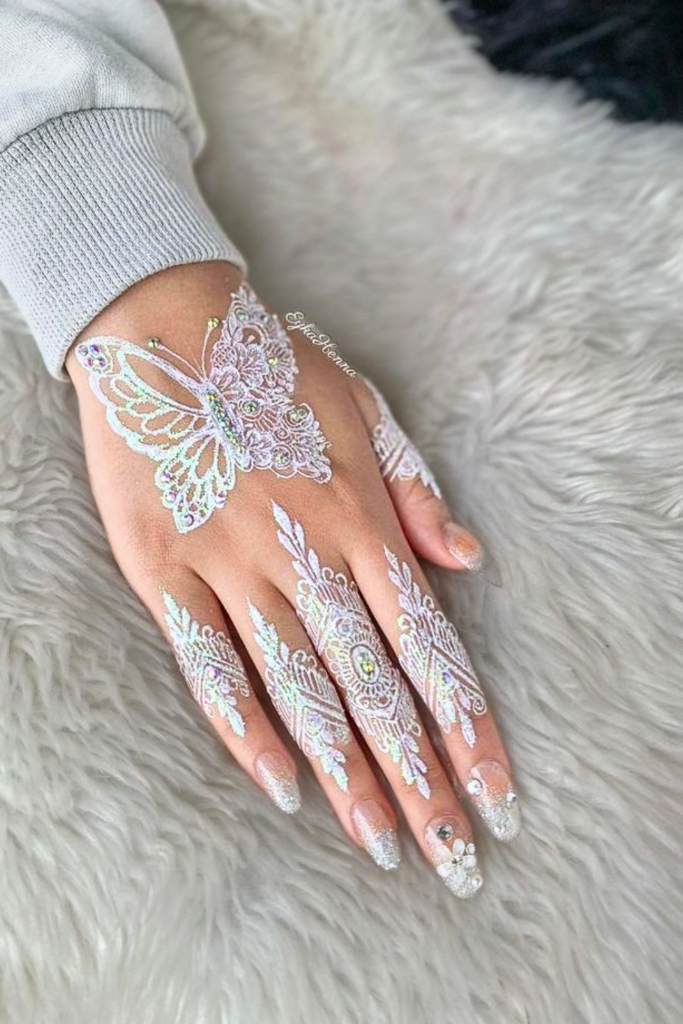
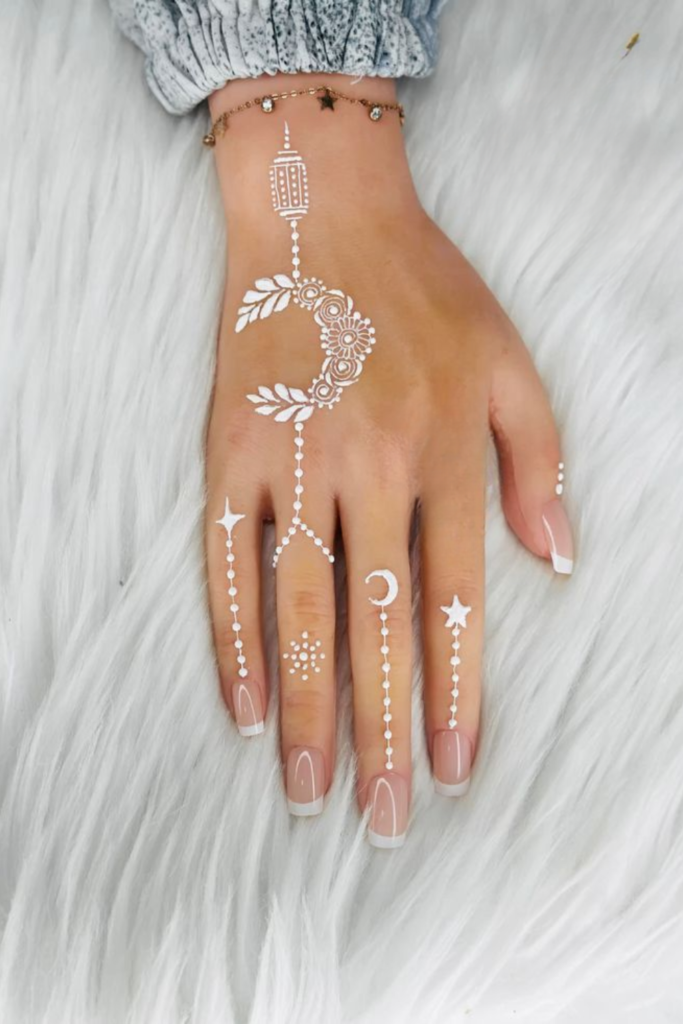
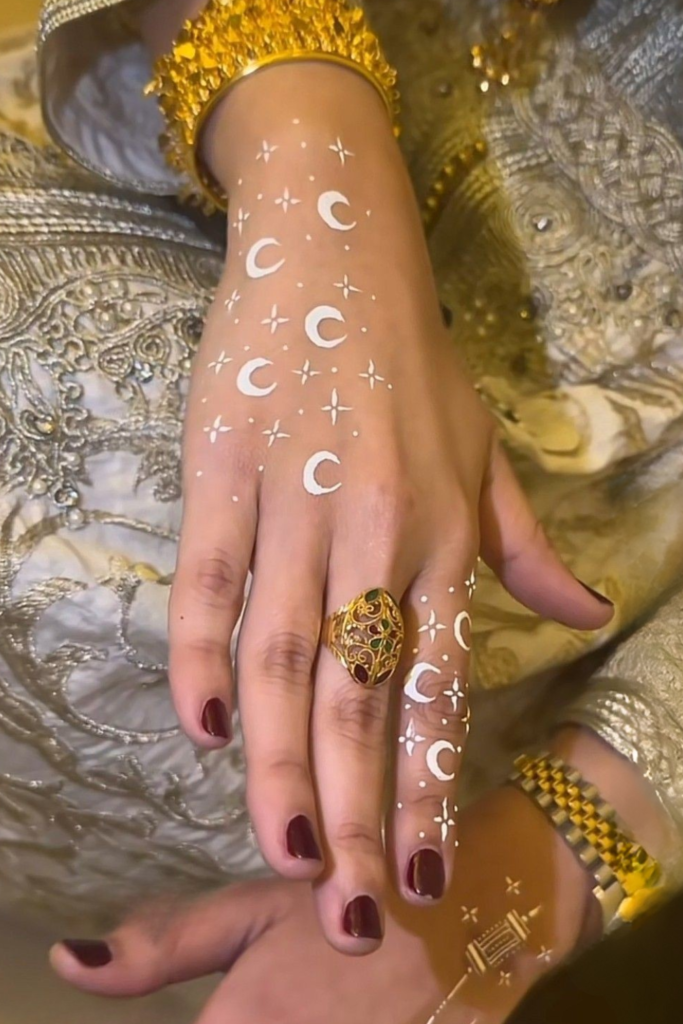
Fusion and Fantasy Designs
Artists have expanded into entirely original territory, incorporating celestial motifs (moons, stars, constellations), feathers, dragons, and even watercolor washes of pastel pigment alongside white henna for immersive, fantastical body art.
Source:Pinterest
Source:Pinterest
White Henna in Bridal Contexts
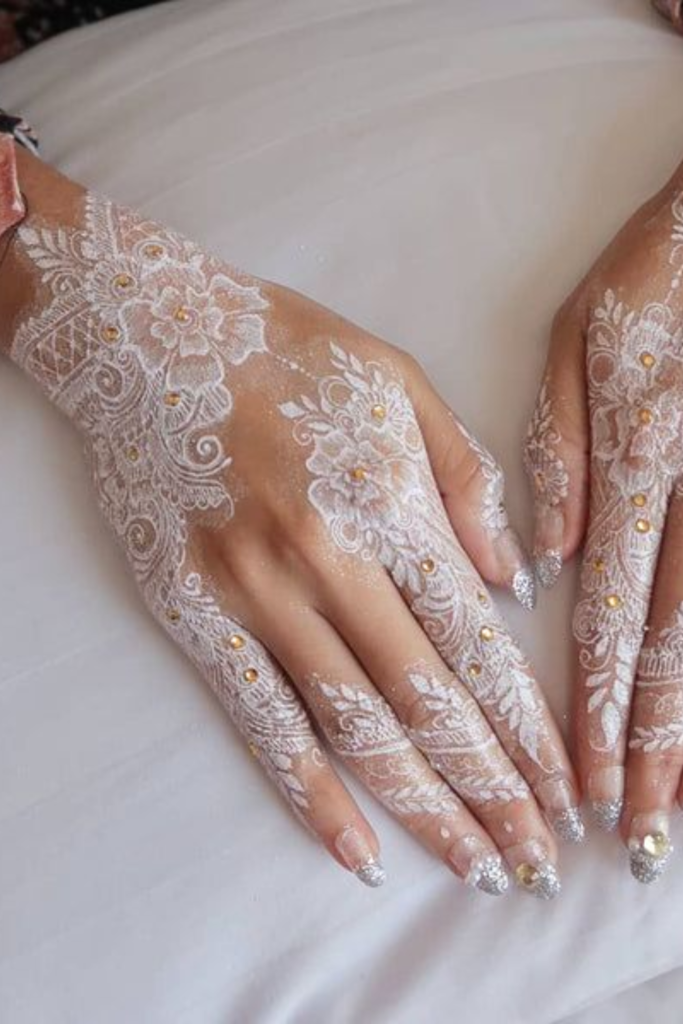
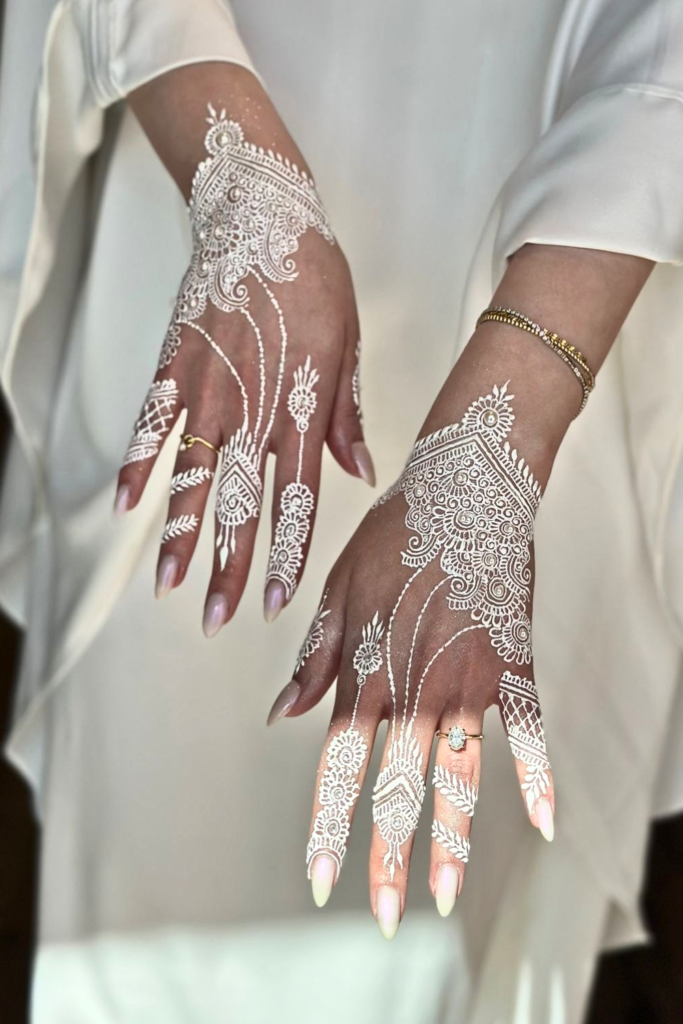
One of the most significant applications of white henna is in bridal body art. Brides who prefer a more subtle, fashion forward, or non-traditional look have embraced white henna as an alternative or complement to classic brown mehndi.
White henna is particularly popular for:
- Western and fusion weddings, where traditional brown mehndi may feel stylistically incongruent
- Destination and beach weddings, where a lighter, more ethereal aesthetic is desired
- Brides of all cultural backgrounds who wish to participate in the mehndi tradition while expressing their own visual identity
- Pre-wedding photography and bridal shoots, where the high contrast white designs photograph beautifully
Bridal white henna designs often feature elaborate full hand coverage, extending up the forearms and incorporating matching foot designs for a cohesive, jewel like effect.
Source:Pinterest
Source:Pinterest
Common Application Areas
White henna’s versatility extends to where it can be applied on the body. The most popular placement areas include:
- Hands and fingers: The traditional mehndi placement, ideal for bridal and ceremonial occasions
- Wrists and forearms create a cuff-like effect reminiscent of body jewelry
- Shoulders and upper arms are popular for festival and beach aesthetics
- Back and spine Statement placement for formal events and editorial shoots
- Collarbones and décolletage Romantic and elegant, particularly for bridal use
- Feet and ankles: A nod to traditional mehndi, beautiful for summer events
- Sternum and ribcage: A bold, increasingly popular choice for fashion focused designs
How White Henna Is Applied
The application process requires a steady hand, quality materials, and patience. Professional artists typically follow these steps:
1. Skin Preparation The skin must be clean, dry, and free of oils, lotions, or sunscreen. Artists often wipe the area with an alcohol based cleanser to ensure maximum adhesion.
2. Material Loading The white henna compound, usually in a thick, paste-like consistency, is loaded into a piping cone, applicator bottle, or fine tipped nozzle similar to those used for traditional mehndi.
3. Design Application The artist applies the compound directly onto the skin in slow, deliberate strokes, building up the design freehand or following a pre-sketched template. The compound is raised, allowing for three-dimensional detailing.
4. Drying Time White henna requires a drying period of approximately 15 to 30 minutes. During this time, the design should not be touched or disturbed.
5. Embellishment (Optional) While the compound is still slightly tacky, artists may press crystals, glitter, or metallic foils into the design to enhance its visual impact.
6. Some artists apply a light setting spray to prolong the life of the design and reduce smudging.
Longevity and Aftercare
Because white henna sits on the skin’s surface rather than staining it, its longevity is more limited and more dependent on the wearer’s behavior. To maximize the life of a white henna design:
- Avoid water for at least two hours after application.
- Minimize friction, avoid tight clothing, rubbing, or excessive touching of the design.
- Skip moisturizers in the decorated area, as oils break down the adhesive.
- Sleep carefully, placing tissue paper or cling wrap loosely over the design can prevent it from transferring onto bedding.
- Avoid direct sun exposure, which can cause the compound to crack and flake more quickly.
With proper care, a well applied white henna design can last between two and five days, with some formulations claiming up to a week.
Safety Considerations
While white henna made from body-safe adhesives is generally considered safe for most individuals, there are important precautions to observe:
- Patch test before full application, particularly for individuals with sensitive skin or known adhesive allergies
- Avoid use on broken or irritated skin
- Do not confuse it with “black henna”, which contains the chemical PPD (para-phenylenediamine) and is known to cause severe allergic reactions and permanent scarring.
- Verify ingredients when purchasing white henna products, ensuring all components are cosmetic-grade and skin-safe
- Children and pregnant individuals should consult a dermatologist before use, as a precautionary measure.
Reputable professional artists will always disclose the ingredients they use and welcome questions about product safety.
Conclusion
White henna design is where ancient tradition meets modern creativity, and the result is something truly special. Whether it’s on a bride’s hands, a festival shoulder, or a magazine page, it never fails to turn heads. At its core, it’s more than just body art. It’s a small, beautiful piece of human history worn on skin.