
Introduction
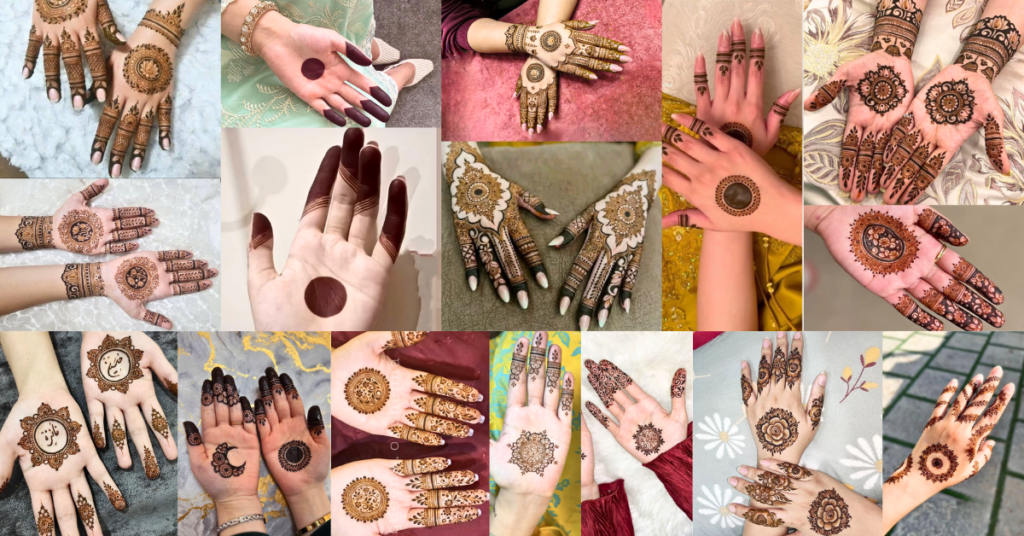
Mehndi, the ancient art of adorning skin with henna paste, holds a cherished place in South Asian, Middle Eastern, and North African cultures. Among its many forms, round mehndi designs stand out for its geometric precision, symmetrical beauty, and spiritual depth. Whether applied for a wedding or a festival, circular mehndi designs carry a visual elegance that has endured for centuries.
Cultural Significance
The circle in mehndi is not merely decorative; it carries deep meaning. Inspired by the sacred mandala, it symbolizes infinity, completeness, and the cyclical nature of life. In bridal traditions across India, Pakistan, and Bangladesh, the round design centered on the palm is considered highly auspicious, believed to attract good fortune and bless the union of two souls.
Key Elements
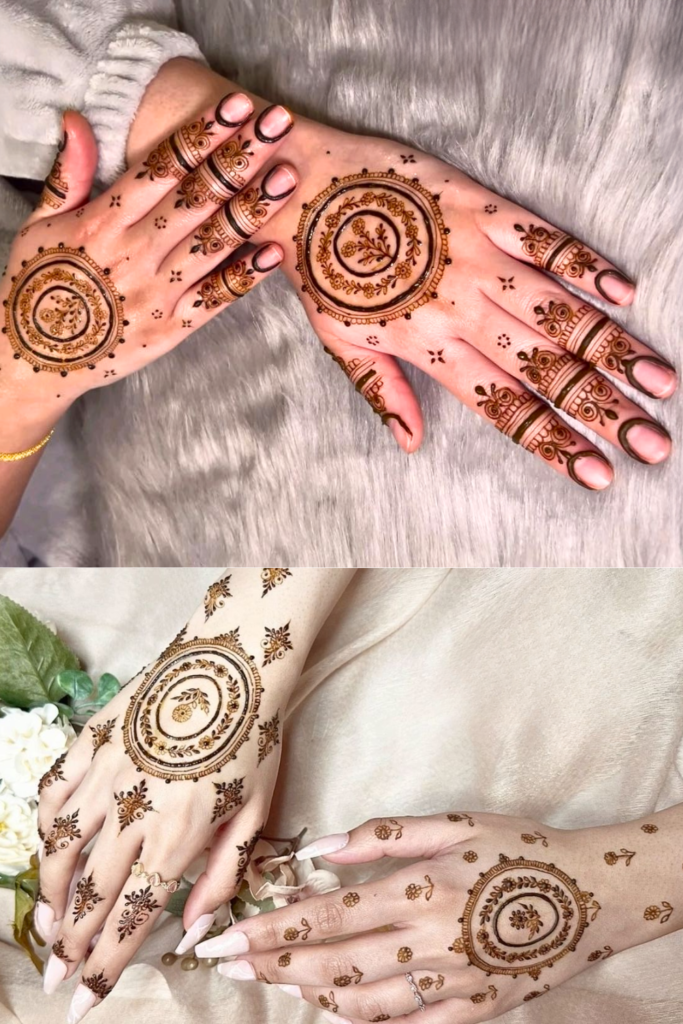
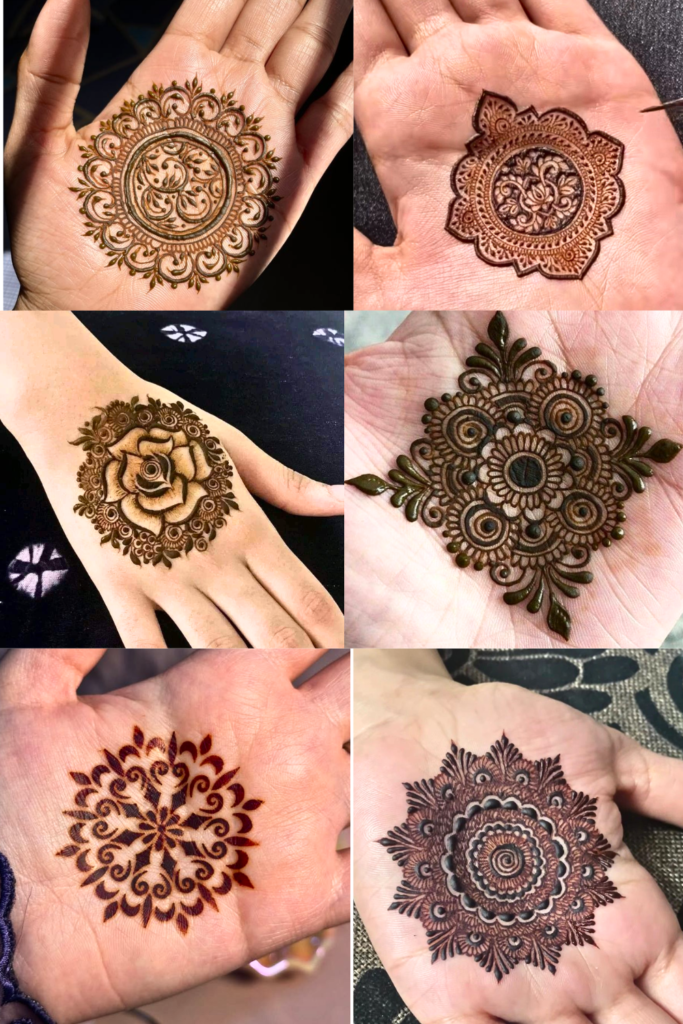
Mehndi is built on radial symmetry, with all patterns expanding outward from a central point. The central motif, a dot, florette, or paisley, anchors the entire composition. From there, concentric rings of floral patterns, leaf chains, and geometric detailing build the design layer by layer. Fine dot work and shading add depth, while a clean outer border gives the design a finished, polished look.
Popular Styles
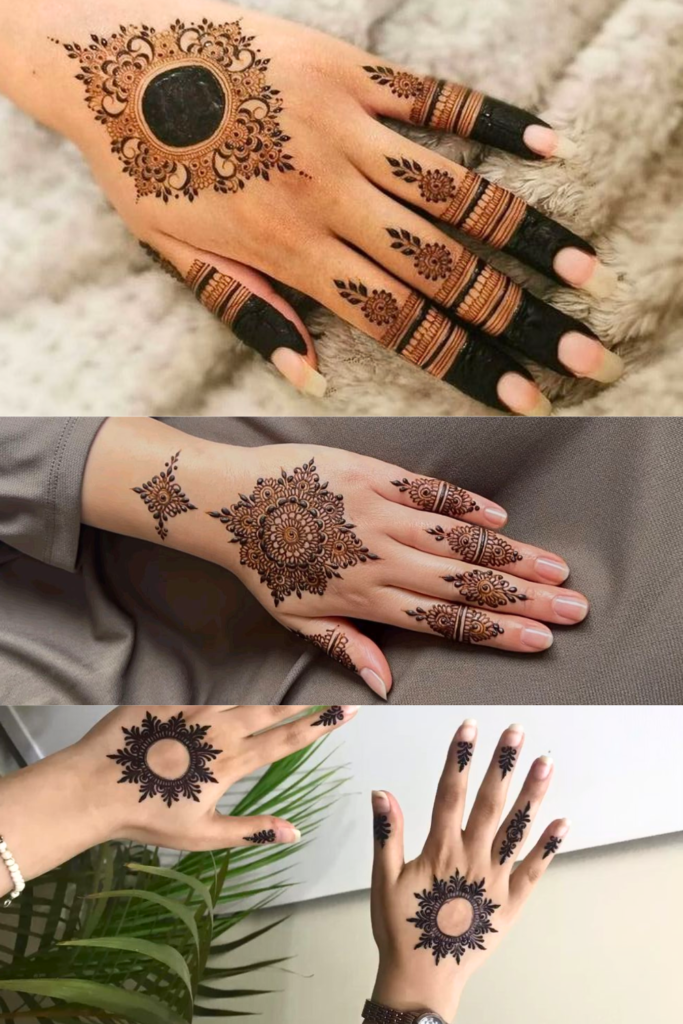
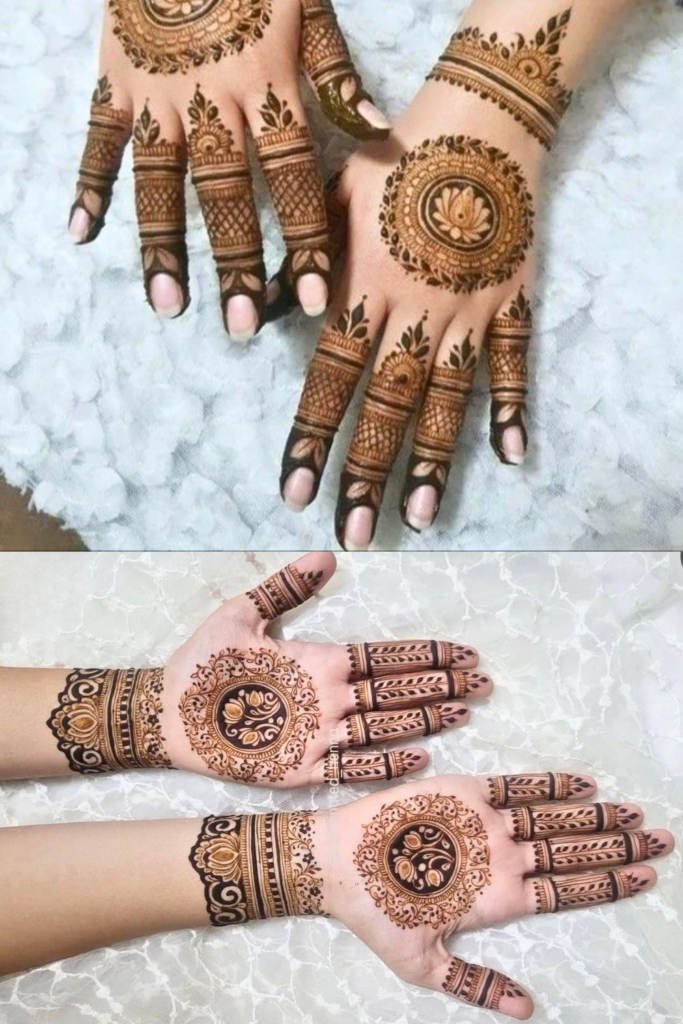
Traditional Indian Round Mehndi tends to be dense and detailed, filling the entire circle with fine motifs. Floral patterns, peacock feathers, and intricate geometric work are common, and the designs are typically bold enough to be visible from a distance. This style is particularly popular in Rajasthan and Gujarat, where mehndi artistry has been refined over centuries.
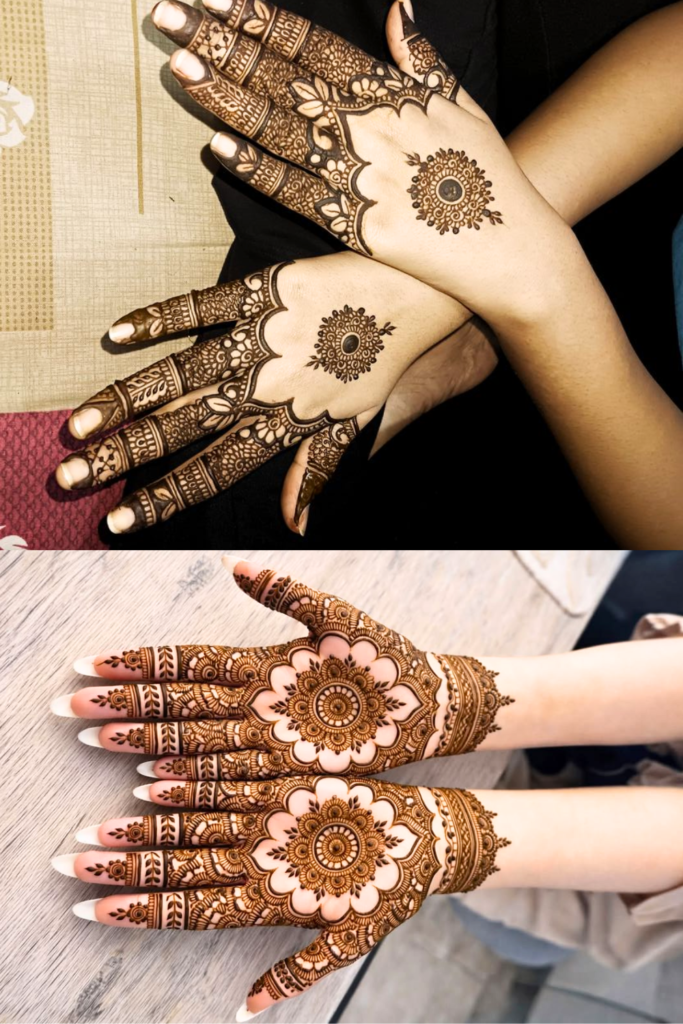
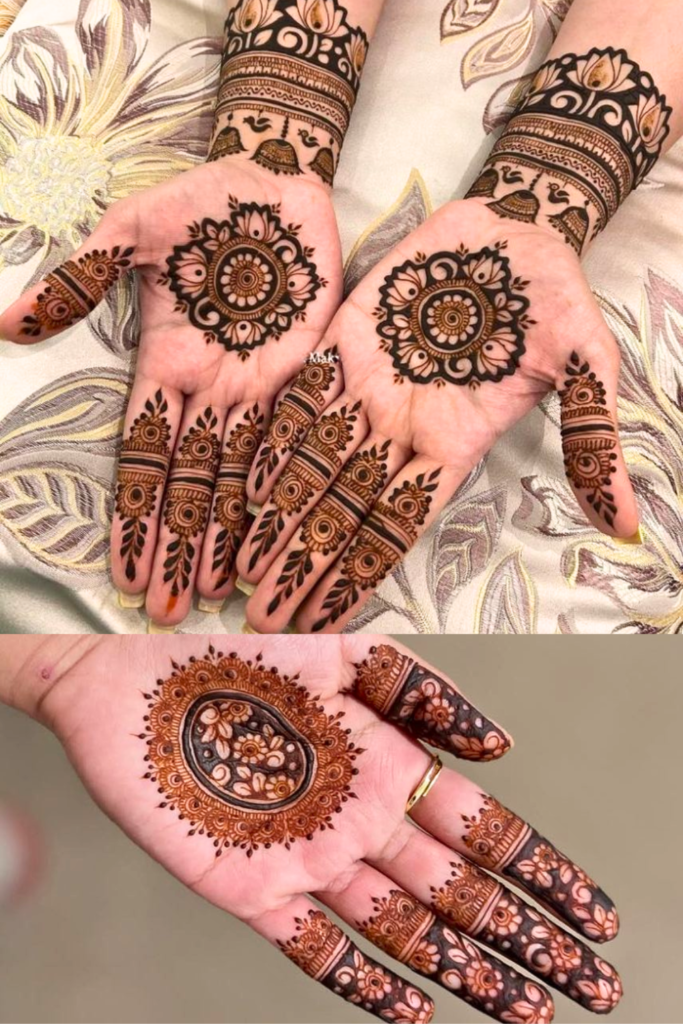
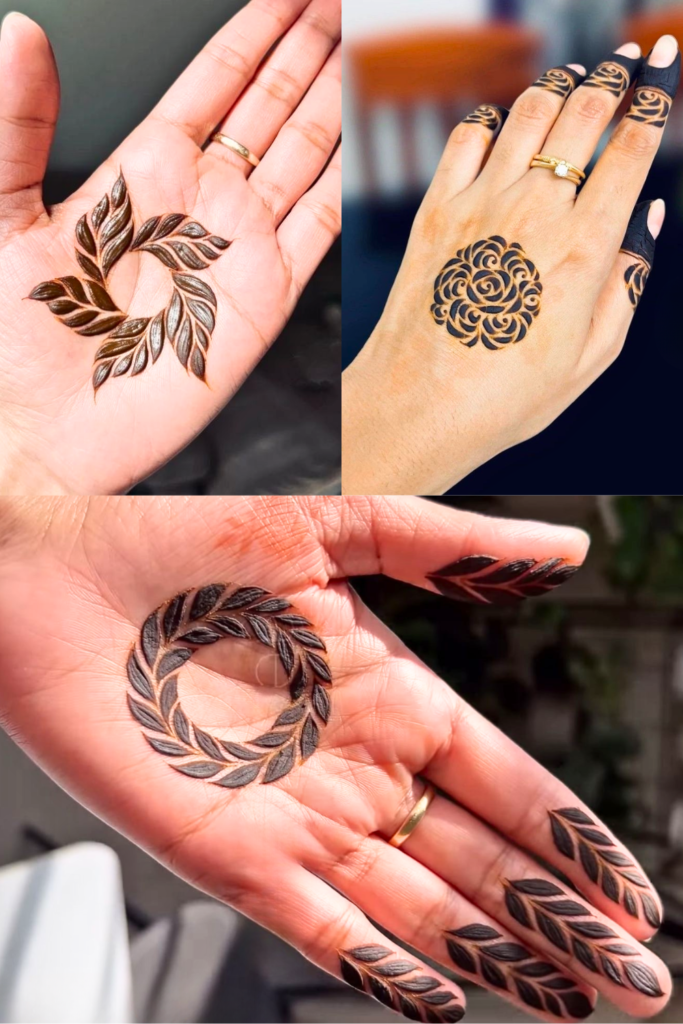
Arabic-Influenced Circular Mehndi takes a more open and flowing approach. The designs incorporate bold floral and vine motifs with deliberate negative spaces left between elements, allowing the skin to breathe within the pattern. The result feels both airy and dramatic, making it popular for modern brides and festive occasions.
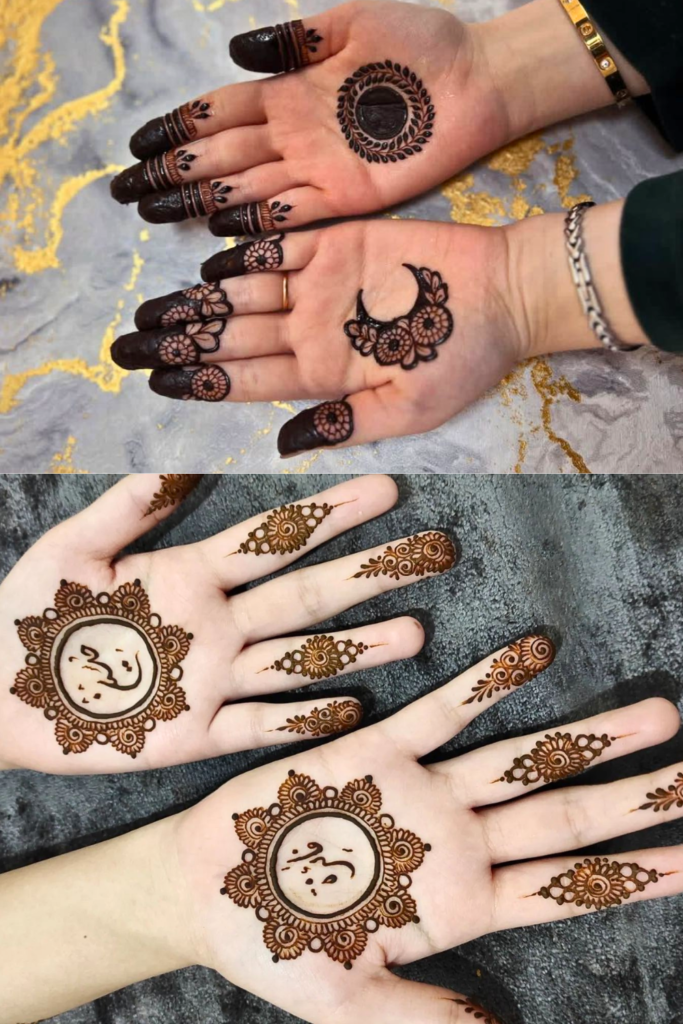
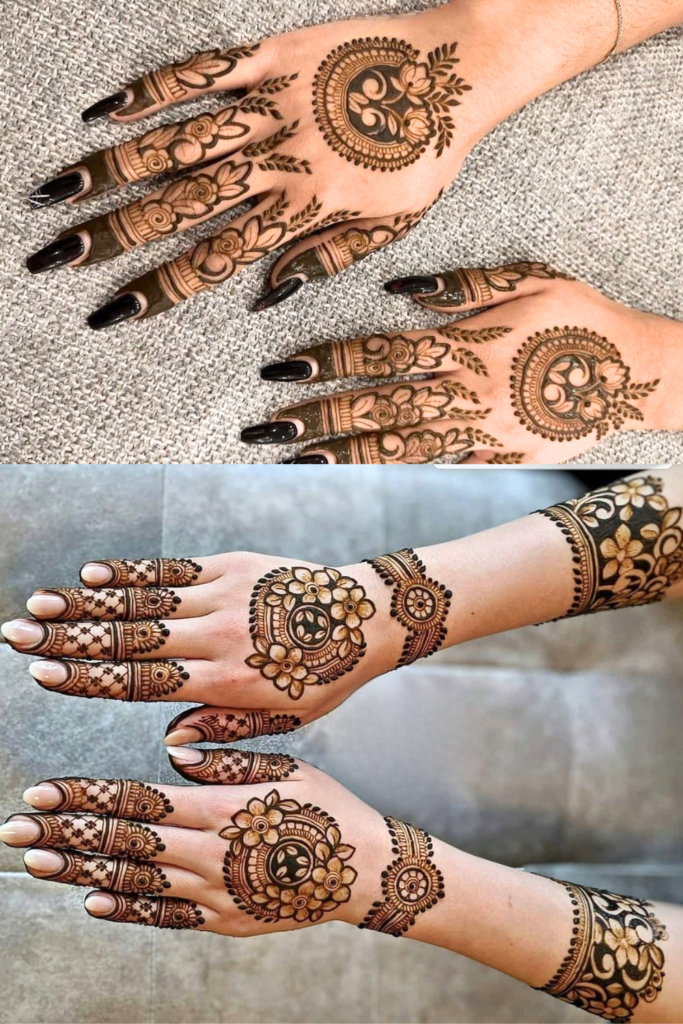
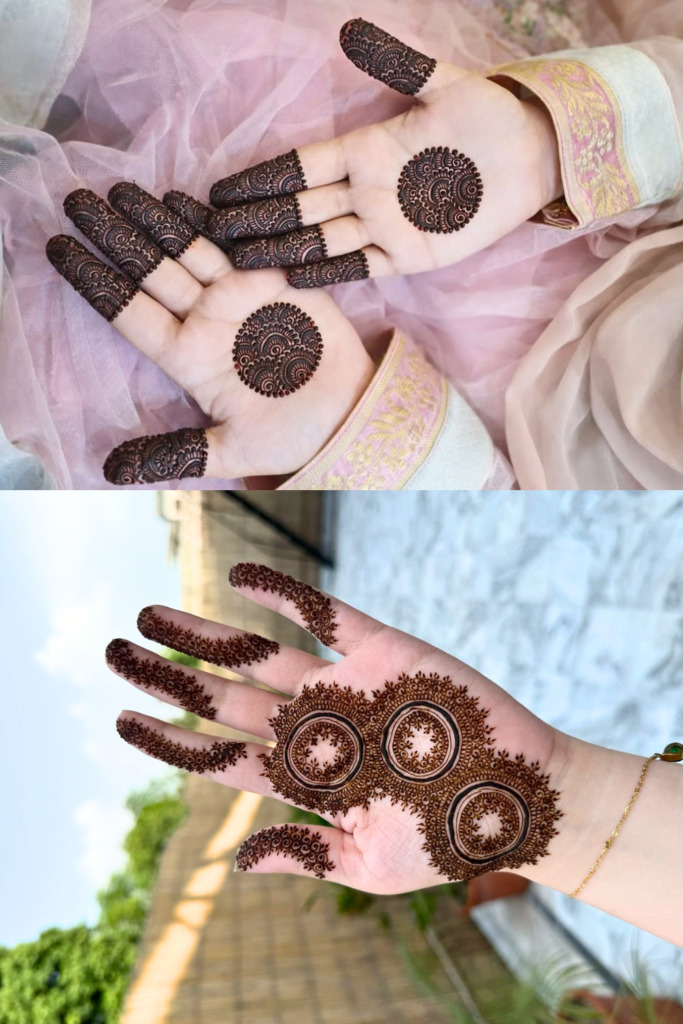
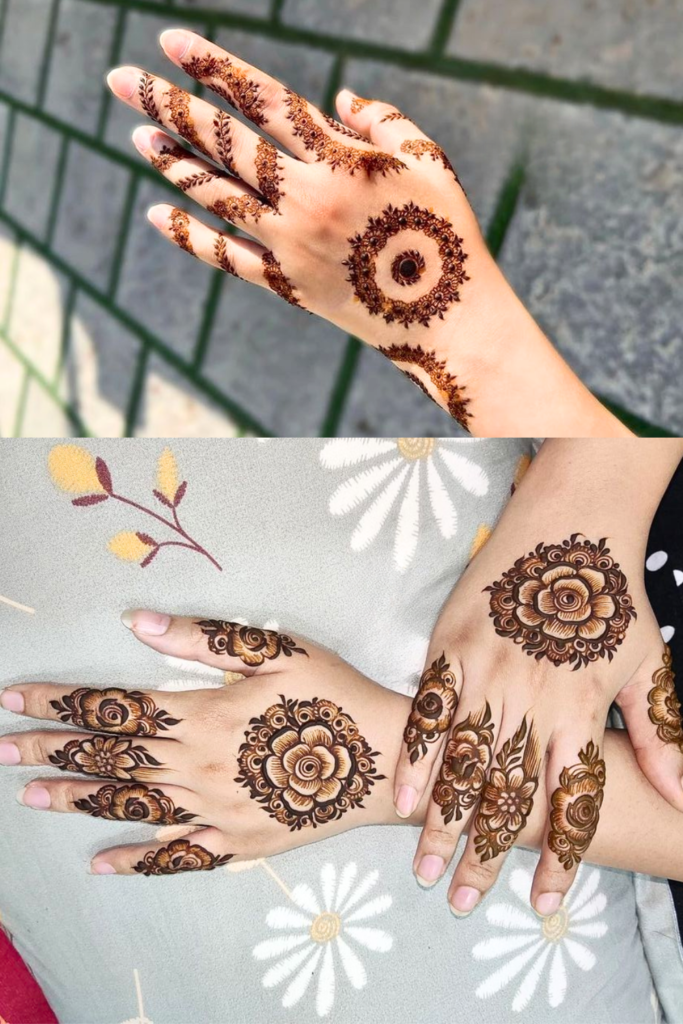
Indo-Arabic Fusion combines the density and detail of Indian mehndi with the bold strokes and negative space of Arabic styles. This hybrid approach has become especially popular in contemporary bridal mehndi, offering the best of both traditions within a single circular composition.
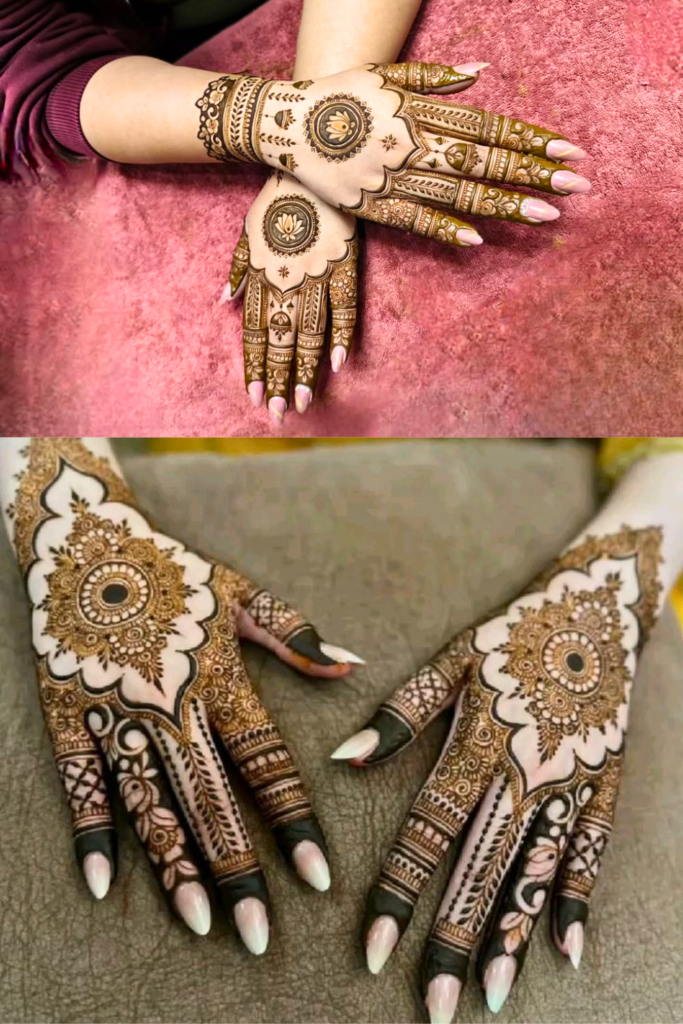
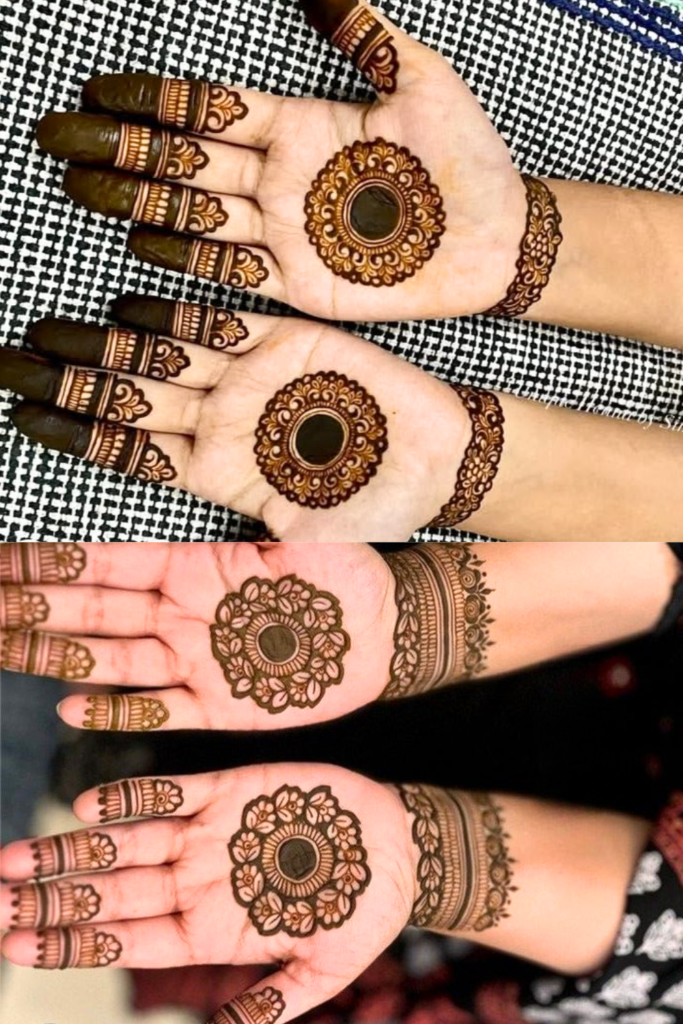
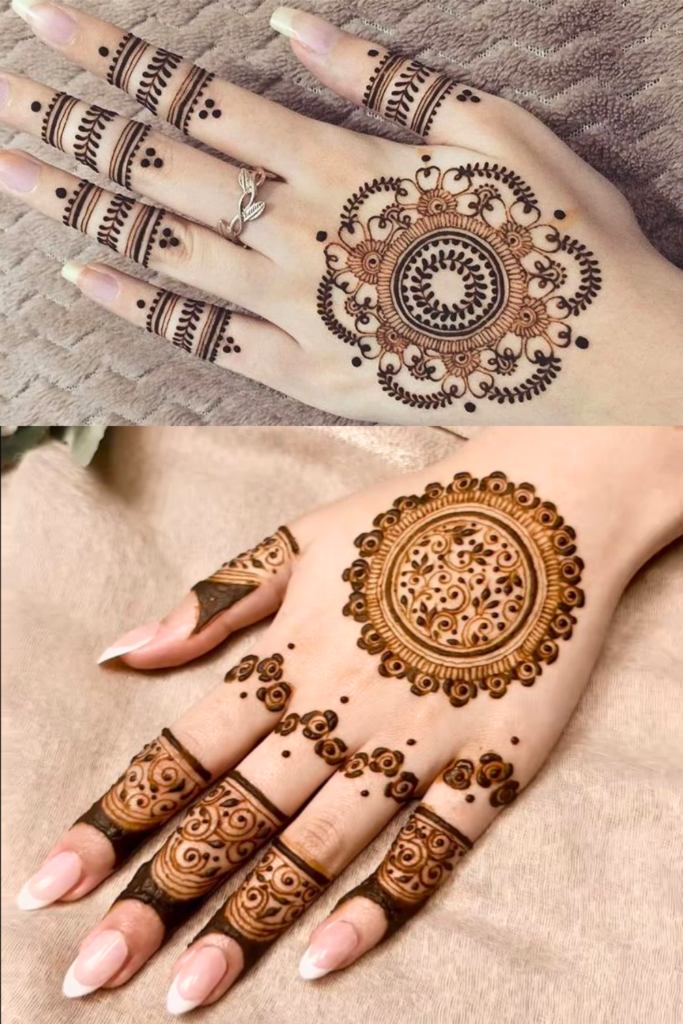
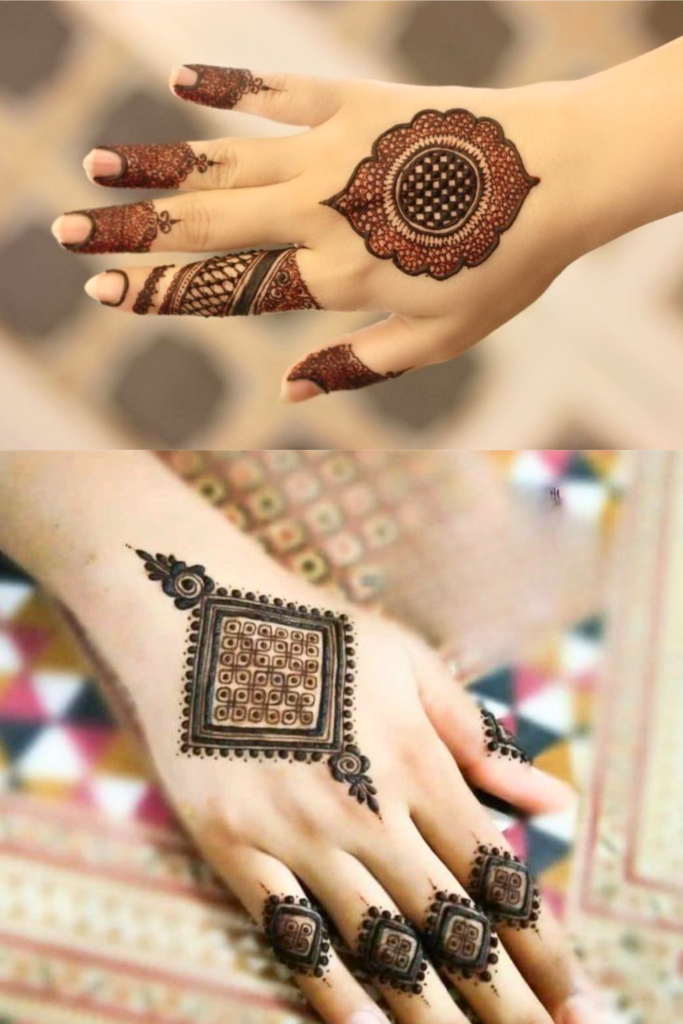
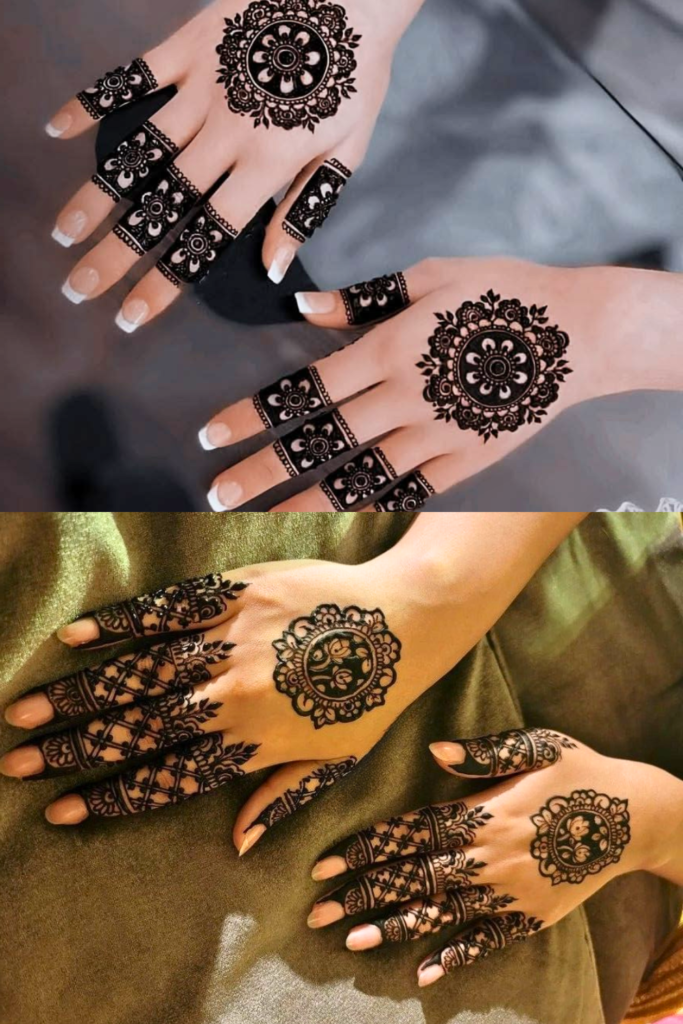
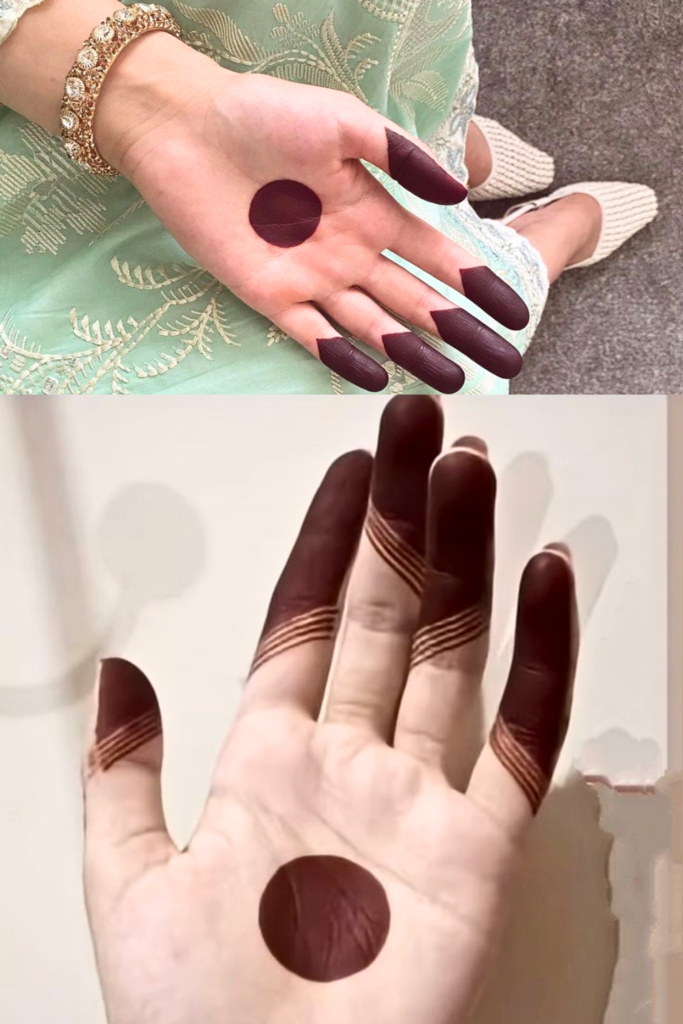
Minimalist Round Mehndi has emerged strongly in recent years, particularly among younger wearers who prefer understated elegance. These designs use a small central motif with just one or two outer rings of simple patterning, leaving significant areas of skin untouched. The result is a clean, modern aesthetic that still honors the circular tradition.
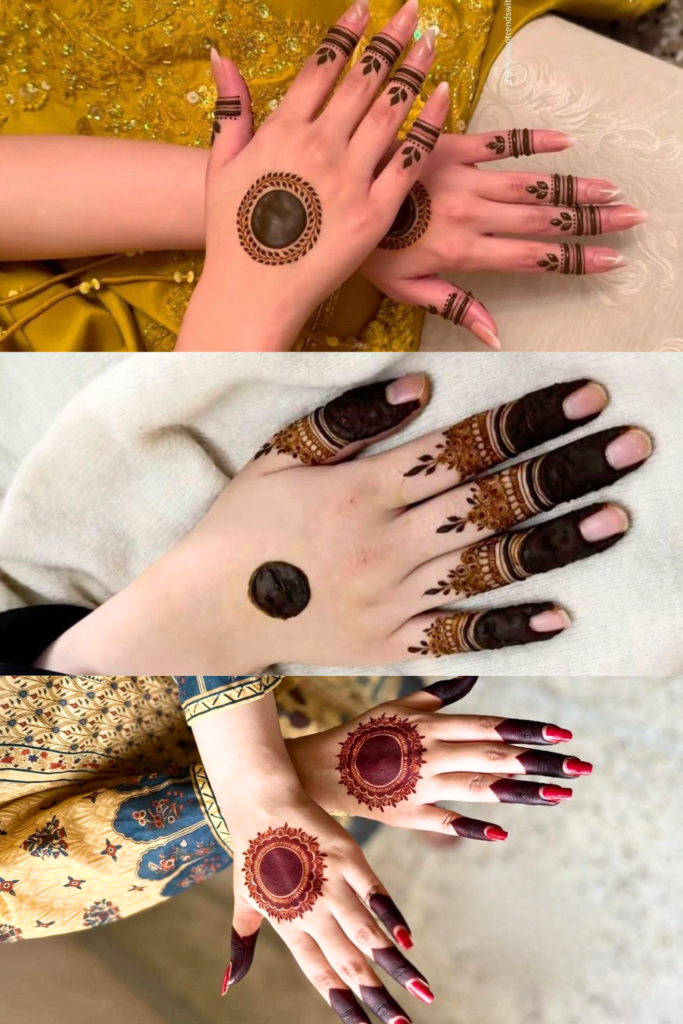
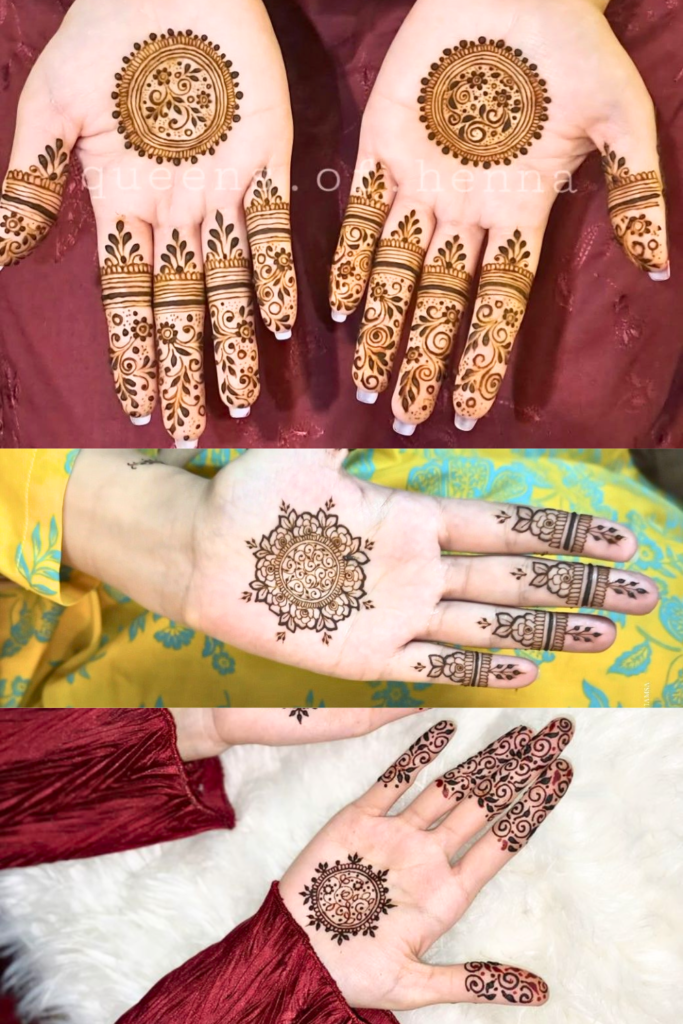
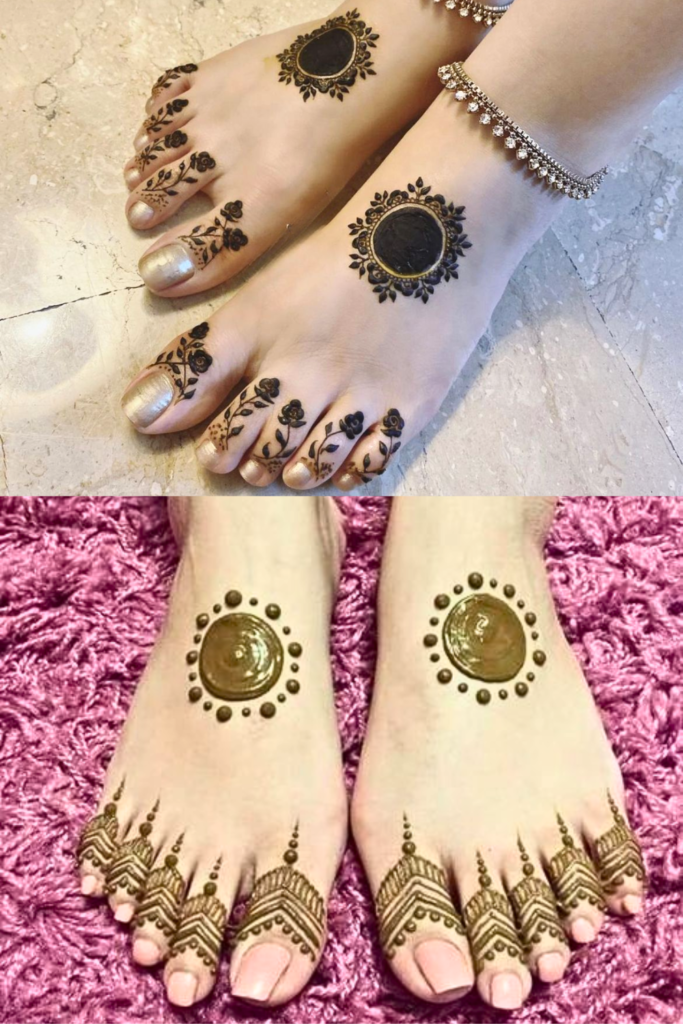
Mandala Round Mehndi is perhaps the most spiritually aligned style, drawing directly from the sacred mandala form used in meditation art. These designs feature precise geometric divisions often divided into eight, twelve, or sixteen equal segments, each filled with matching or complementary patterns. The symmetry in mandala mehndi is near-mathematical in its accuracy and demands extraordinary skill from the artist.
Application and Care
Mehndi is most naturally suited to the center of the palm, where the flat surface allows the design to expand evenly. After application, the paste must be left to dry fully before flaking off. The stain deepens over the following forty-eight hours as it oxidizes. Avoiding water initially and moisturizing with natural oils helps the design last one to three weeks.
Conclusion
Mehndi designs beautifully unite art, tradition, and spirituality. Their timeless circular form continues to inspire artists and wearers across the world, proving that some expressions of beauty need no reinvention, only devotion to the craft.