
Introduction
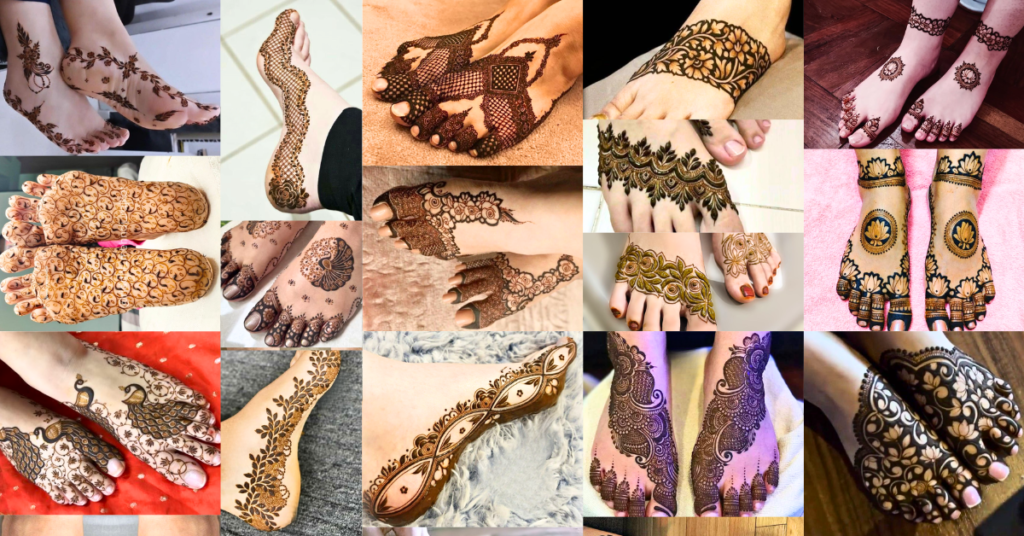
Mehndi, commonly known as henna, is one of the oldest and most cherished forms of body art in the world. Among its many applications, foot mehndi design holds a special place, transforming the feet into a canvas of elegance, culture, and personal expression. Whether worn as a bridal adornment or a festive embellishment, foot mehndi has graced women across South Asia, the Middle East, and North Africa for centuries.
Cultural Significance
Foot mehndi carries deep cultural and spiritual meaning. In South Asian traditions, it is considered an auspicious part of bridal preparation, believed to bring good luck and prosperity into marriage. Beyond weddings, it is widely applied during festivals such as Eid, Diwali, Teej, and Karva Chauth as a symbol of joy and celebration.
Popular Foot Mehndi Design Styles
Traditional Indian Designs
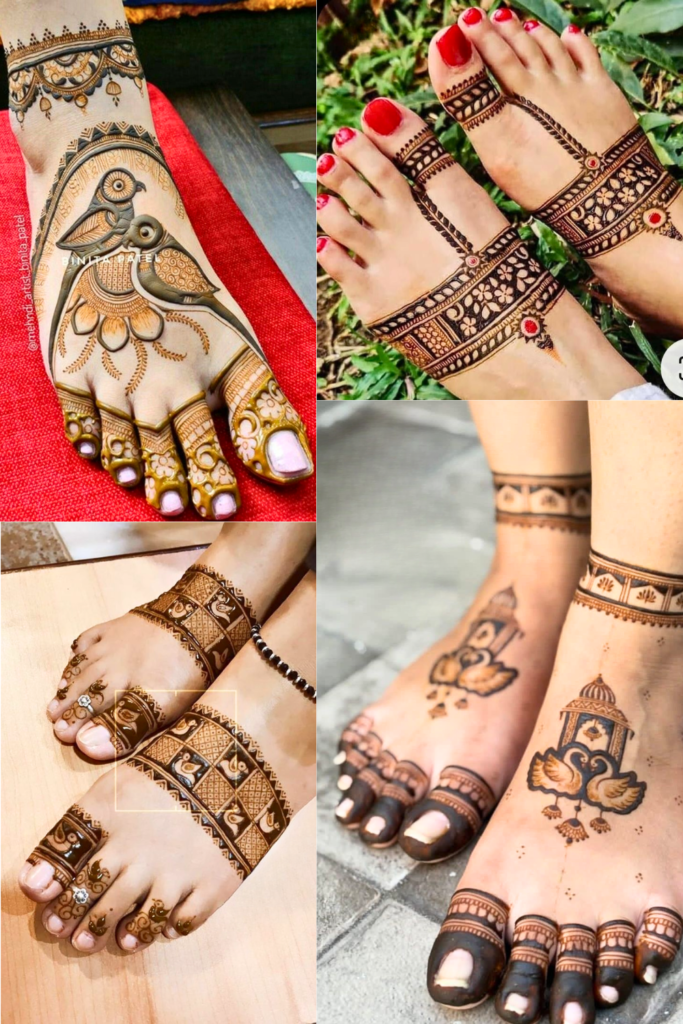
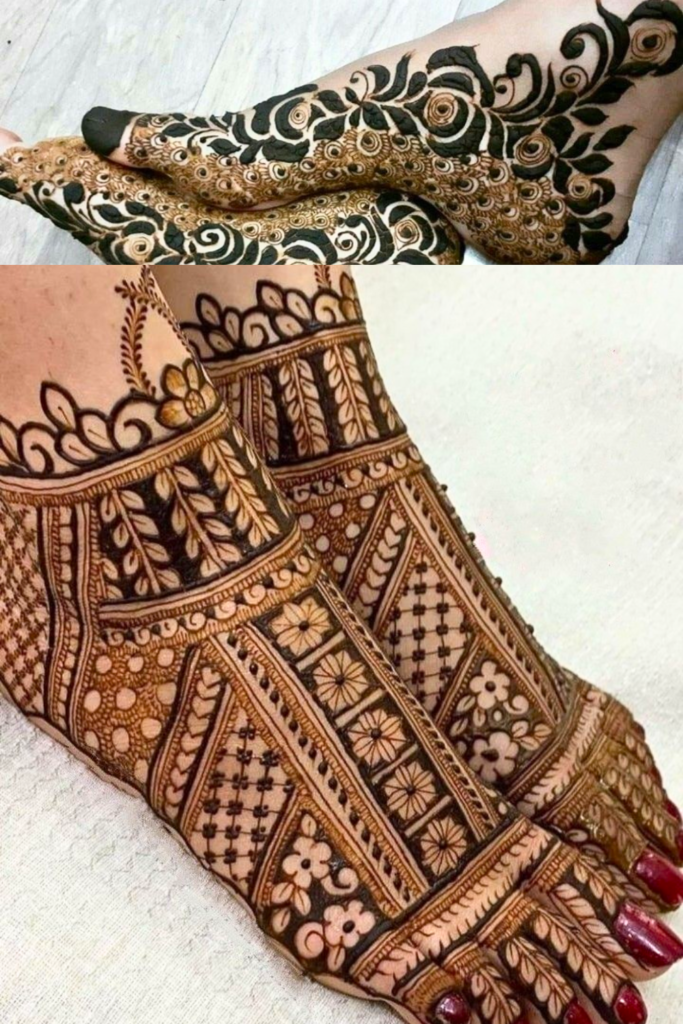
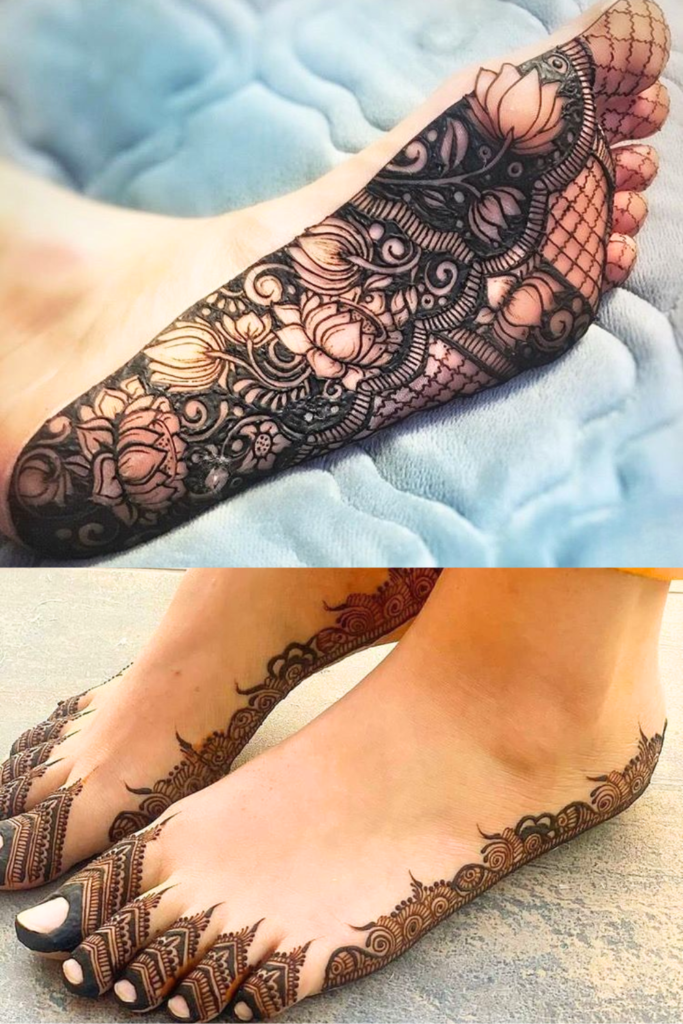
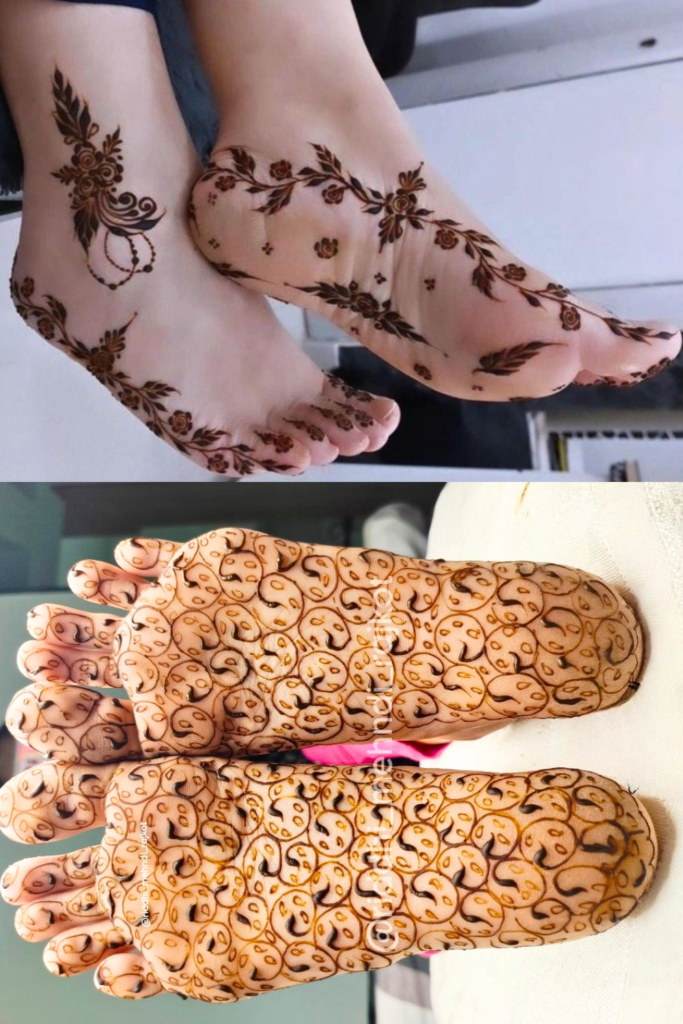
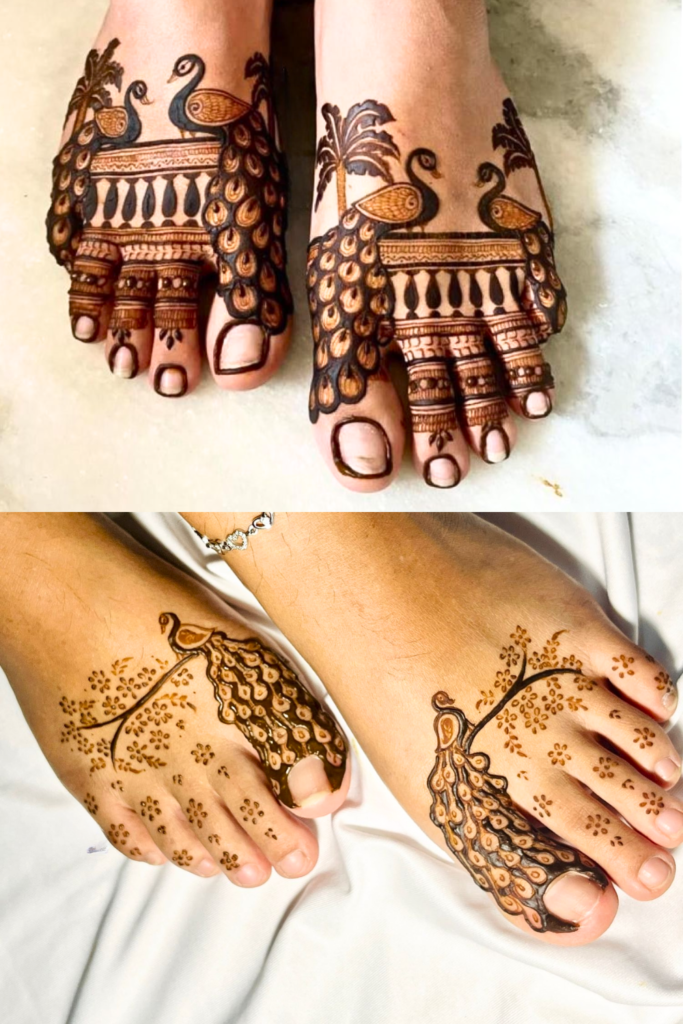
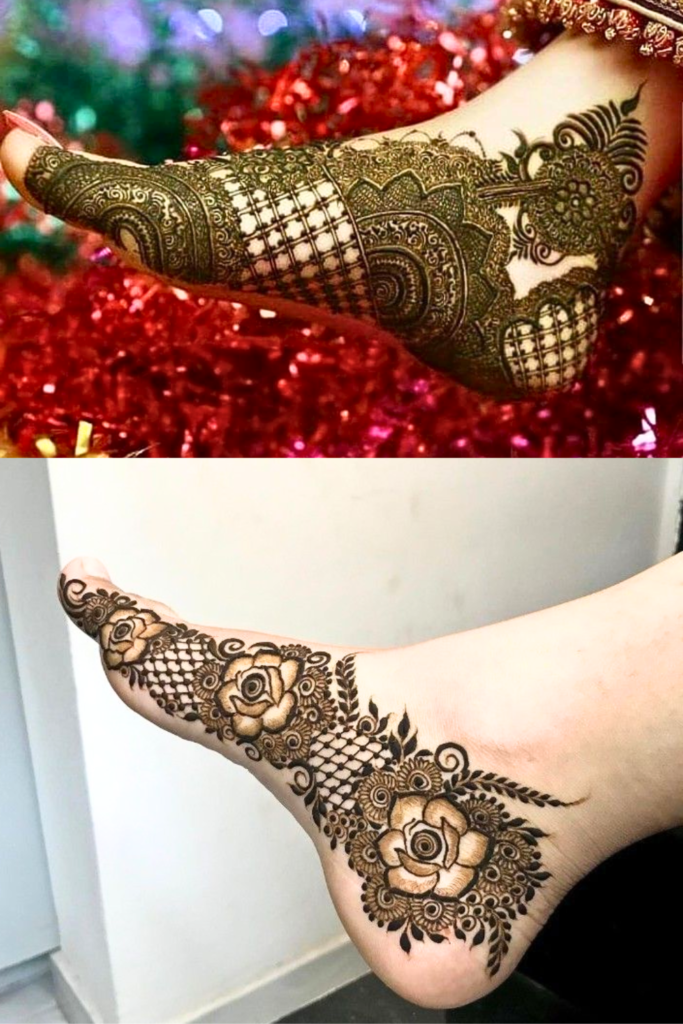
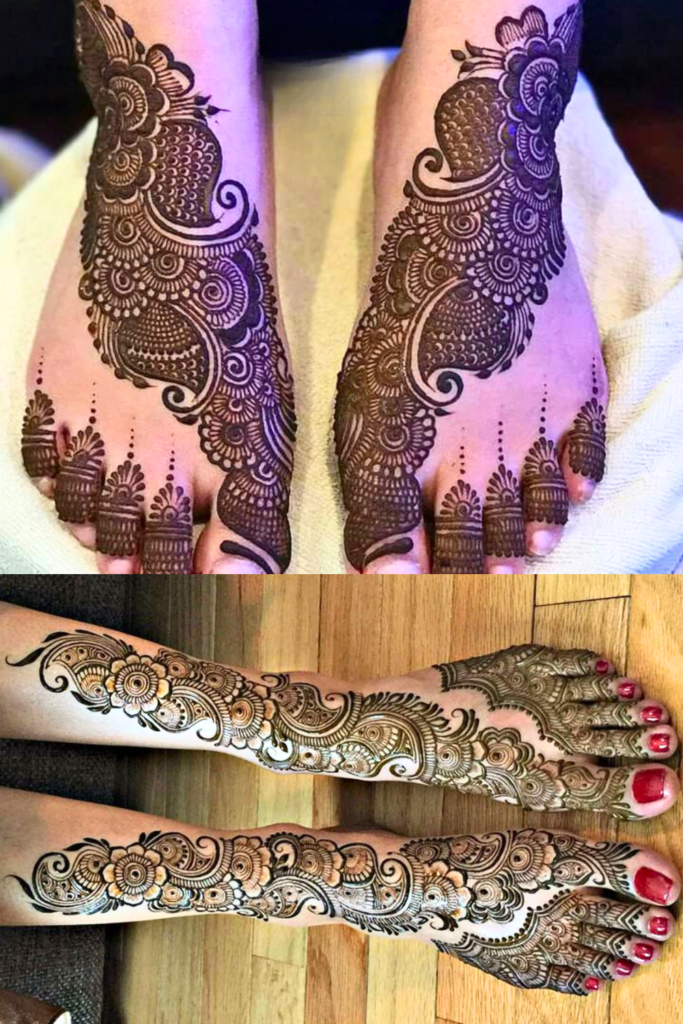
Traditional Indian foot mehndi is characterized by bold, elaborate patterns that cover the entire foot from the toes to the ankle and sometimes extend up the leg. These designs typically feature peacocks, lotus flowers, paisleys, and intricate geometric patterns. Thick outlines and dense fill work give these designs a rich, classic appearance that has been passed down through generations.
Arabic Foot Mehndi
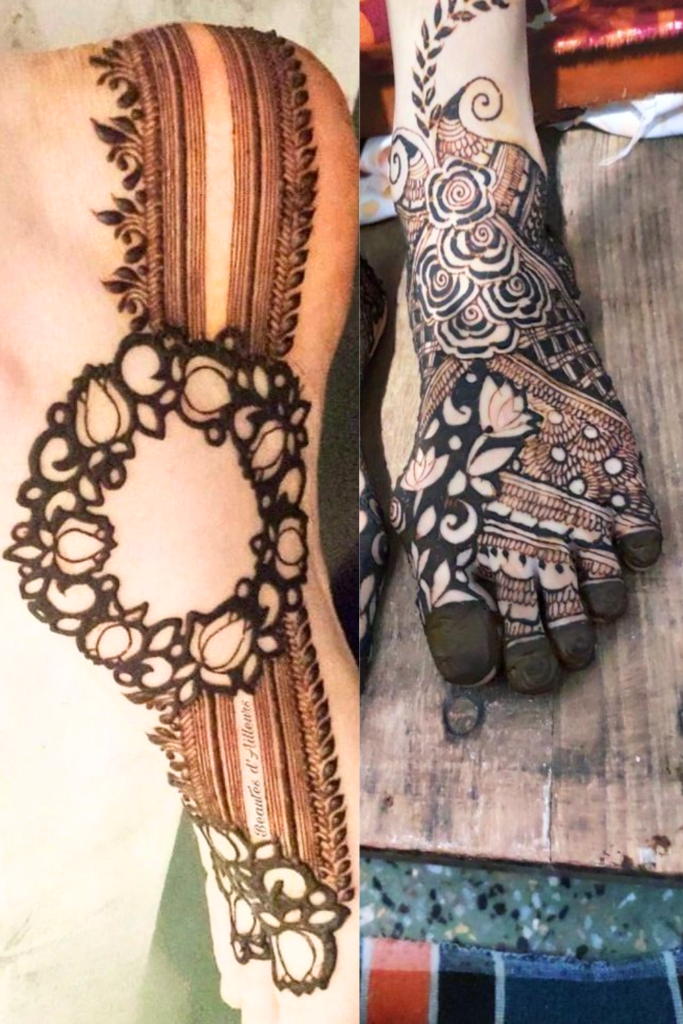
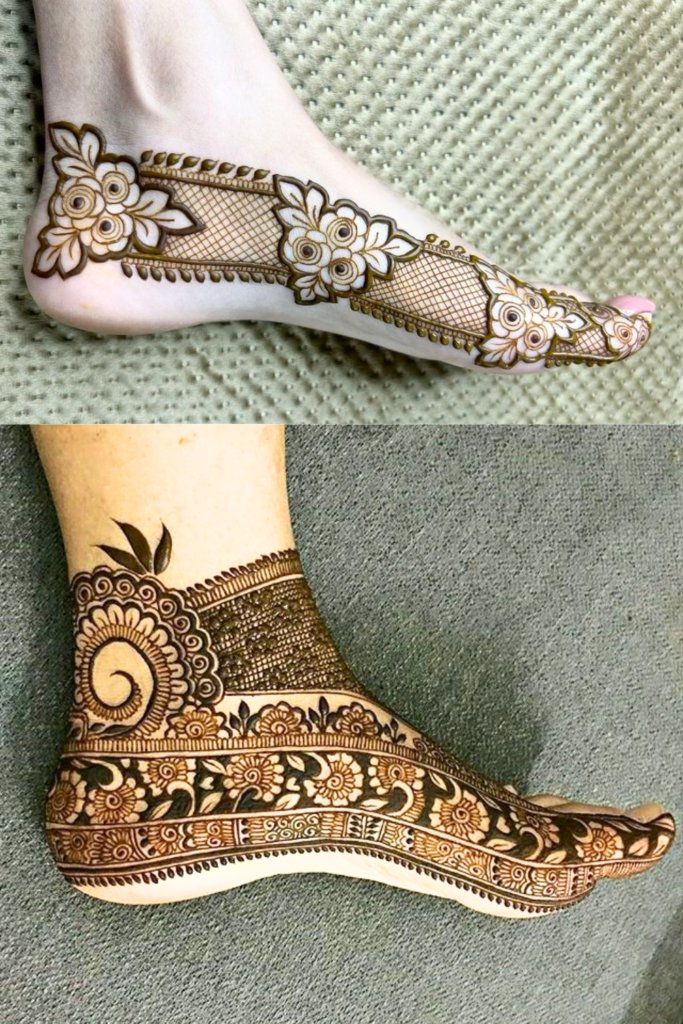
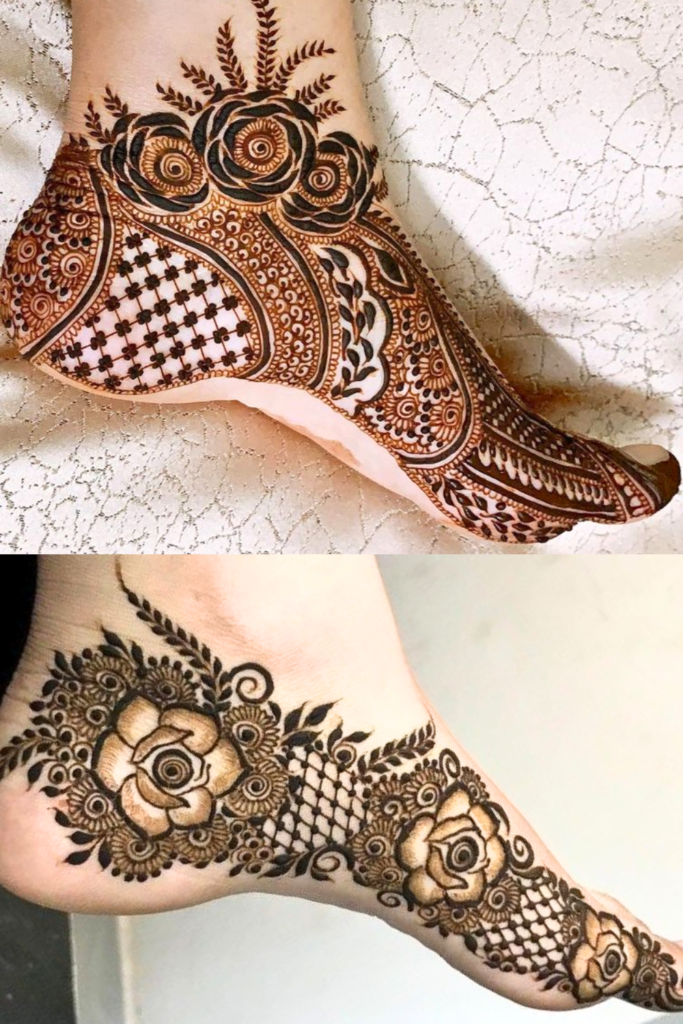
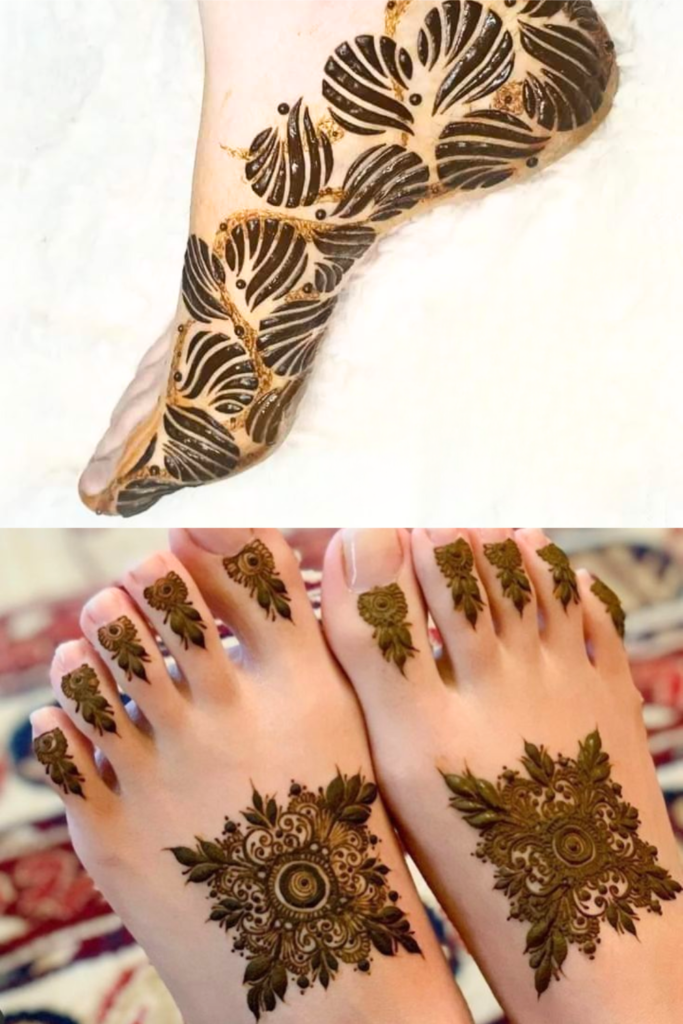
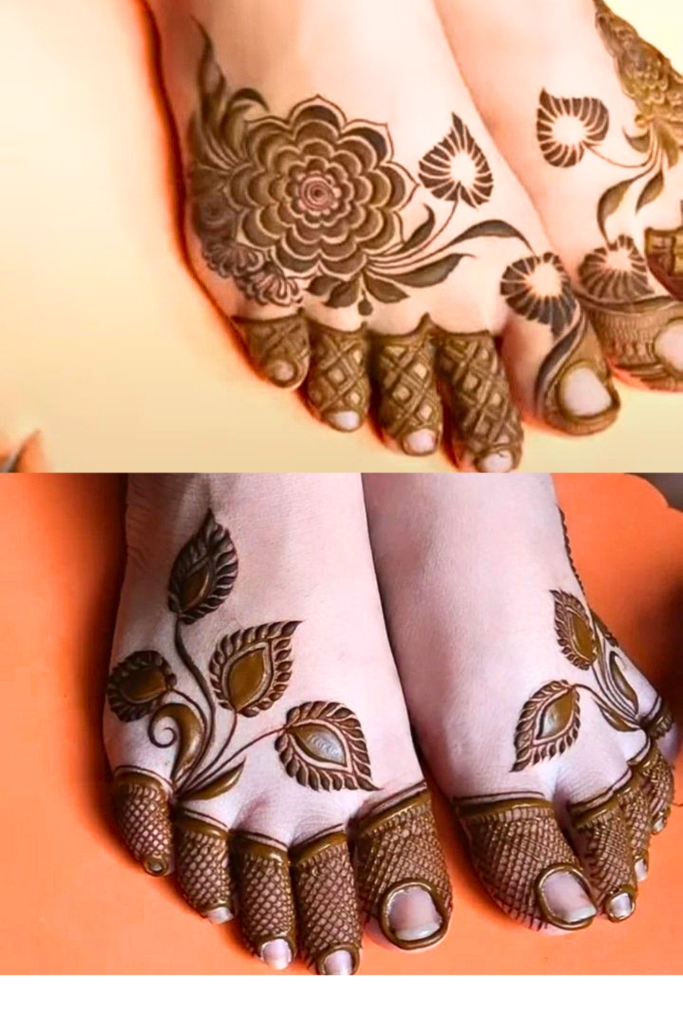
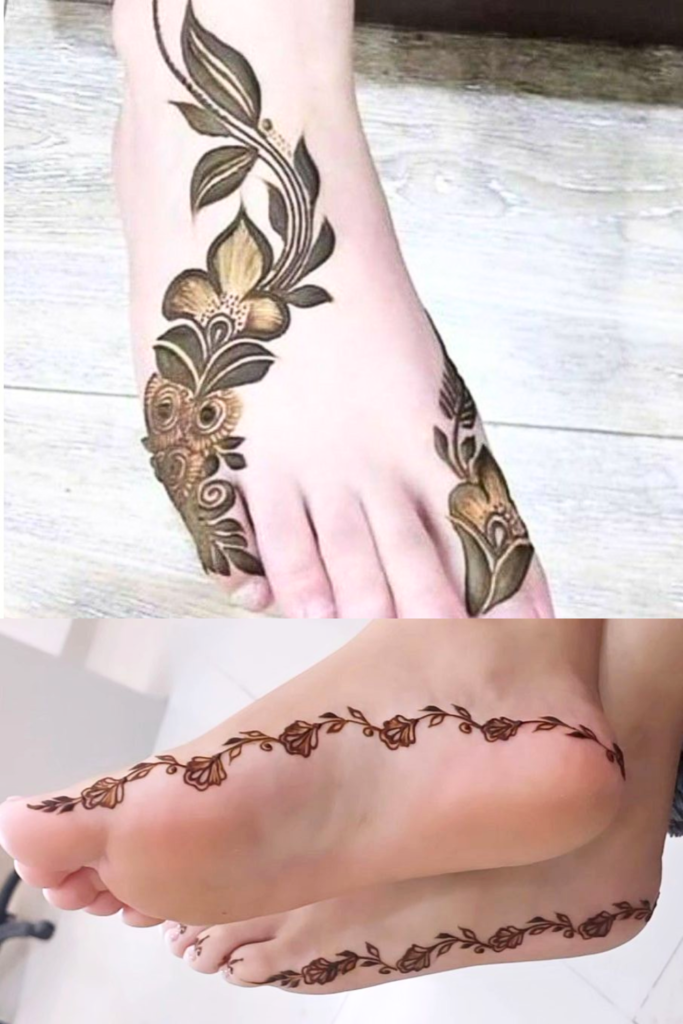
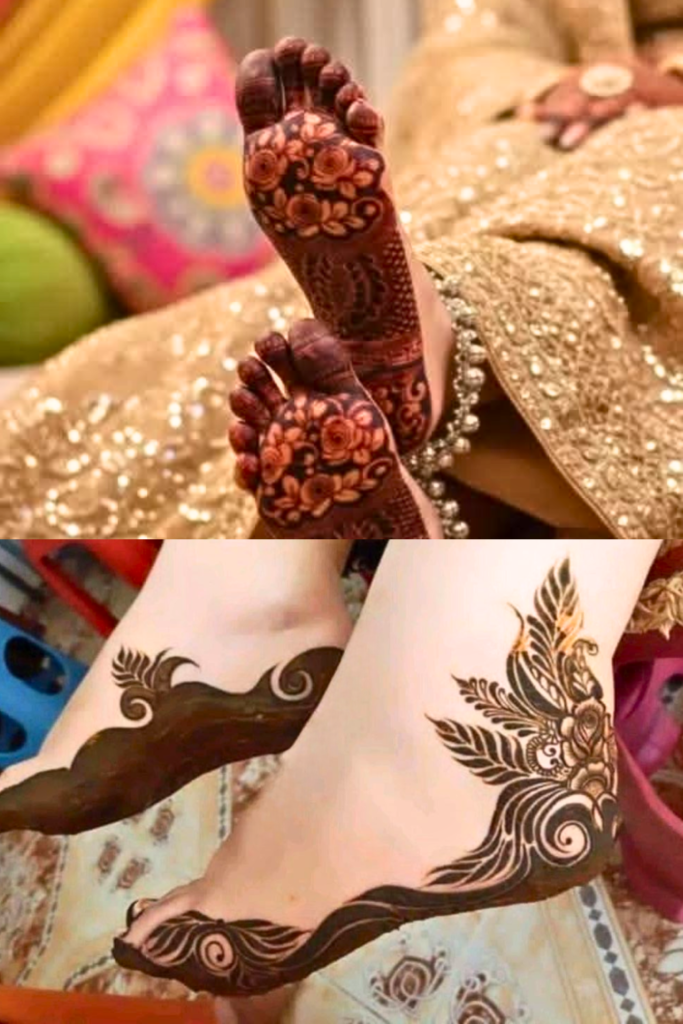
Arabic-style mehndi is known for its flowing, bold lines and open spaces. The designs are less densely packed than Indian mehndi and often feature large floral motifs, vines, and leaves that flow gracefully across the top of the foot. The elegant simplicity of Arabic mehndi makes it a popular choice for those who want a striking yet effortless look.
Moroccan and North African Designs
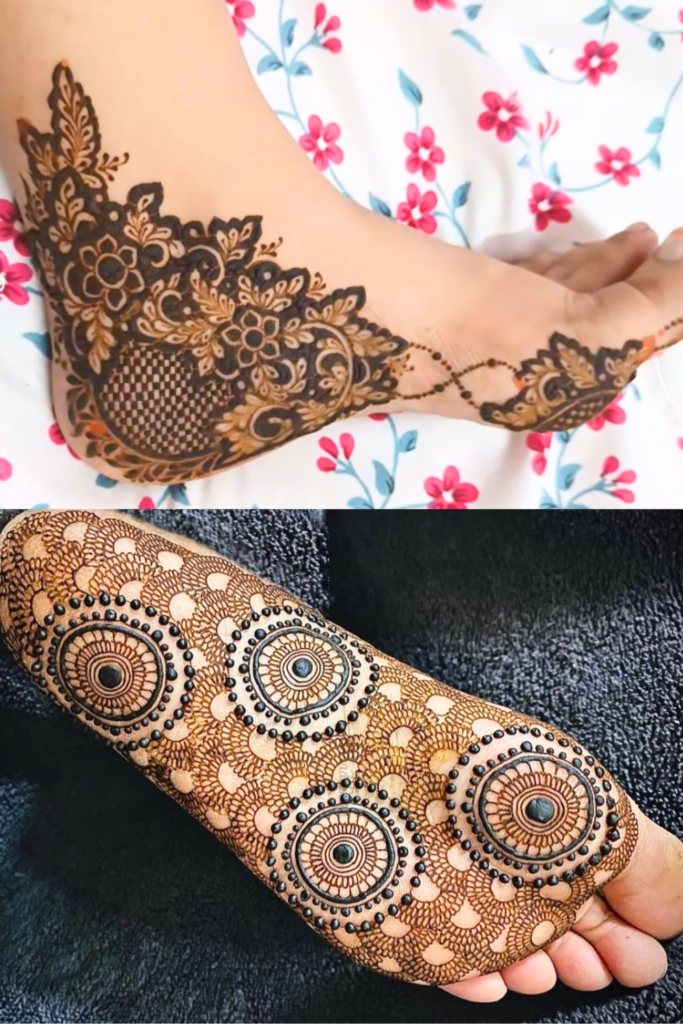
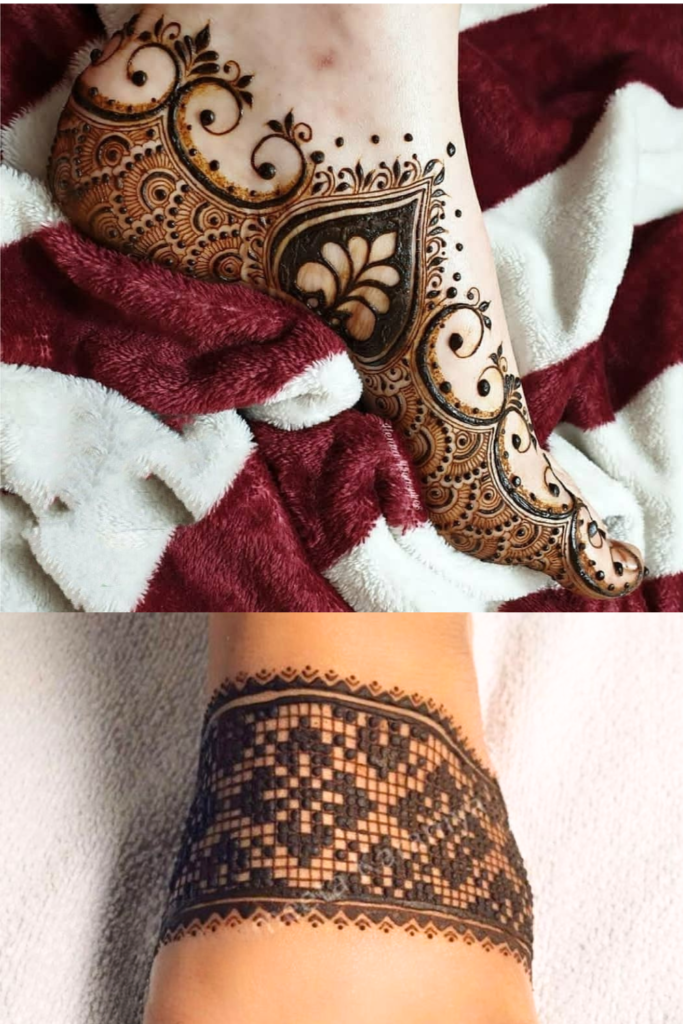
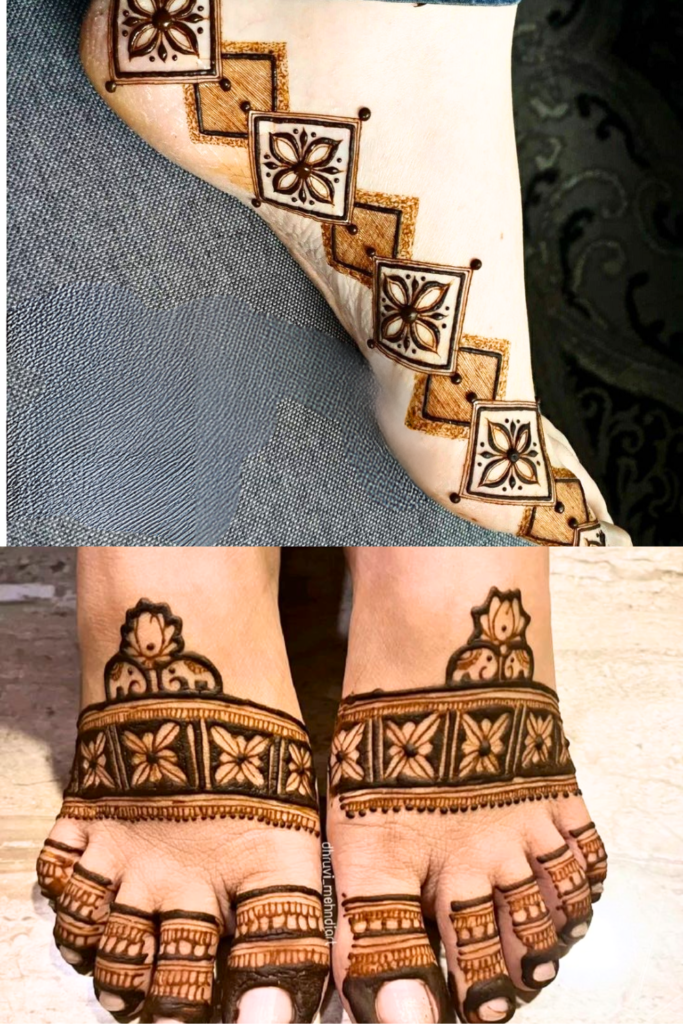
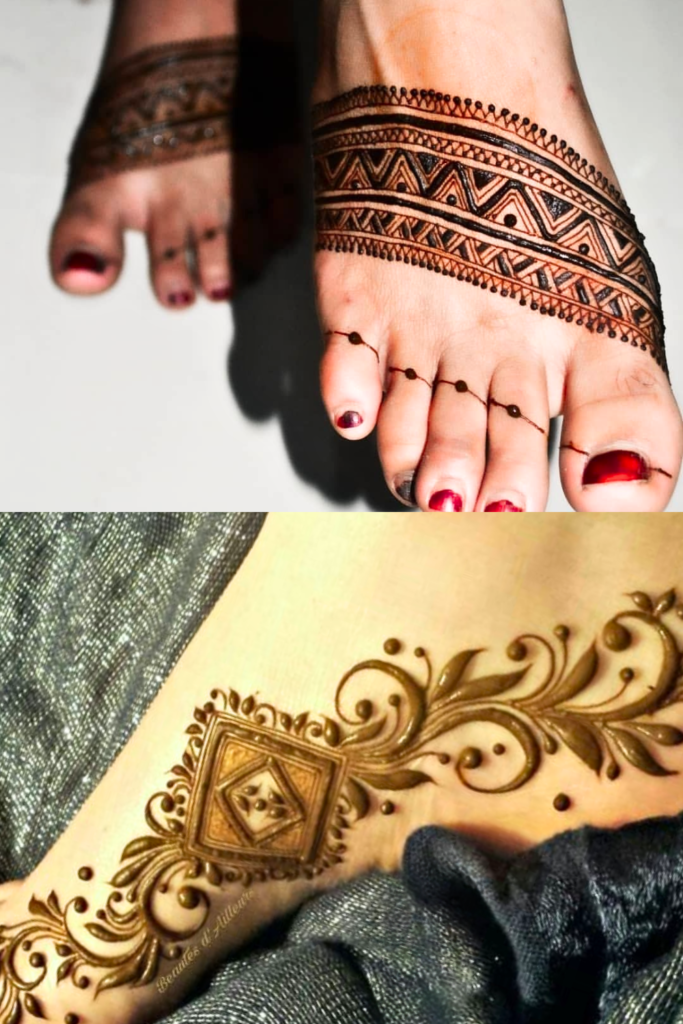
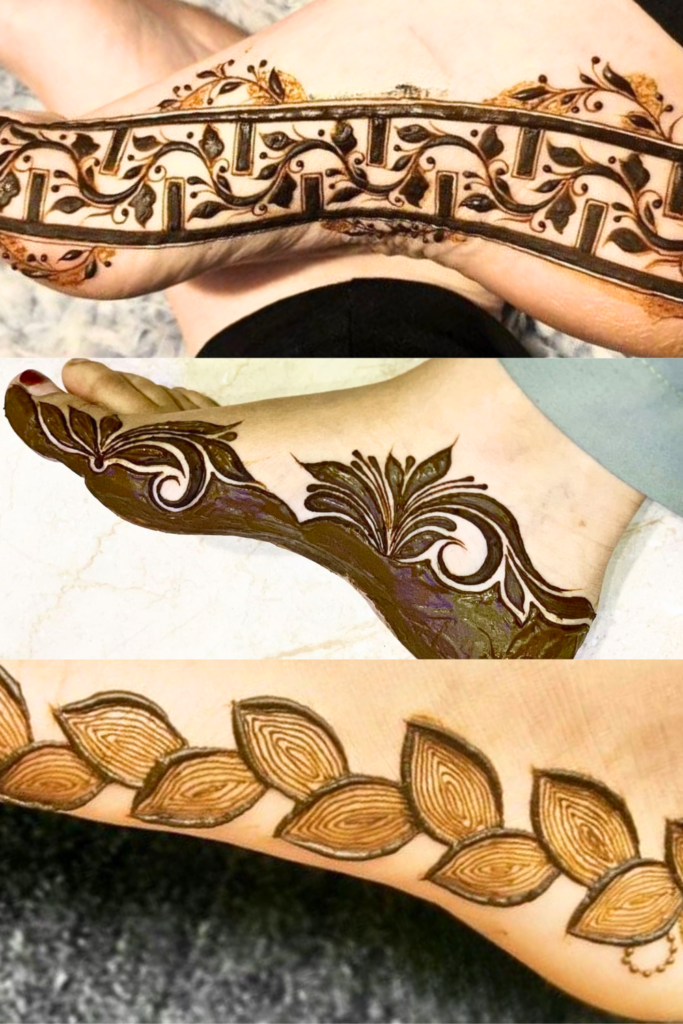
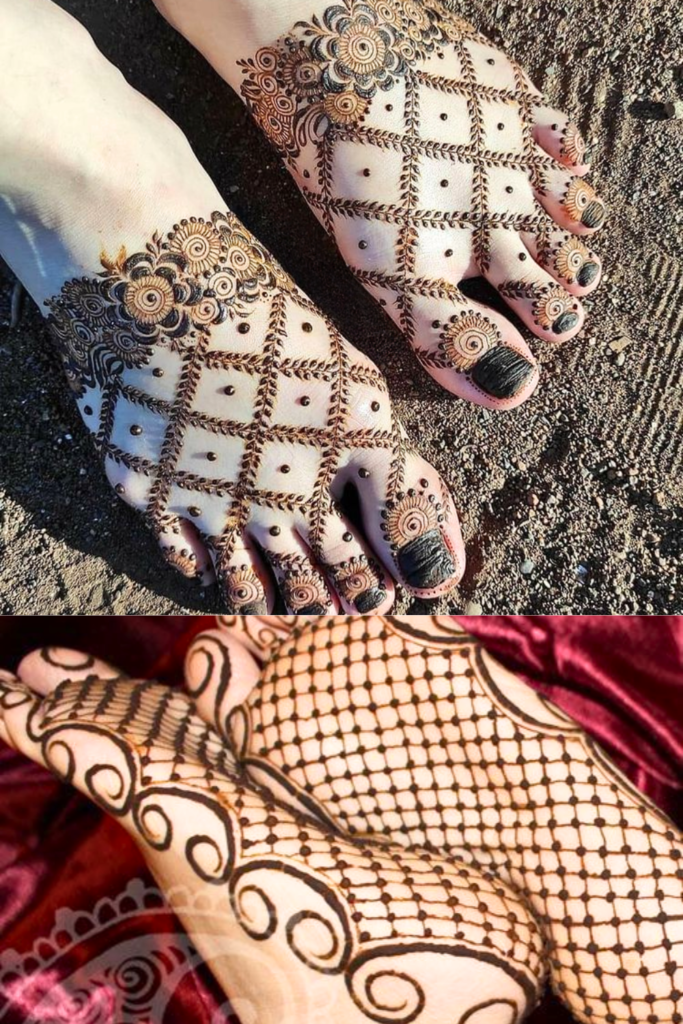
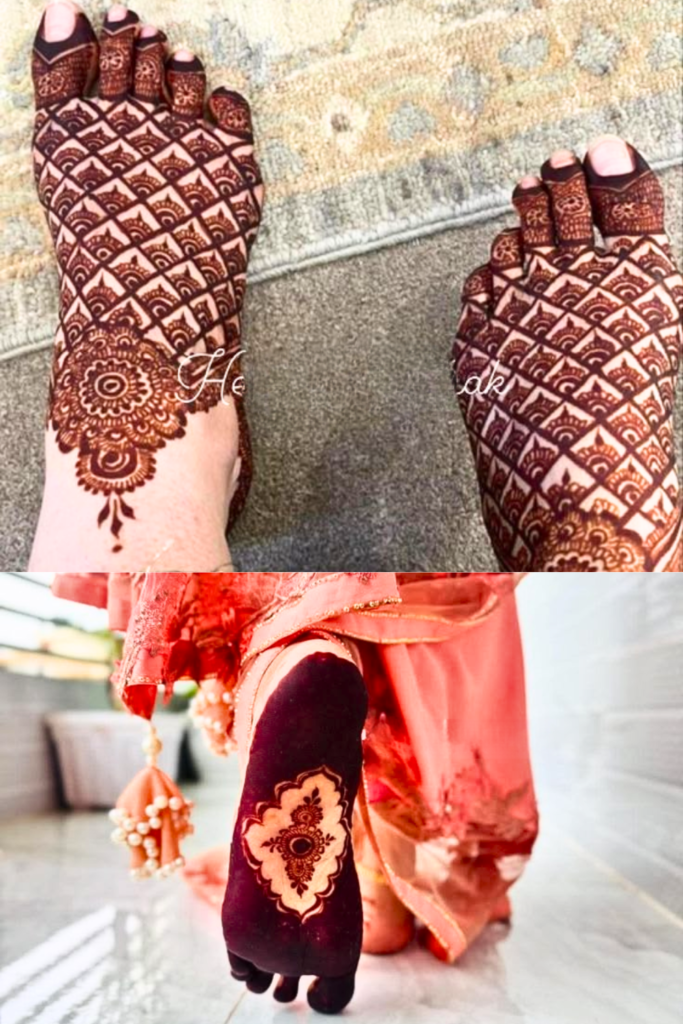
Geometric patterns and symmetry heavily influence Moroccan mehndi. Diamond shapes, triangles, grid-like arrangements, and bold linear elements dominate this style. The designs tend to be structured and precise, creating a striking visual contrast between the natural form of the foot and the rigid geometry of the art.
Indo-Arabic Fusion Designs
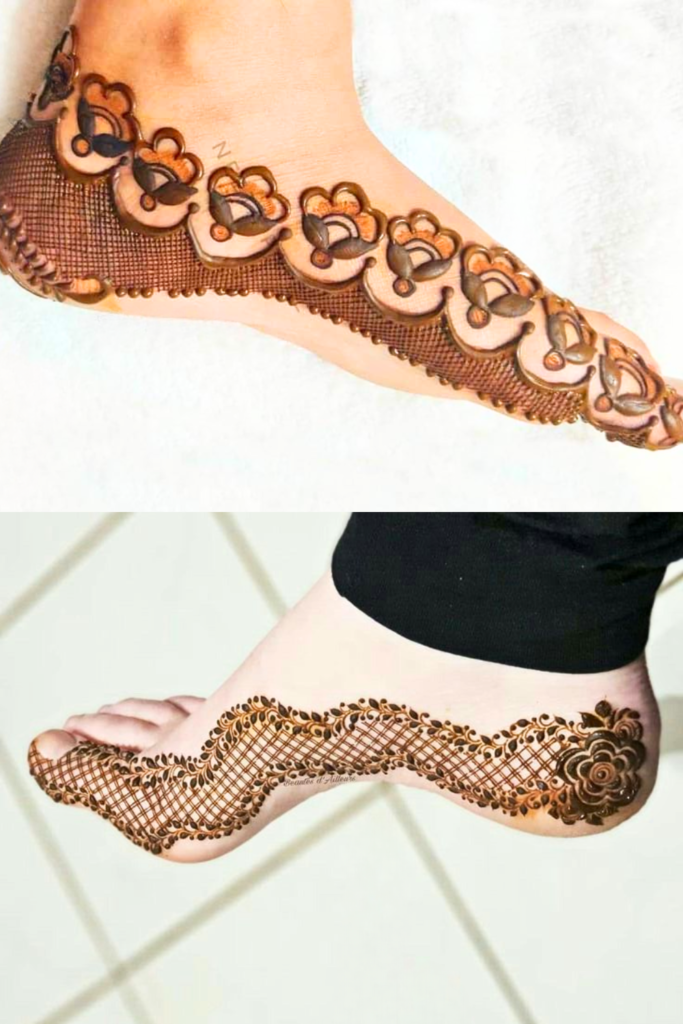
As global artistic exchange has grown, many mehndi artists now blend the density of Indian tradition with the flowing openness of Arabic style. The result is a hybrid form that uses fine detailing within larger, flowing motifs. This style has become particularly popular among brides who want a design that is both intricate and modern.
Minimalist and Modern Designs
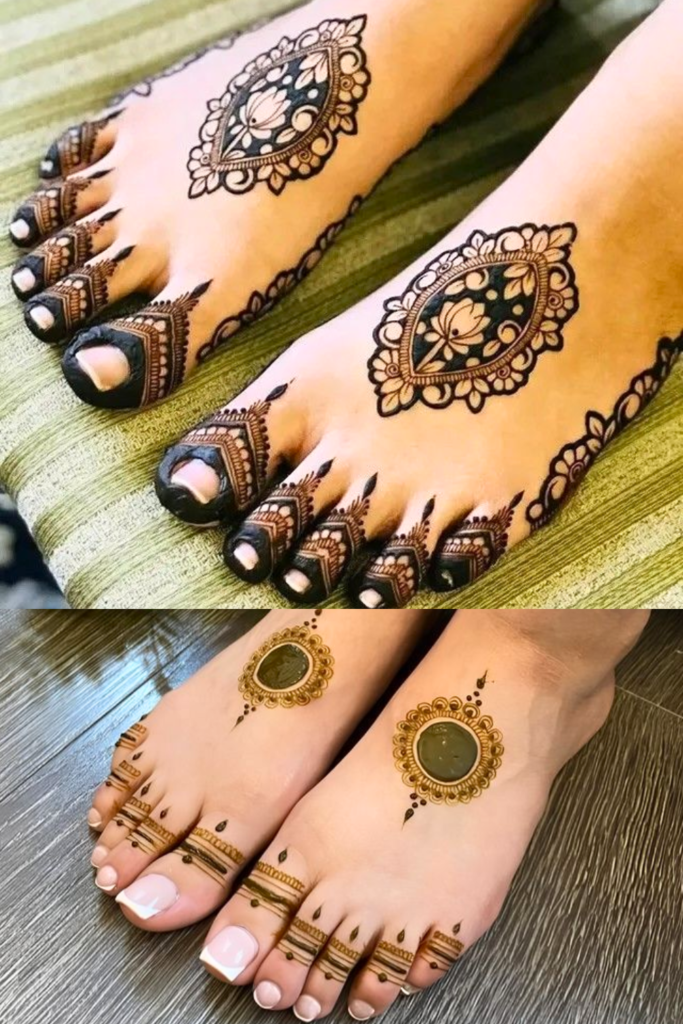
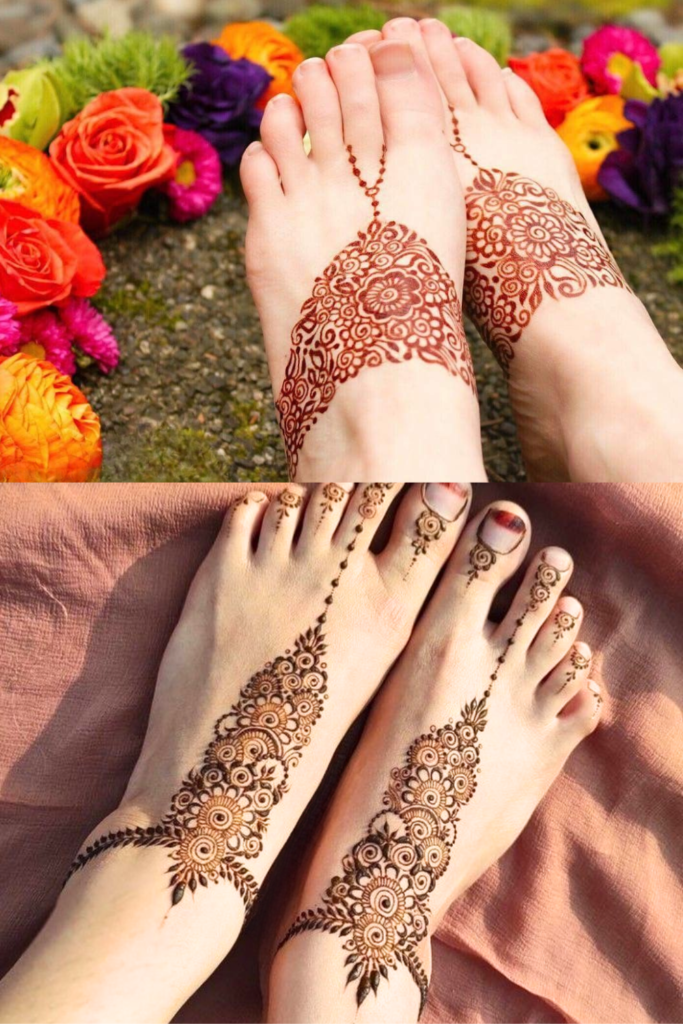
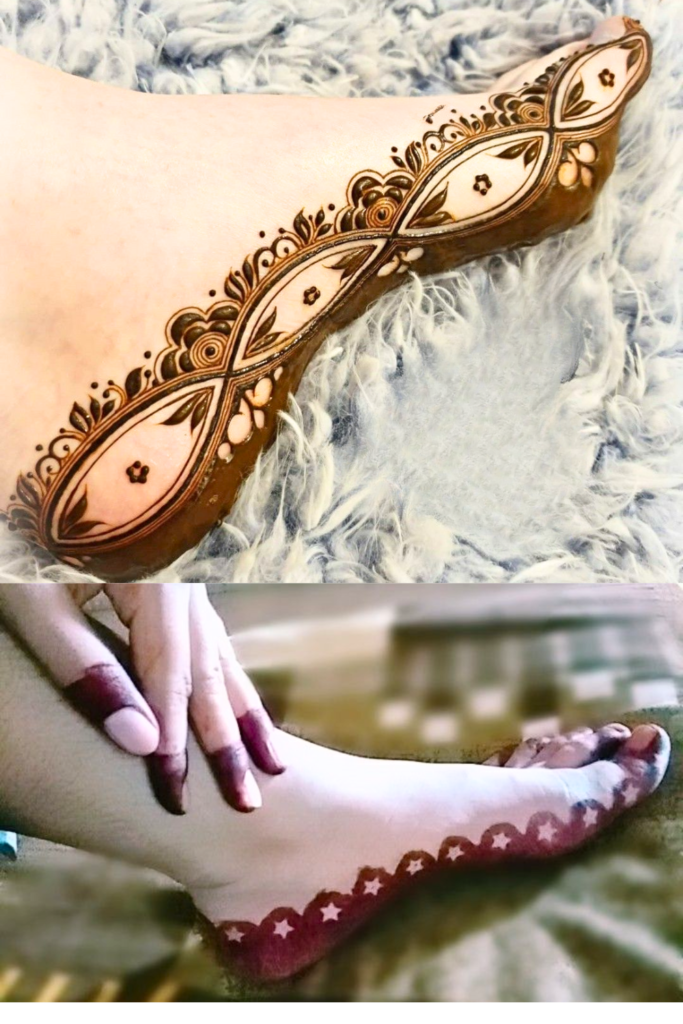
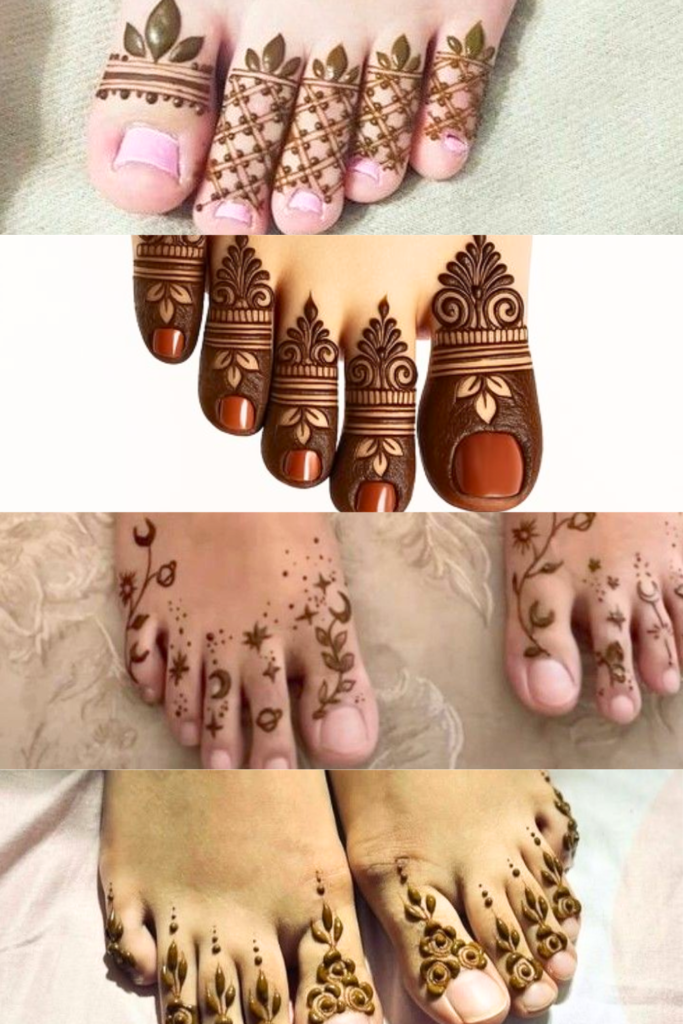
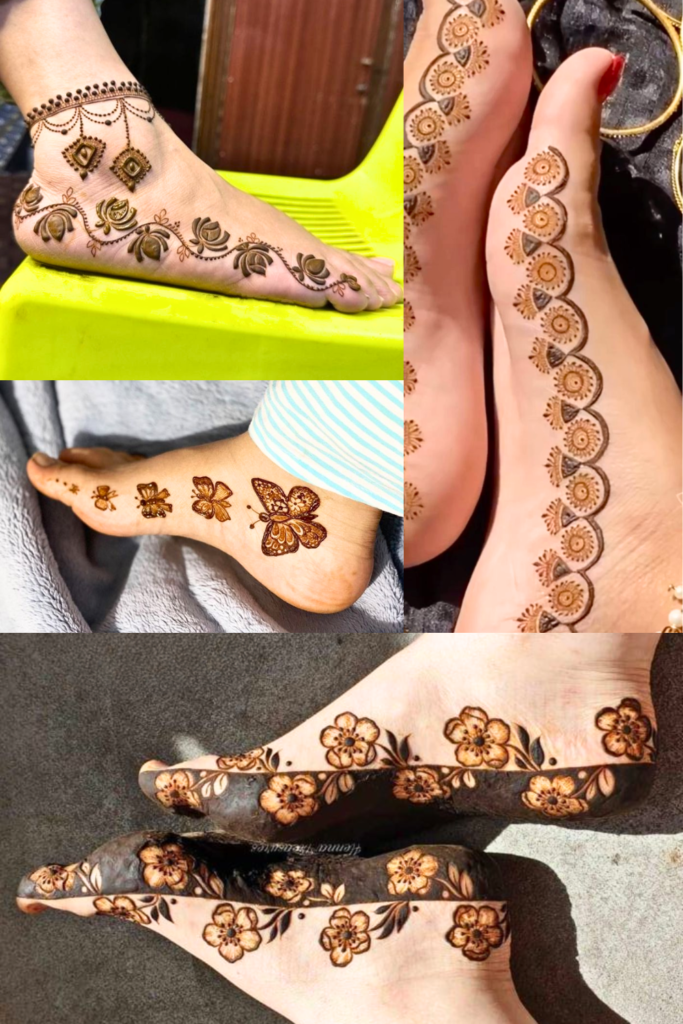
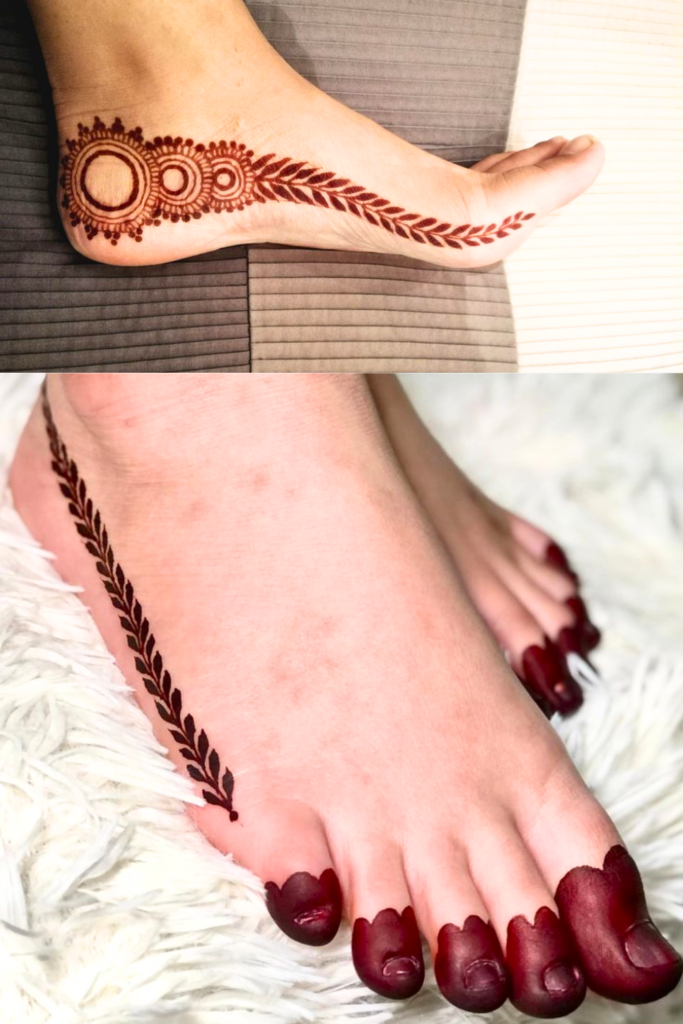
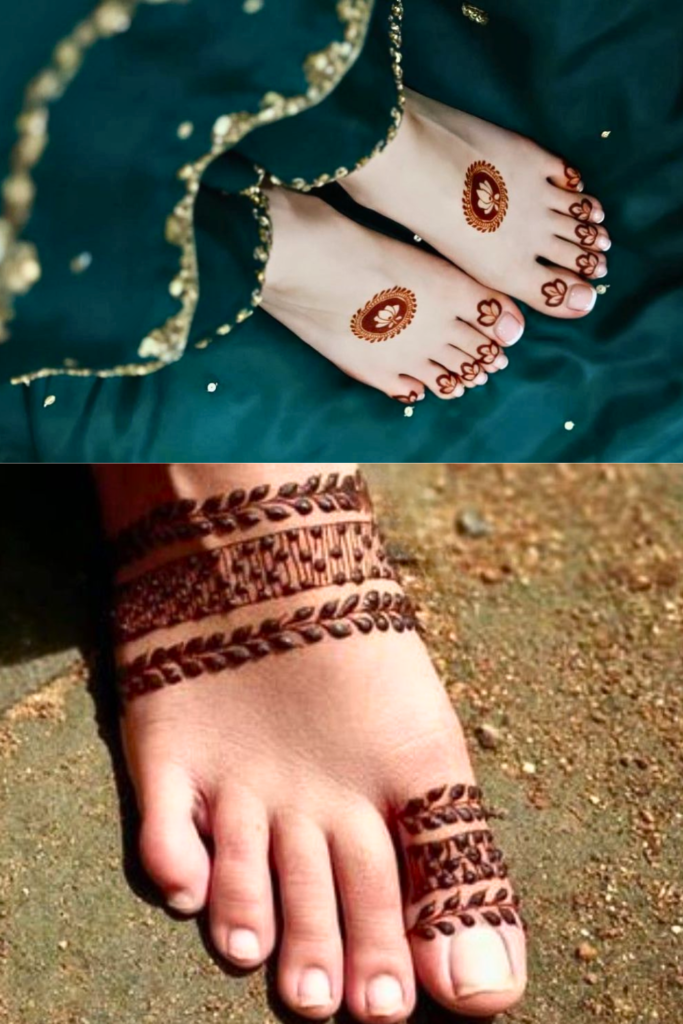
Contemporary mehndi trends have given rise to minimalist foot designs that feature fine lines, simple floral accents, and subtle geometric elements. These designs appeal to those who appreciate understated elegance and are popular for casual celebrations, photoshoots, or everyday wear.
Key Elements Commonly Used in Foot Mehndi
Foot mehndi designs draw upon a rich vocabulary of motifs and elements, each carrying its own visual character and sometimes symbolic meaning.
Paisleys, also known as mango motifs, are perhaps the most iconic element in mehndi art. Their teardrop shape lends itself naturally to filling and detailing, making them a centerpiece of many foot designs.
Peacocks are a beloved motif in Indian mehndi, symbolizing grace and beauty. The elaborate tail feathers of the peacock allow artists to showcase fine detailing and fill intricate patterns.
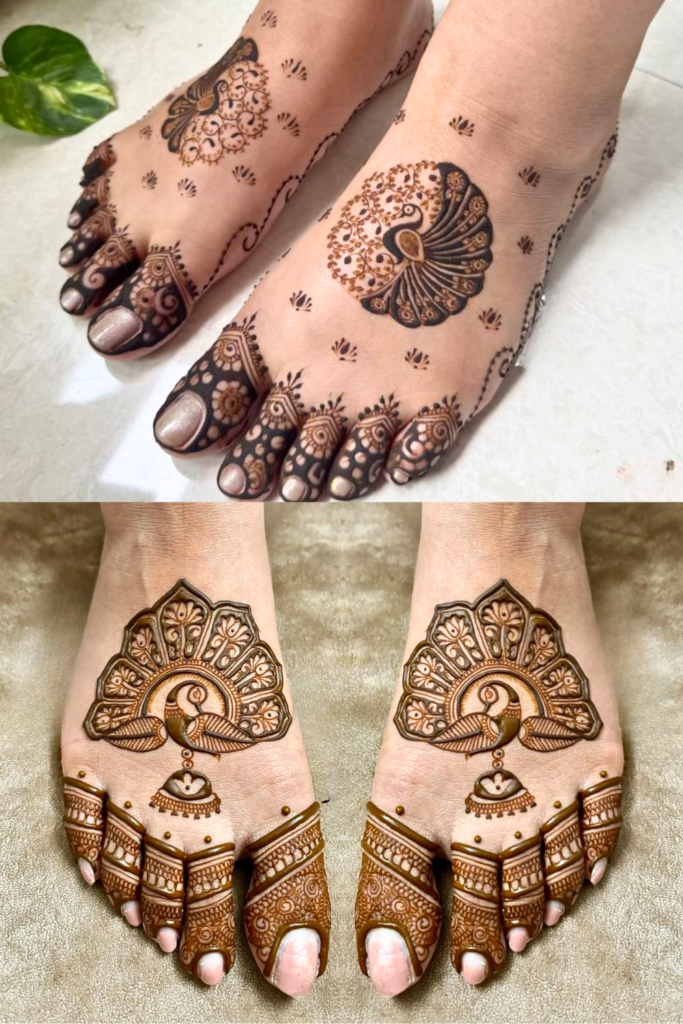
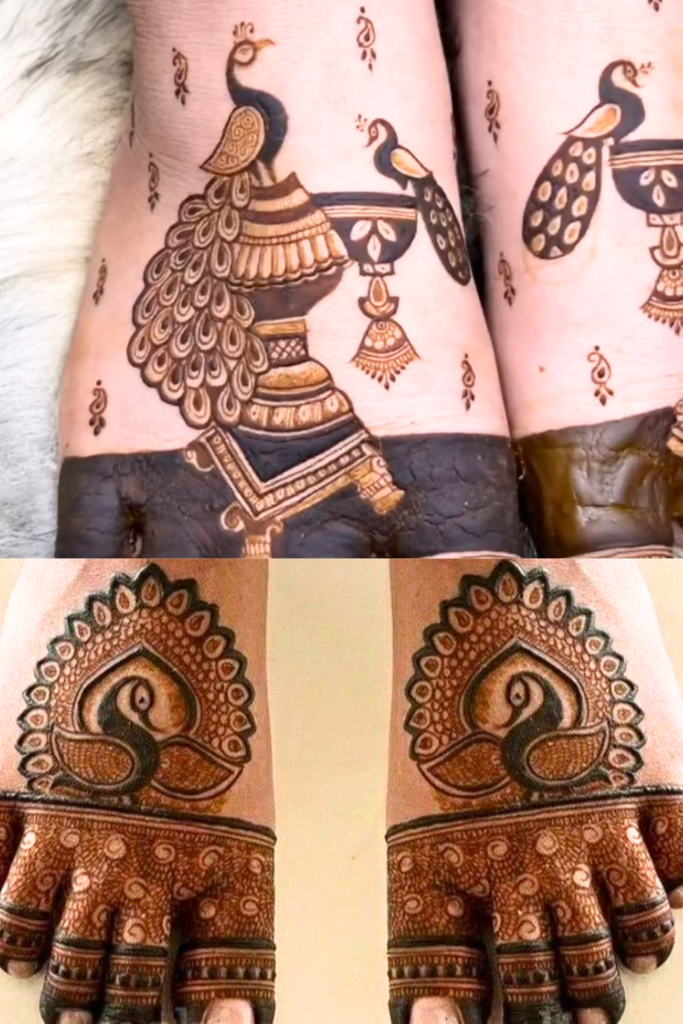
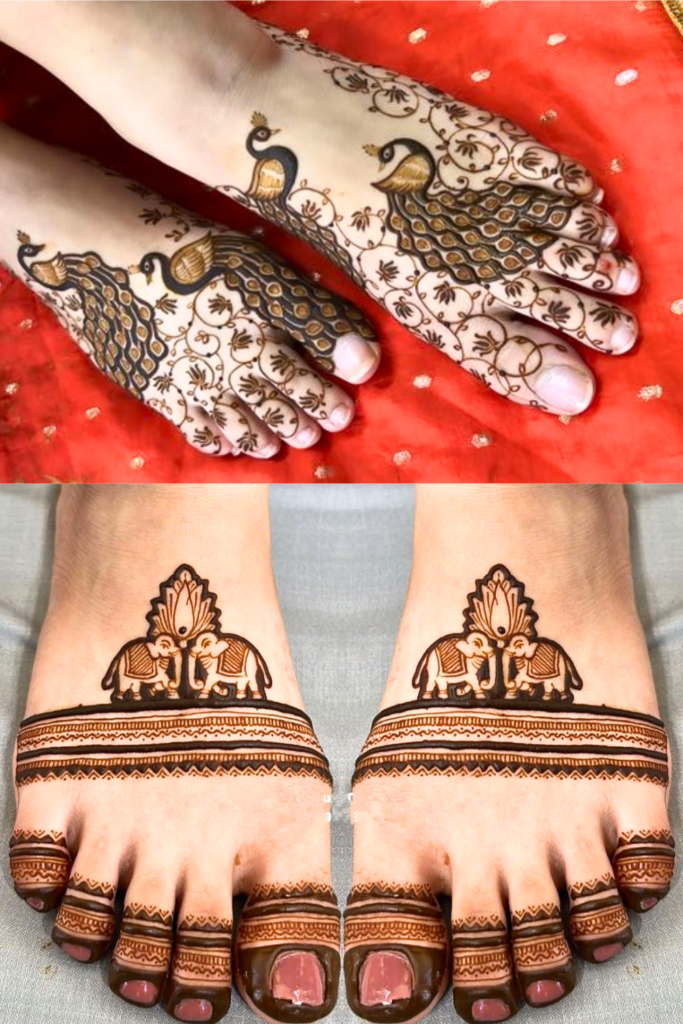
Lotus flowers represent purity and new beginnings, making them a popular choice, especially in bridal mehndi.
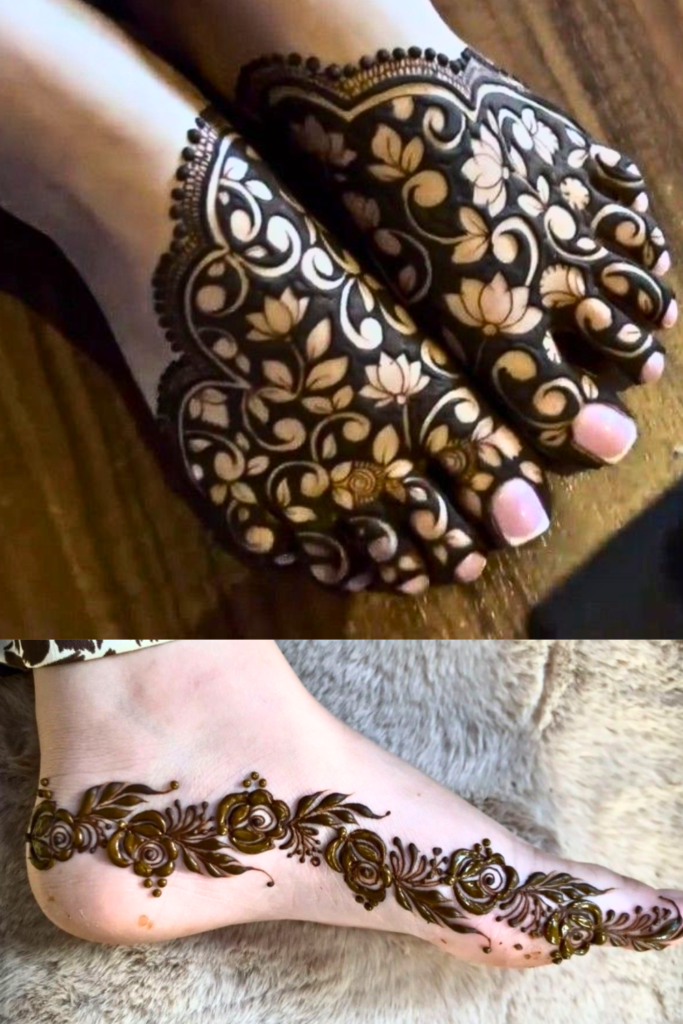
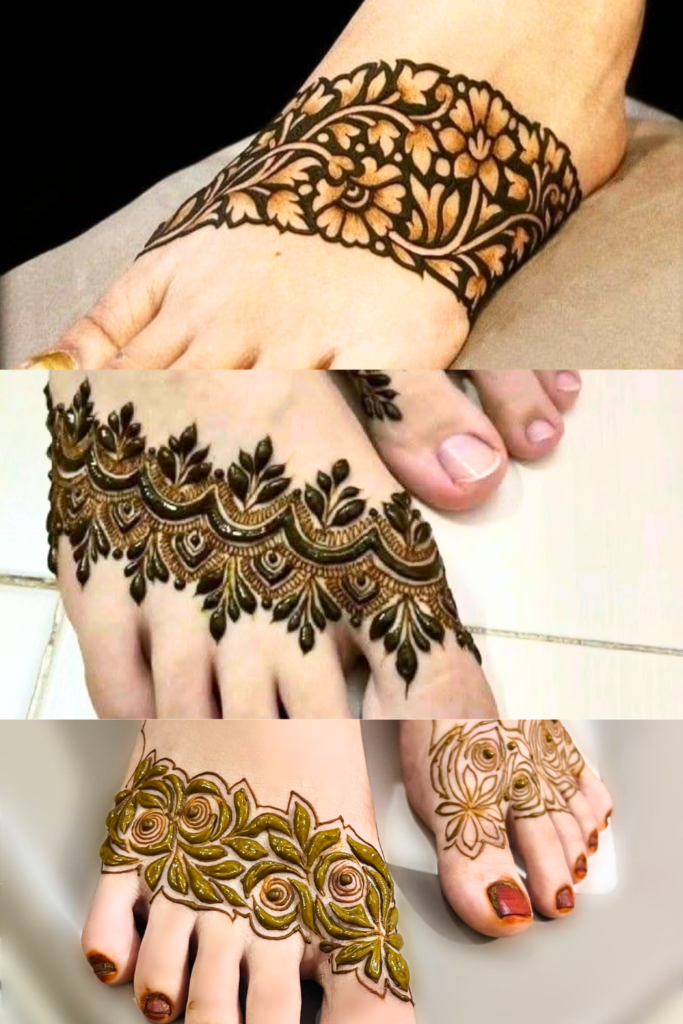
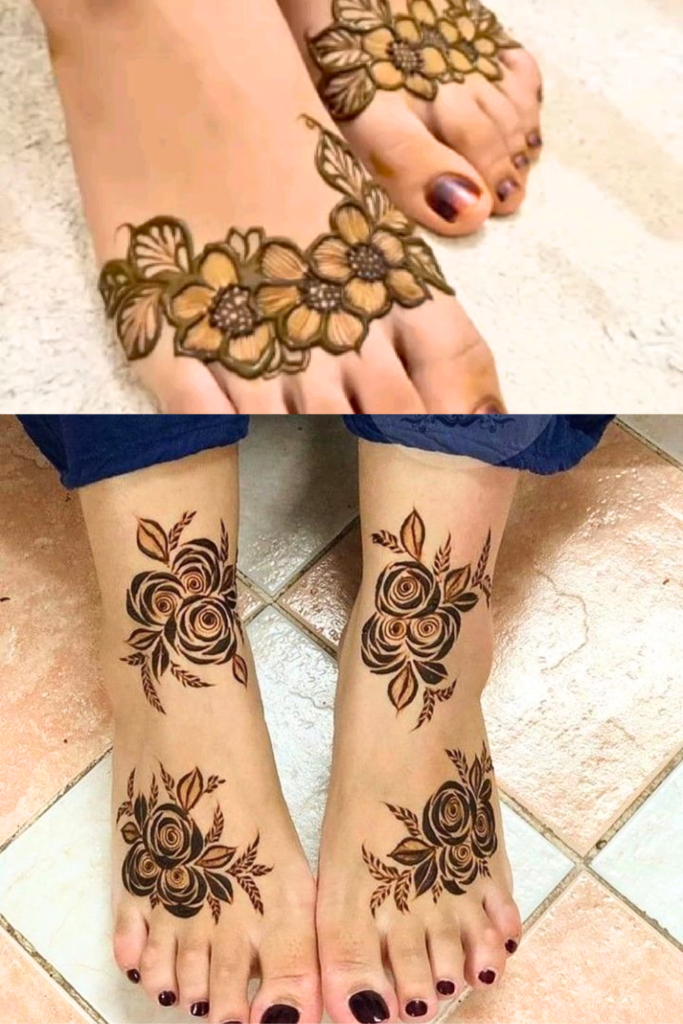
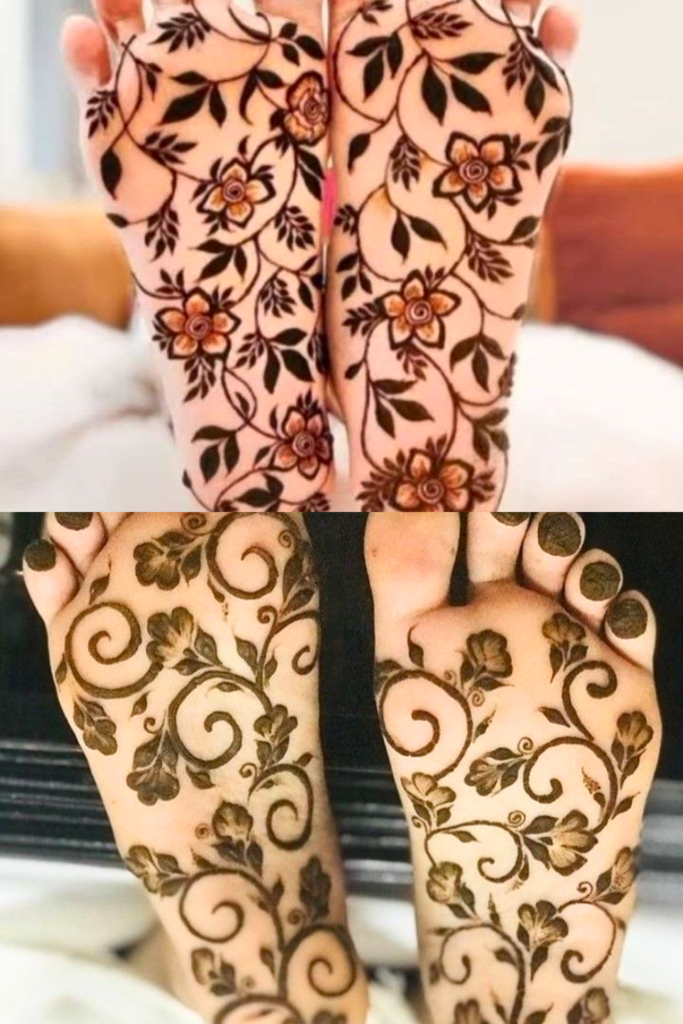
Vines and tendrils act as connecting elements, flowing from the toes up the foot and ankle to create a sense of movement and continuity throughout the design.
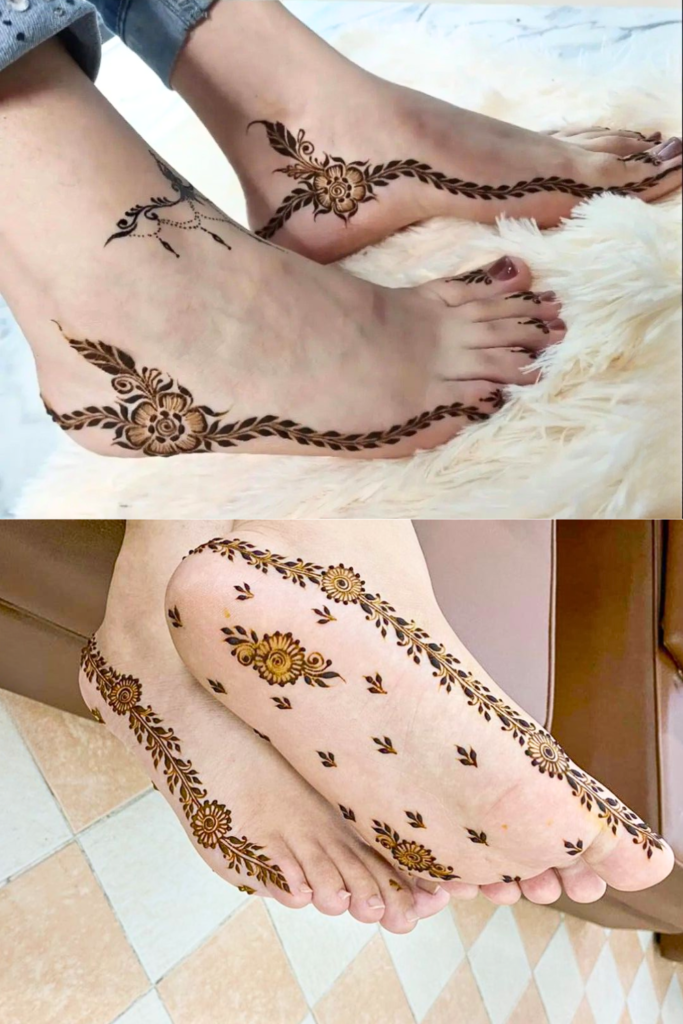
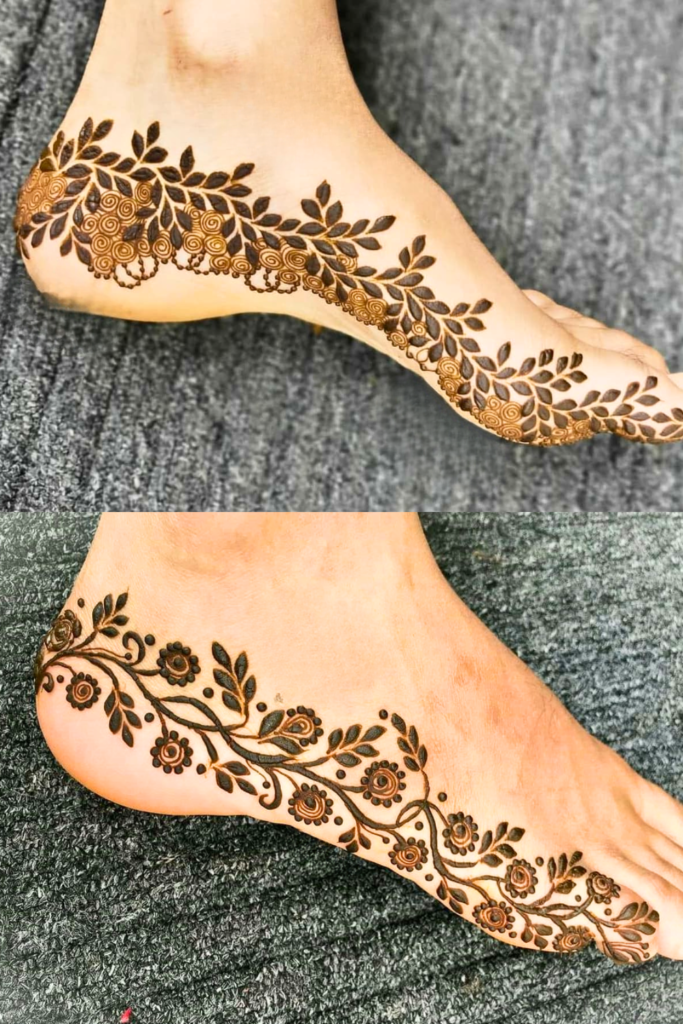
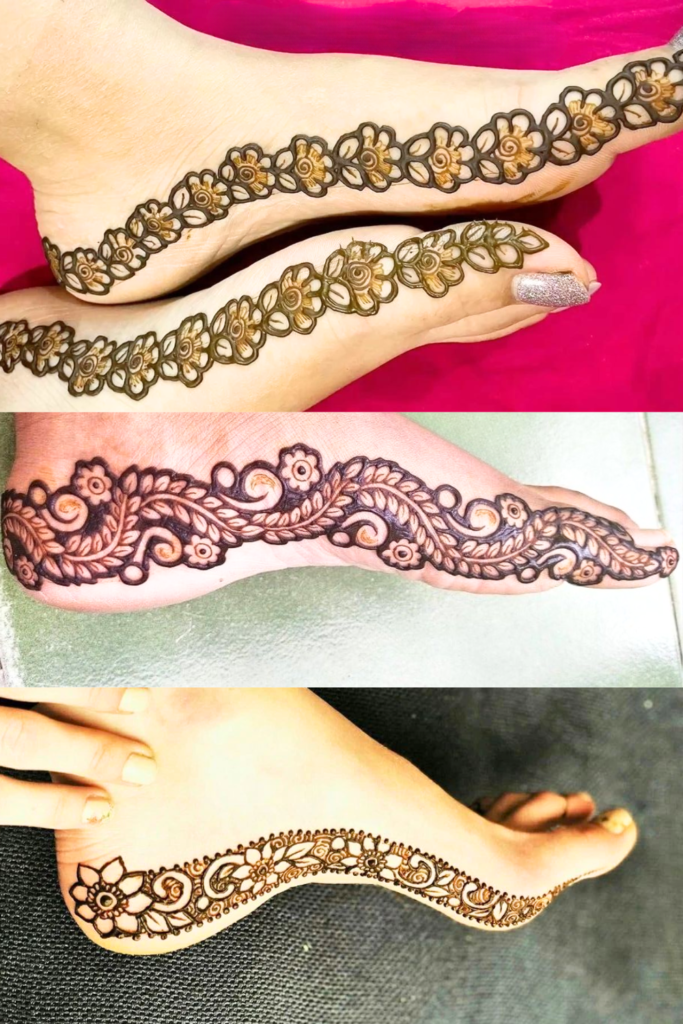
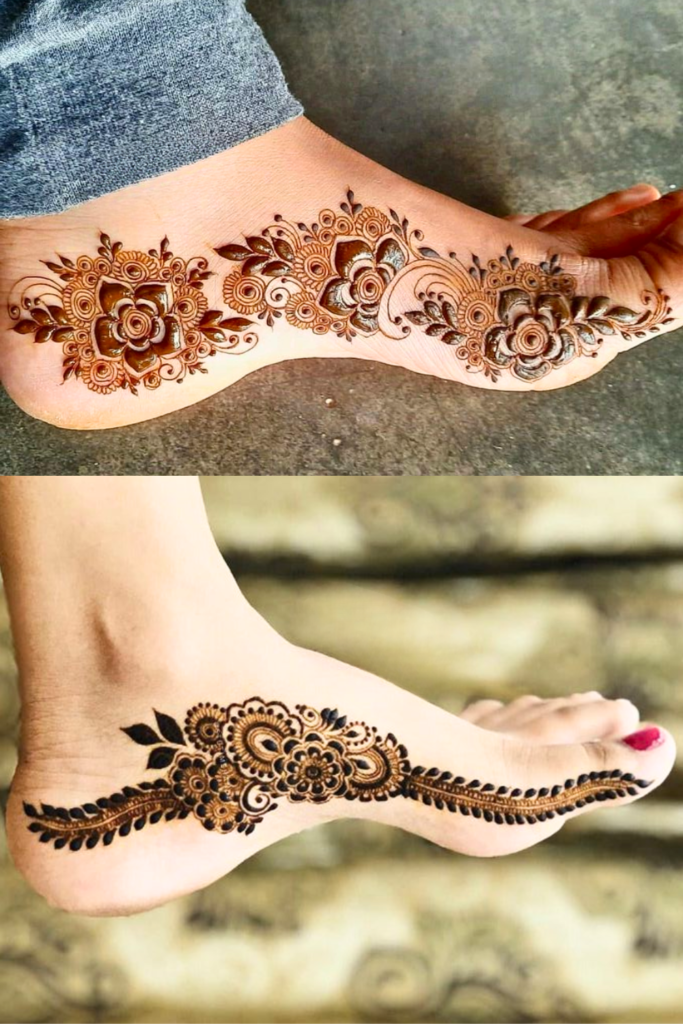
Anklet patterns are designs that encircle the ankle, mimicking the appearance of traditional payal jewelry. These ring-like patterns create a beautiful frame for the rest of the foot design.
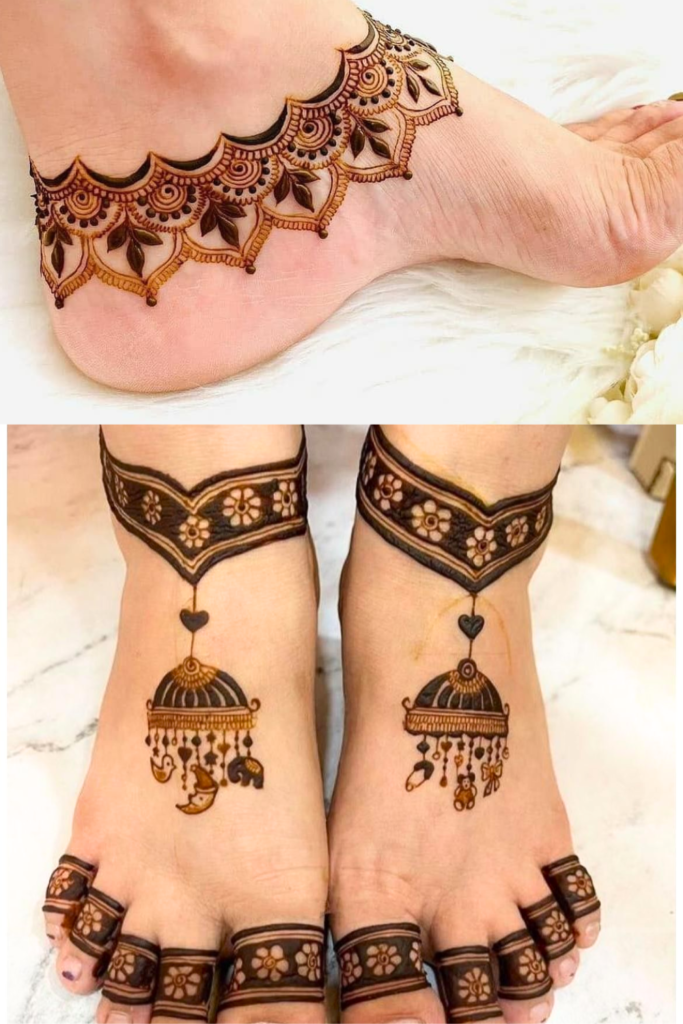
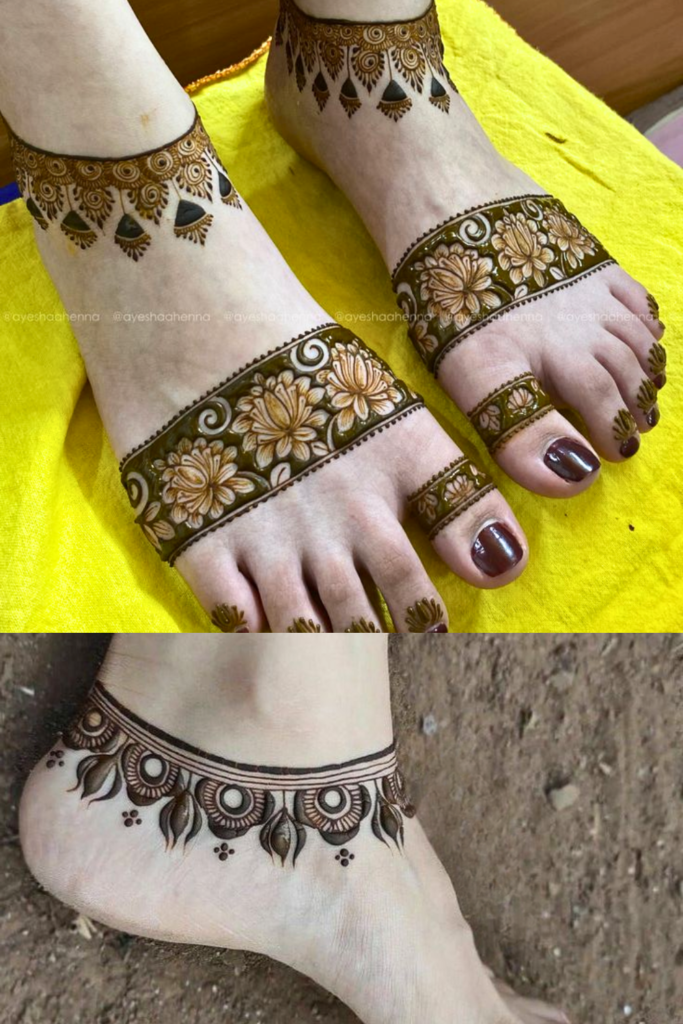
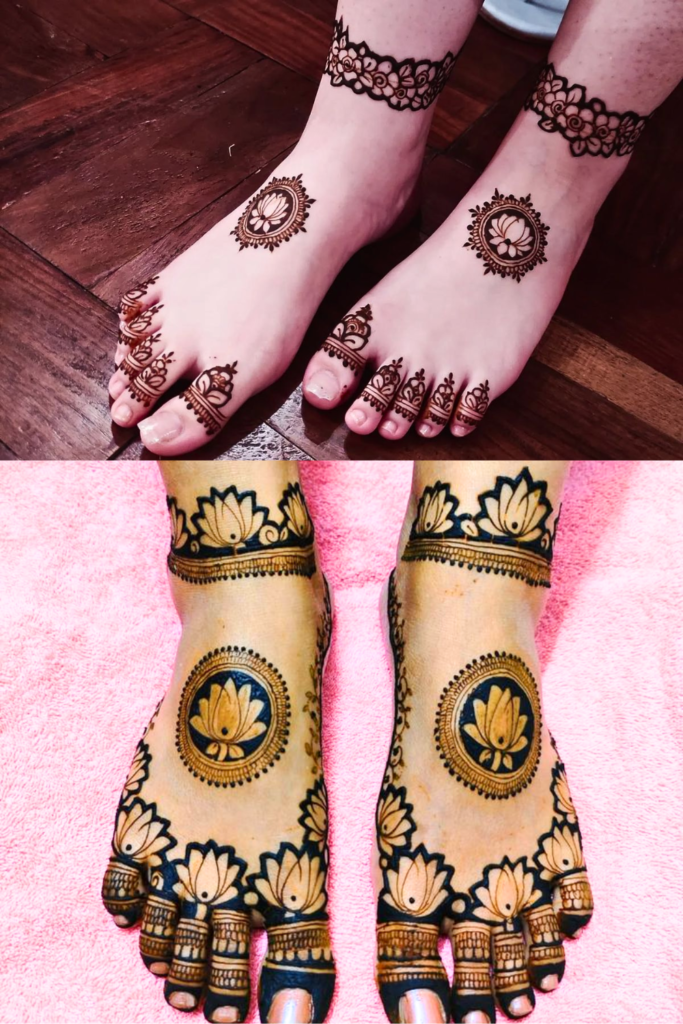
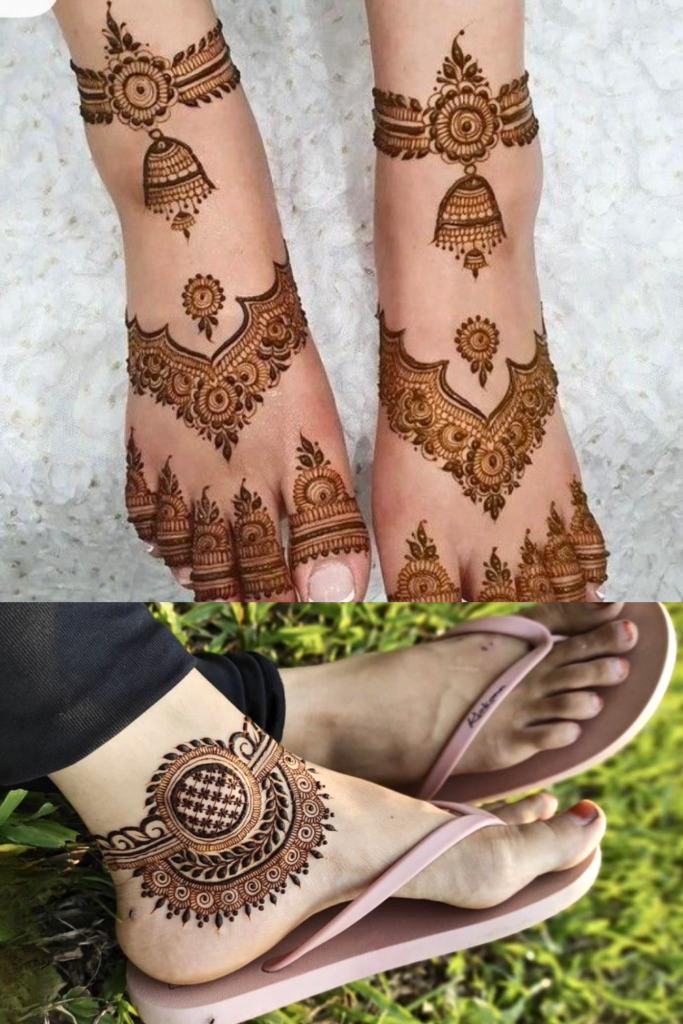
Geometric patterns such as grids, diamonds, and triangles add structure and visual balance, particularly in Moroccan-inspired or modern designs.
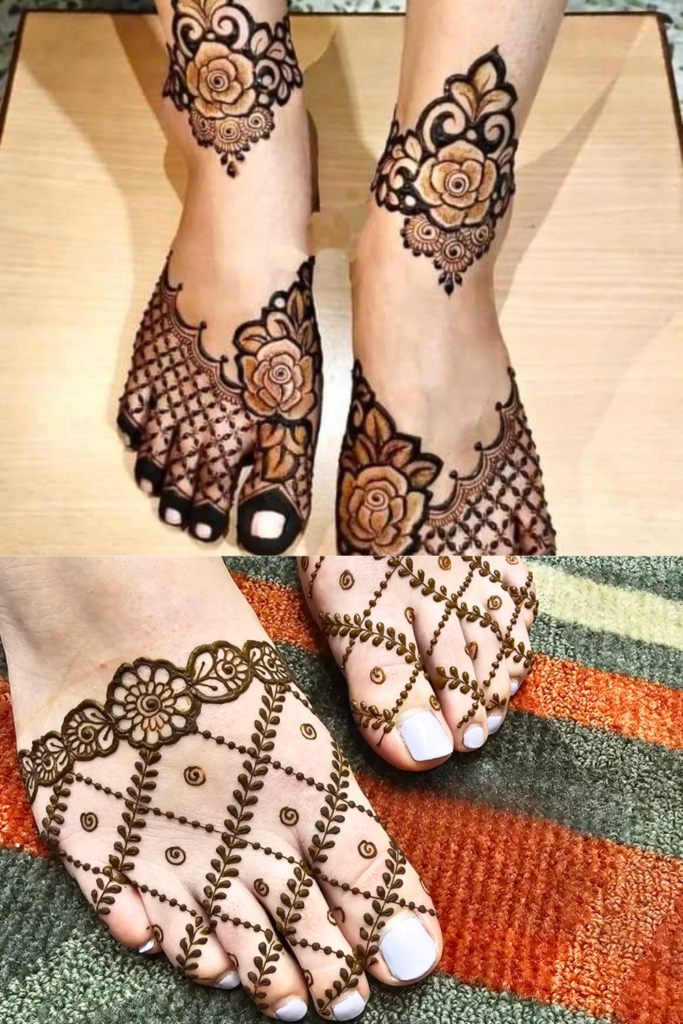
Bridal Foot Mehndi
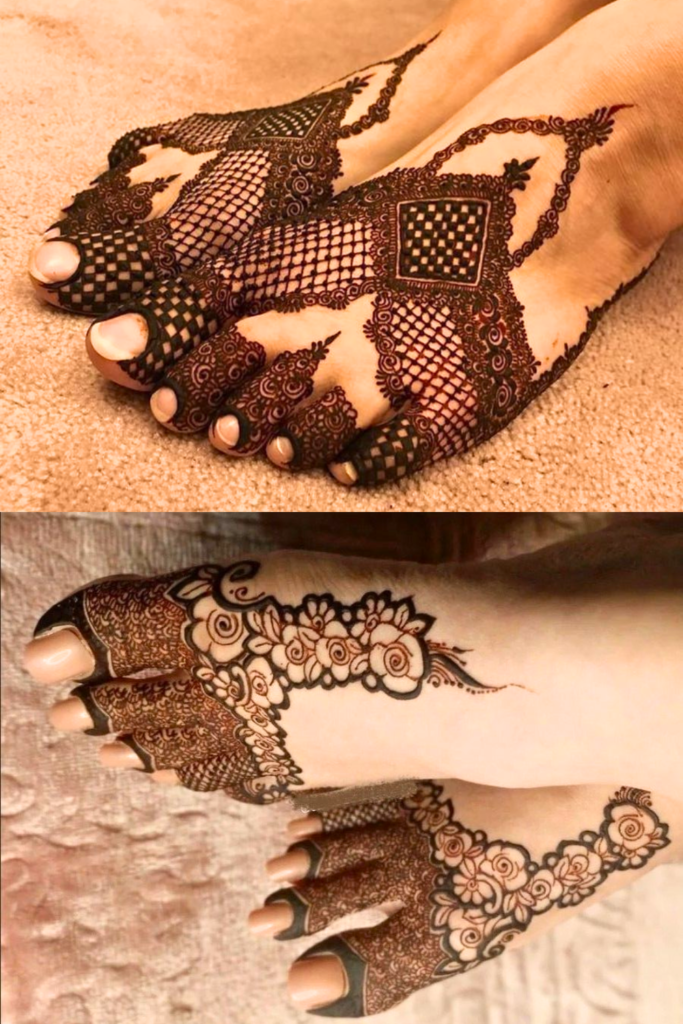
Bridal foot mehndi is the most elaborate and emotionally significant application of this art. Covering the entire foot and often extending up the calf, bridal designs may include personalized elements such as the names of the bride and groom, wedding symbols, and temple motifs. It is not merely decoration; it is a wearable story of one of life’s most meaningful celebrations.
Tips for a Long-Lasting Design
To get the best results, clean the feet thoroughly before application and allow the paste to dry for several hours. After removing the paste, avoid water for at least twelve hours to let the color develop fully. Applying a light coat of natural oil helps protect the design and extend its life. With good aftercare, foot mehndi can last one to three weeks.
Conclusion
Foot mehndi is a timeless art that blends culture, beauty, and storytelling. Whether you are a bride, a festival-goer, or simply someone drawn to intricate artistry, foot mehndi offers a deeply human and enduring form of self-expression that continues to captivate the world.